
GMP Certification in Iran:
GMP Certification in Iran, Vertex Certifiers is a trusted GMP certification and consulting partner in Iran, delivering end-to-end Good Manufacturing Practices (GMP) certification support across major industrial and life-science hubs such as Tehran, Karaj, Isfahan, Tabriz, Mashhad, and Shiraz. We work closely with pharmaceutical manufacturers, food and beverage producers, cosmetics companies, medical device manufacturers, and herbal medicine units to implement GMP systems aligned with WHO GMP and Iran FDA (IFDA) regulatory requirements. Through practical gap analysis, customized GMP documentation, staff training, and audit readiness—offered via flexible onsite and remote models—Vertex Certifiers ensures a smooth, compliant, and internationally accepted GMP certification journey tailored to Iran’s manufacturing and export ecosystem.
What is GMP Certification?
GMP certification confirms a facility follows Good Manufacturing Practices—systematic protocols to prevent contamination, mix-ups, or errors during production. Objectives include ensuring product safety, purity, efficacy, and consistency. Scope spans facilities (cleanrooms, airflow), processes (validation), personnel (training, hygiene), and documentation (batch records). Guidelines like WHO GMP provide the framework, but certification delivers official validation from IFDA or accredited bodies. Unlike advisory guidelines, certification triggers regulatory approvals, making it essential for market entry.
Industries That Require GMP Certification in Iran
High-risk sectors demand GMP under IFDA:
- Pharmaceutical Manufacturing: Tablets, injectables, biotech drugs.
- Medical Devices: Syringes, diagnostics, surgical tools.
- Food & Beverage Processing: Dairy, juices, canned goods for halal exports.
- Cosmetics & Personal Care: Creams, shampoos, sanitizers.
- Herbal Medicines & Nutraceuticals: Traditional Iranian remedies, supplements.
- Packaging Materials: Pharma/food-contact plastics, glass.
Inspections enforce these, with WHO GMP for premium exports.
GMP Certification Process in Iran
Step-by-step path to GMP Certification:
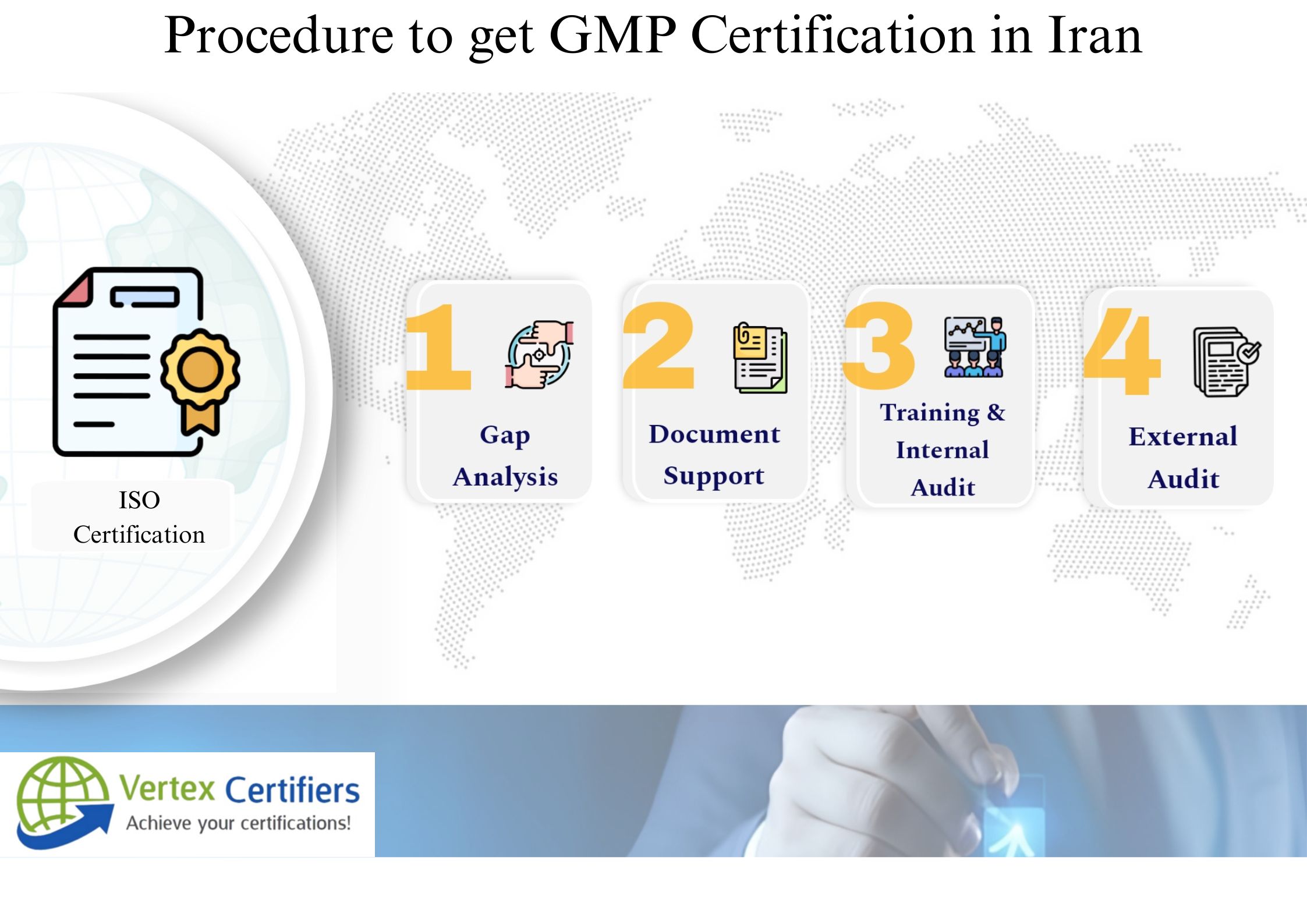
- GMP Gap Analysis: Identify deficiencies via expert review.
- Risk Assessment & Compliance Planning: Prioritize via FMEA.
- SOP & Documentation Development: Customized to operations.
- GMP Training for Employees: Competency-based programs.
- Implementation & Internal Audit: Trial runs, corrective actions.
- Certification/Regulatory Audit: IFDA inspection or WHO PQS.
- GMP Certificate Issuance: 2-3 year validity, surveillance follows.
Vertex Certifiers – GMP Consultants in Iran handles full cycles for Iranian firms.
Iran’s manufacturing and export sectors are rapidly focusing on international compliance standards to improve product quality, safety, and global acceptance. GMP Certification helps organizations establish structured manufacturing controls, reduce contamination risks, and ensure consistent product quality across production batches.
For pharmaceutical manufacturers, herbal product companies, cosmetics producers, food processing industries, and medical device suppliers in Iran, GMP implementation supports both domestic market credibility and international trade opportunities. Many importers and distributors in GCC countries, Europe, and Asia prefer suppliers operating under Good Manufacturing Practices because it demonstrates commitment to hygiene, traceability, and regulatory compliance.
GMP Certification also helps businesses in Iran:
- Improve production consistency
- Minimize product recalls and defects
- Strengthen customer trust
- Enhance export opportunities
- Maintain proper documentation and traceability
- Improve employee hygiene and operational discipline
- Reduce regulatory and operational risks
Organizations implementing GMP standards often experience better process control, improved audit readiness, and stronger market positioning in competitive industries.
Industries in Iran That Commonly Require GMP Certification
GMP Certification is highly beneficial for several industries operating in Iran where product safety, hygiene, and manufacturing consistency are critical.
Pharmaceutical Manufacturing
Pharmaceutical companies require GMP implementation to maintain controlled production environments, proper validation procedures, and quality assurance systems for medicines and healthcare products.
Food and Beverage Processing
Food manufacturers use GMP practices to improve hygiene management, contamination prevention, storage control, and safe production processes.
Herbal and Traditional Products
Iran has a growing herbal and natural products sector. GMP helps these businesses standardize production methods and improve consumer confidence.
Cosmetics and Personal Care Products
Cosmetics manufacturers implement GMP to ensure safe ingredient handling, production hygiene, and product consistency.
Medical Device Manufacturing
Medical equipment and device manufacturers use GMP systems to maintain strict quality controls and compliance with international buyer expectations.
Chemical and Packaging Industries
Packaging material manufacturers and industrial chemical companies also adopt GMP principles to improve operational control and product reliability.