ISO 45001 Certification in Indonesia:
Vertex Certifiers is a globally trusted ISO consulting and certification firm providing comprehensive ISO 45001 Certification services in Indonesia for organizations committed to creating safer workplaces and achieving internationally recognized Occupational Health & Safety Management System (OHSMS) standards. We deliver complete end-to-end consulting solutions including gap analysis, documentation development, system implementation, employee awareness and safety training, internal audits, management review support, certification audit coordination, and post-certification assistance. Our experienced ISO 45001 consultants support organizations across Jakarta, Surabaya, Bandung, Medan, Semarang, Batam, Makassar, Denpasar (Bali), Tangerang, Bekasi, and other major industrial cities in Indonesia, helping businesses achieve certification through practical, efficient, and industry-focused implementation.
In addition to ISO 45001 Certification, Vertex Certifiers also provides expert consulting and certification support for ISO 9001, ISO 14001, ISO 22000, ISO 27001, ISO 22301, ISO 50001, ISO/IEC 20000-1, ISO/IEC 17025, GMP, and several other internationally recognized management system standards. We work with organizations across Indonesia’s key industries including manufacturing, oil & gas, mining, construction, food processing, electronics, automotive, logistics, textiles, healthcare, chemicals, infrastructure, and heavy engineering, helping them reduce workplace risks, strengthen legal compliance, improve employee well-being, enhance operational performance, and build greater confidence among customers, regulators, and international business partners.
Introduction to ISO 45001 Certification in Indonesia
ISO 45001 certification in Indonesia provides organizations with a globally recognized framework to enhance occupational health and safety (OH&S) management systems. This standard helps businesses systematically identify, manage, and reduce workplace risks, ensuring a safer working environment for employees and stakeholders. By implementing ISO 45001, organizations can improve compliance with local and international safety regulations, reduce incidents, and foster a culture of continuous improvement in health and safety practices. Certification by accredited bodies in Indonesia.
What is ISO 45001 Certification in Indonesia?
ISO 45001 certification is an international standard for occupational health and safety (OH&S) management systems that provides a framework for organizations to proactively improve their OH&S performance. It focuses on reducing workplace risks, preventing work-related injuries and illnesses, and promoting a safe and healthy working environment. The certification process involves identifying hazards, assessing risks, and implementing effective control measures, along with continuous monitoring and improvement. Achieving ISO 45001 certification demonstrates an organization’s commitment to maintaining high standards of health and safety, ensuring compliance with relevant laws and regulations, and enhancing overall organizational resilience and performance.
Importance of ISO 45001 Certification in Indonesia:
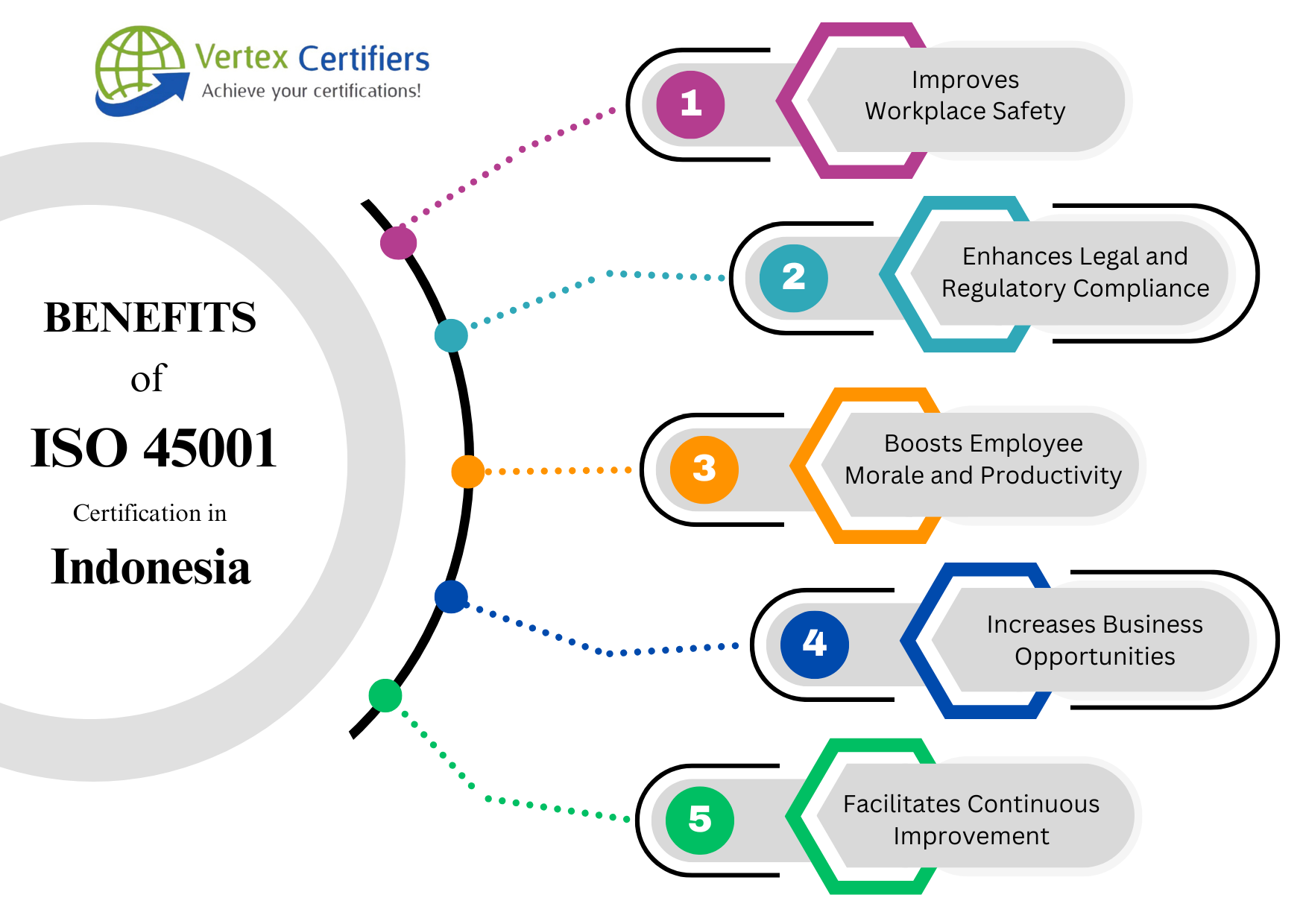
- Enhanced Workplace Safety: ISO 45001 certification helps organizations systematically identify and mitigate workplace hazards, reducing the risk of injuries, illnesses, and accidents. This leads to a safer working environment for employees, which can improve morale and productivity.
- Regulatory Compliance: Achieving ISO 45001 certification ensures that organizations comply with local and international health and safety regulations. This helps avoid legal penalties and demonstrates a commitment to adhering to stringent safety standards.
- Risk Management and Prevention: The standard emphasizes proactive risk management and prevention strategies, enabling organizations to identify potential hazards before they cause harm. This approach not only protects employees but also reduces the likelihood of costly incidents and downtime.
- Improved Reputation and Marketability: ISO 45001 certification enhances an organization’s reputation by showcasing its commitment to high standards of health and safety. This can attract clients, investors, and partners who prioritize safety and corporate responsibility, giving the organization a competitive edge in the market.
How to get ISO 45001 certification in Indonesia?

1. Initial Assessment (Gap Analysis)
- Purpose: Evaluate current occupational health and safety (OH&S) practices against ISO 45001 requirements.
- Outcome: Identify gaps and areas needing improvement.
2. Planning
- Scope and Objectives: Define the scope of the OH&S management system and set clear objectives and targets aligned with organizational goals.
- Policy Development: Create an OH&S policy that reflects the organization’s commitment to health and safety.
3. Training and Awareness
- Training Programs: Train employees on ISO 45001 standards, OH&S procedures, and their specific roles within the system.
- Awareness Campaigns: Increase awareness about the importance of health and safety and the benefits of certification.
4. Documentation
- System Documentation: Develop necessary documentation, including policies, procedures, and controls required by ISO 45001.
- Record Keeping: Establish a system for maintaining records of OH&S activities and compliance.
5. Implementation
- Process Implementation: Implement the OH&S management system according to the documented procedures and controls.
- Monitoring and Measurement: Establish mechanisms to monitor and measure OH&S performance against set objectives and targets.
6. Internal Audit
- Audit Planning: Conduct internal audits to evaluate the effectiveness of the OH&S management system and identify non-conformities.
- Corrective Actions: Address identified non-conformities and implement corrective actions to improve the system.
7. Management Review
- Review Meetings: Hold regular management review meetings to assess the performance of the OH&S management system, review audit findings, and make decisions on necessary improvements.
- Continual Improvement: Ensure continuous improvement by updating objectives, policies, and procedures as needed.
8. Certification Audit
- Stage 1 Audit: The certification body reviews the OH&S management system documentation and assesses readiness for the certification audit.
- Stage 2 Audit: An on-site audit by the certification body to verify the implementation and effectiveness of the OH&S management system.
- Non-Conformities: Address any non-conformities identified during the certification audit.
9. Certification and Surveillance
- Certification: If compliant, the organization receives ISO 45001 certification.
- Surveillance Audits: Regular surveillance audits by the certification body to ensure ongoing compliance and continual improvement.
- Re-certification: Periodic re-certification audits to maintain the certification status.
Benefits of ISO 45001 certification in Indonesia
· Enhanced Occupational Health and Safety:
- Risk Reduction: ISO 45001 helps organizations systematically identify and mitigate workplace hazards, leading to a reduction in accidents, injuries, and illnesses.
- Healthier Work Environment: Promotes a safer and healthier work environment, boosting employee morale and productivity.
· Regulatory Compliance:
- Legal Adherence: Ensures that organizations comply with Indonesian health and safety regulations, minimizing the risk of legal penalties and fines.
- Proactive Management: Helps organizations stay ahead of regulatory changes and proactively manage health and safety risks.
· Improved Business Performance:
- Cost Savings: Reducing workplace incidents can lead to significant cost savings by lowering medical expenses, workers’ compensation claims, and downtime.
- Operational Efficiency: Enhances overall operational efficiency through better risk management and safety practices.
· Enhanced Reputation and Market Access:
- Credibility and Trust: Certification demonstrates a commitment to high health and safety standards, enhancing the organization’s credibility and trust among clients, employees, and stakeholders.
- Competitive Advantage: Provides a competitive edge in the marketplace, attracting customers, investors, and business partners who prioritize safety and corporate responsibility.
Industry Which Required ISO 45001 certification in Indonesia:
· Manufacturing
- Risks: High potential for workplace injuries due to machinery, equipment, and manual handling.
- Benefits: Reduces accidents, improves safety protocols, and ensures regulatory compliance.
· Construction
- Risks: Significant hazards related to falls, heavy equipment, and site conditions.
- Benefits: Enhances worker safety, reduces incidents, and complies with stringent safety regulations.
· Mining and Quarrying
- Risks: Exposure to hazardous materials, heavy machinery, and confined spaces.
- Benefits: Improves safety measures, ensures regulatory adherence, and reduces risk of serious incidents.
· Oil and Gas
- Risks: High risk of explosions, fires, and exposure to toxic substances.
- Benefits: Enhances safety procedures, mitigates risks, and ensures compliance with industry regulations.
· Transport and Logistics
- Risks: Potential for accidents related to vehicle operation and manual handling.
- Benefits: Improves safety practices, reduces accident rates, and ensures regulatory compliance.
· Healthcare
- Risks: Exposure to infectious diseases, hazardous chemicals, and physical strain.
- Benefits: Enhances safety protocols, reduces occupational hazards, and ensures compliance with health regulations.
· Chemical and Petrochemical
- Risks: Handling of hazardous materials and risk of chemical spills and explosions.
- Benefits: Improves safety management, reduces risks, and ensures compliance with safety standards.
· Food and Beverage
- Risks: Risks associated with food processing machinery and handling of hot or cold environments.
- Benefits: Enhances safety measures, reduces workplace incidents, and ensures compliance with safety regulations.
· Utilities (Electricity, Water, Gas)
- Risks: High-risk environments due to electrical hazards, water treatment chemicals, and gas leaks.
- Benefits: Improves safety protocols, reduces risks, and ensures regulatory compliance.
· Construction Materials
- Risks: Heavy lifting, machinery operation, and exposure to dust and chemicals.
- Benefits: Enhances worker safety, improves handling procedures, and ensures compliance with safety standards.
How to apply for ISO 45001 certification in Indonesia?
Thinking about how to apply for ISO 45001 certification in Indonesia!!
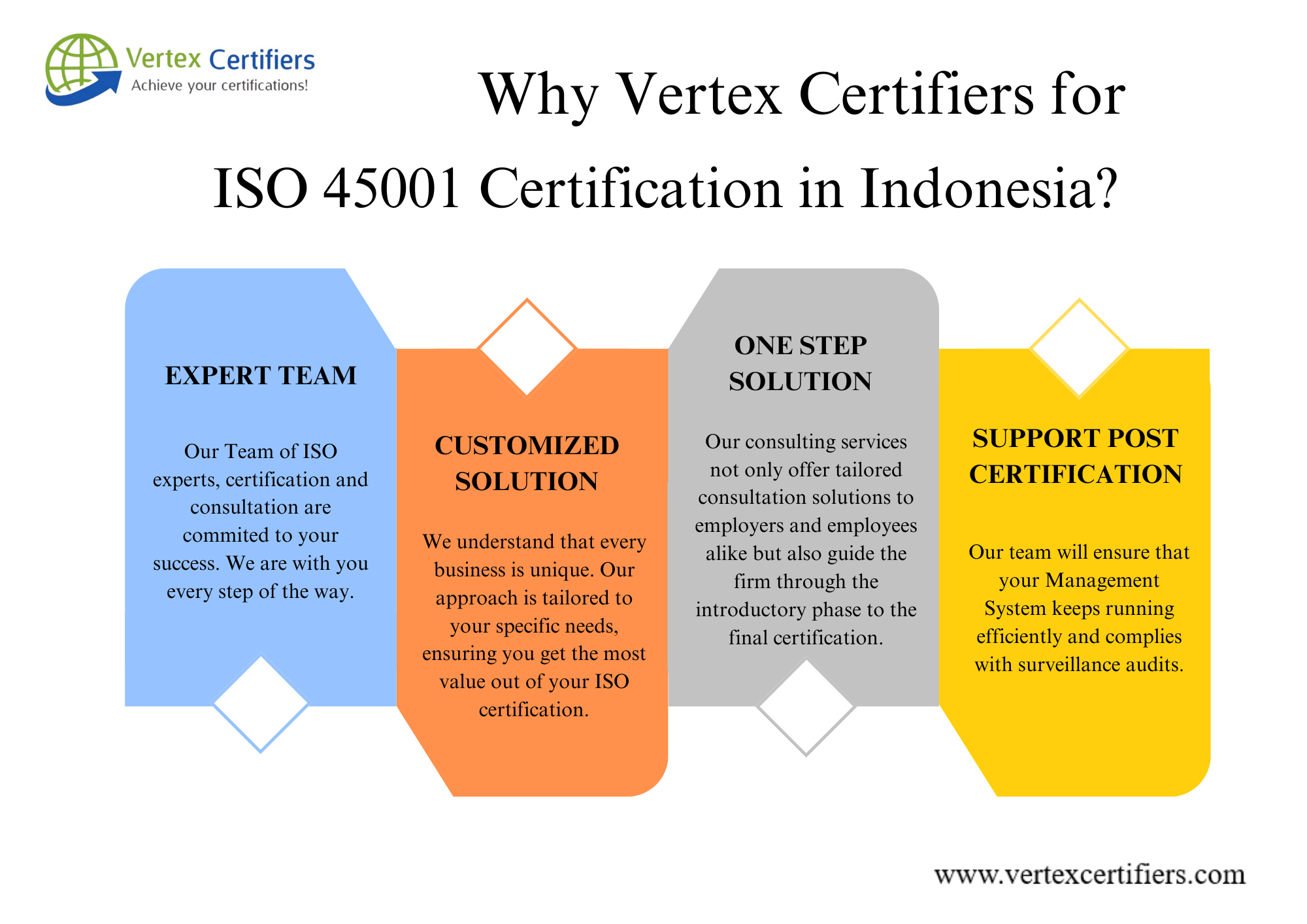
Vertex Certifiers is the solutions for that. We provide the best ISO Certification consultants who are expertise in the respective industry to help a company to achieve the ISO Certification. We will help to comply the International Standard in an organization in order to achieve the certification.
Please drop an email to info@vertexcertifiers.com with your requirements or please fill our fully oriented application form. Our expert will revert you back at the earliest and even provide the free quotation for ISO related costs in Indonesia. If you require more about our consulting methodology, please visit our site www.vertexcertifiers.com
- Professional Consultation – Our highly experienced professionals support you at each step.
- ISO Implementation Strategy, suited to every industry.
- Affordable Pricing – Value-for-money certification without quality compromise.
- Efficient Process – Easy and quick certification.
- Continuous Support – Help for audits, renewals, and compliance management.