
ISO 14001 Certification in Malaysia:
ISO 14001 Certification in Malaysia, Vertex Certifiers is a leading ISO consulting and certification support firm providing end-to-end ISO 14001 Environmental Management System services across Malaysia, including Kuala Lumpur, Selangor, Penang, Johor Bahru, Melaka, Negeri Sembilan, Perak, Kedah, Sabah, and Sarawak. We support organizations across manufacturing, construction, oil & gas, logistics, energy, and service sectors with complete assistance from gap analysis, EMS documentation, implementation, employee training, internal audit, and certification audit coordination through to final ISO 14001 certificate issuance. With practical, industry-focused expertise and cost-effective solutions, Vertex Certifiers helps Malaysian businesses achieve environmental compliance, sustainability objectives, and internationally recognized ISO 14001 certification efficiently.
Environmental responsibility has become a strategic priority for Malaysian businesses. Increasing regulations by the Department of Environment (DOE), pressure from global supply chains, and sustainability expectations from investors and consumers are compelling businesses to adopt greener operations.
ISO 14001 Certification in Malaysia provides organizations with a structured framework to identify, manage, and minimize their environmental impacts. This internationally recognized standard for an Environmental Management System (EMS) applies to all industries and business sizes — from manufacturing and construction to energy and services.
By implementing ISO 14001, companies not only comply with the Environmental Quality Act 1974 but also demonstrate leadership in sustainable business practices, operational efficiency, and environmental protection.
What is ISO 14001 Certification?
ISO 14001 is part of the ISO 14000 family of environmental management standards developed by the International Organization for Standardization (ISO). It specifies the requirements for establishing an Environmental Management System (EMS) that helps organizations systematically manage their interactions with the environment.
The standard focuses on identifying environmental aspects, assessing their potential impacts, maintaining compliance with laws, and promoting continuous environmental improvement.
An effective EMS built on ISO 14001 principles enables organizations to:
- Reduce waste, emissions, and pollution.
- Use natural resources efficiently.
- Prevent environmental incidents.
- Achieve consistent regulatory compliance.
- Demonstrate corporate environmental responsibility.
Ultimately, ISO 14001 helps businesses transition from reactive compliance to proactive environmental stewardship — a critical factor in today’s sustainability-driven markets.
Why ISO 14001 is Important in Malaysia
Malaysia’s rapid industrial growth has brought attention to environmental management challenges such as waste disposal, carbon emissions, and resource conservation. As the pressure for sustainable development increases, ISO 14001 certification serves as a strategic advantage that aligns operational objectives with environmental performance.
Key reasons why ISO 14001 is crucial for Malaysian businesses include:
- Regulatory Compliance:
The certification ensures alignment with DOE Malaysia guidelines and the Environmental Quality Act 1974, minimizing legal risks. - ESG and Sustainability Reporting:
Companies increasingly integrate Environmental, Social, and Governance (ESG) frameworks into reporting. ISO 14001 supports transparent sustainability metrics. - Customer and Investor Trust:
Clients and investors value certified organizations that can demonstrate proactive environmental management practices. - Export and Tender Eligibility:
Many global buyers, especially in Europe and Asia, prefer suppliers certified to international standards like ISO 14001. - Risk and Cost Reduction:
A structured EMS helps prevent costly incidents, fines, and inefficiencies related to resource use and waste management.
By achieving ISO 14001 certification, Malaysian organizations position themselves as environmentally conscious, compliant, and competitive in global markets.
Process to obtain ISO 14001 Certification in Malaysia
The ISO 14001 certification process in Malaysia involves several key steps that ensure organizations are ready to demonstrate compliance with the EMS standard:
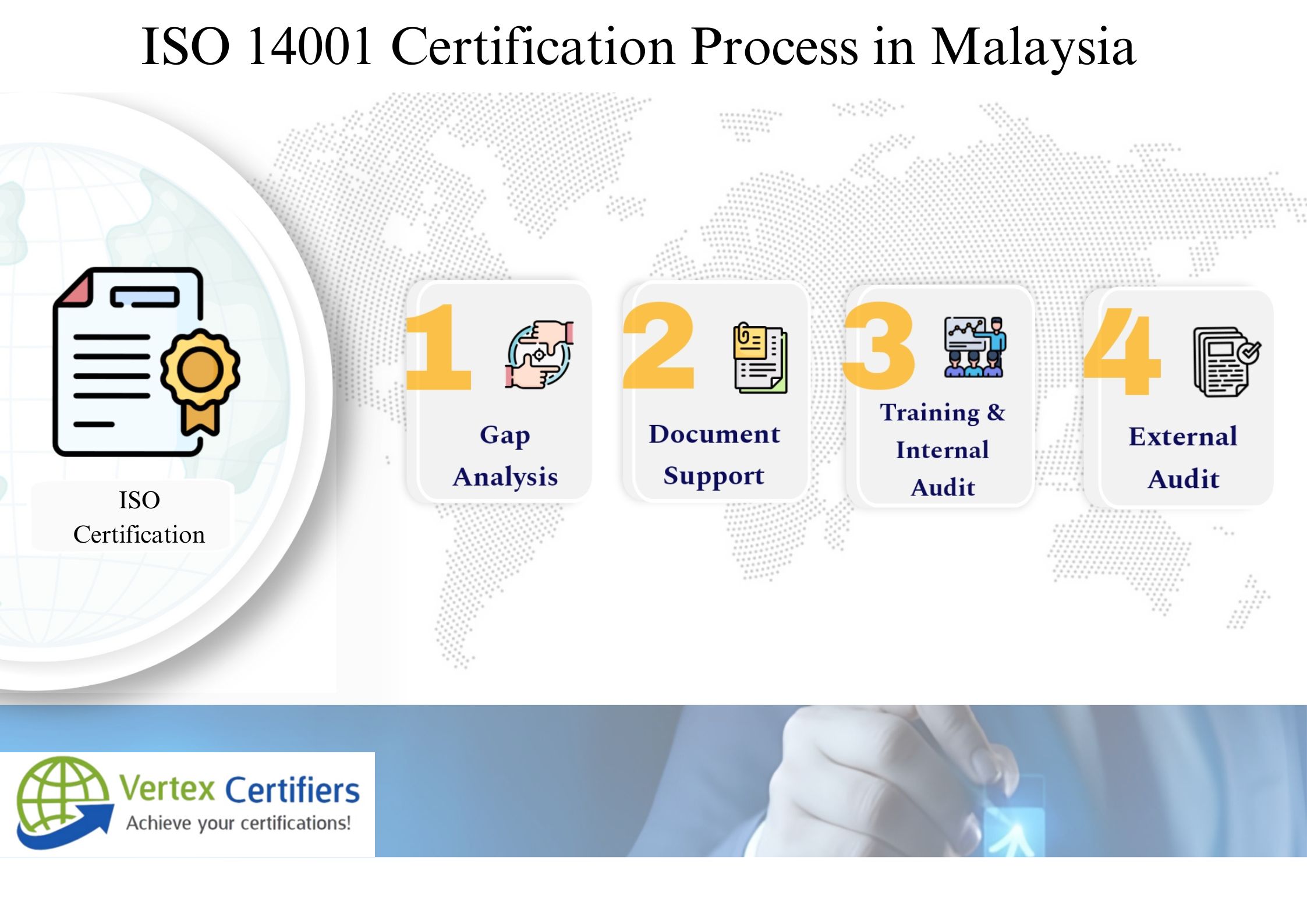
1. Gap Analysis
The journey begins with a preliminary review to identify existing gaps between current environmental practices and ISO 14001 requirements. It helps define an action plan for implementation.
2. EMS Documentation
Develop an environmental policy, objectives, registers, and procedures addressing compliance, operational controls, and continuous improvement.
3. Implementation and Training
Put the EMS into action across departments. Conduct training programs to build awareness among employees about environmental responsibilities and practices.
4. Internal Audit
Perform thorough audits to evaluate how well the system functions and to identify improvement areas before external assessment.
5. Management Review
Top management reviews performance metrics, audit findings, and improvement opportunities to reinforce commitment and leadership.
6. Certification Audit
Carried out by an accredited certification body in two stages: Stage 1 (document review) and Stage 2 (on-site evaluation). Successful completion results in ISO 14001 certification.
The certificate remains valid for three years, with annual surveillance audits ensuring that the EMS continues to meet ISO 14001 standards.