ISO 22000 Certification in Kenya:
ISO 22000 Certification in Kenya, Vertex Certifiers is a leading ISO and food safety certification firm, offering comprehensive end-to-end services for ISO 22000 and HACCP Certification in Kenya. With extensive expertise in Food Safety Management Systems (FSMS) and hazard analysis, Vertex Certifiers helps organizations safeguard food quality, minimize risks, and comply with international standards. Our services cover all major Kenyan cities, including Nairobi, Mombasa, Kisumu, Eldoret, Nakuru, and Thika, enabling food businesses across the country to enhance operational safety, gain consumer trust, and expand into both local and global markets.
In today’s globalized food market, safety and quality are essential to maintaining consumer trust and business competitiveness. ISO 22000 Certification serves as the international standard for Food Safety Management Systems (FSMS), helping organizations control and reduce food safety risks through structured management practices. Similarly, HACCP (Hazard Analysis and Critical Control Points) is a preventive system designed to identify, evaluate, and control hazards throughout the food production and supply chain.
Both ISO 22000 and HACCP Certifications in Kenya help organizations maintain strict food safety standards, minimize risks, and build consumer trust. With the rising demand for high-quality food in both domestic and export markets, these certifications have become a necessity for food businesses operating across Kenya’s cities such as Nairobi, Mombasa, Kisumu, Eldoret, and Nakuru.
Vertex Certifiers offers end-to-end certification solutions, from consultation and documentation to audit and certification, ensuring your organization achieves full compliance with global food safety standards.
Why Food Safety Certification is Important for Kenyan Businesses
Ensuring safe food handling and production is critical for the growth and sustainability of Kenya’s food sector. ISO 22000 and HACCP certification play a major role in:
- Maintaining hygienic food handling, processing, and manufacturing practices.
- Reducing the risk of contamination, foodborne diseases, and costly product recalls.
- Enhancing consumer confidence and strengthening brand reputation.
- Meeting the legal and regulatory requirements established by the Kenyan government and relevant international authorities.
- Facilitating entry into export markets that require certified food safety systems—for example, the EU, Middle East, and North America.
For Kenyan businesses, especially those involved in agriculture, food processing, hospitality, and exports, certification demonstrates a proactive commitment to consumer health and compliance with best practices.
Process to Obtain ISO 22000 Certification in Kenya
The certification process for ISO 22000 and HACCP in Kenya typically follows a systematic approach to ensure full compliance with international standards:
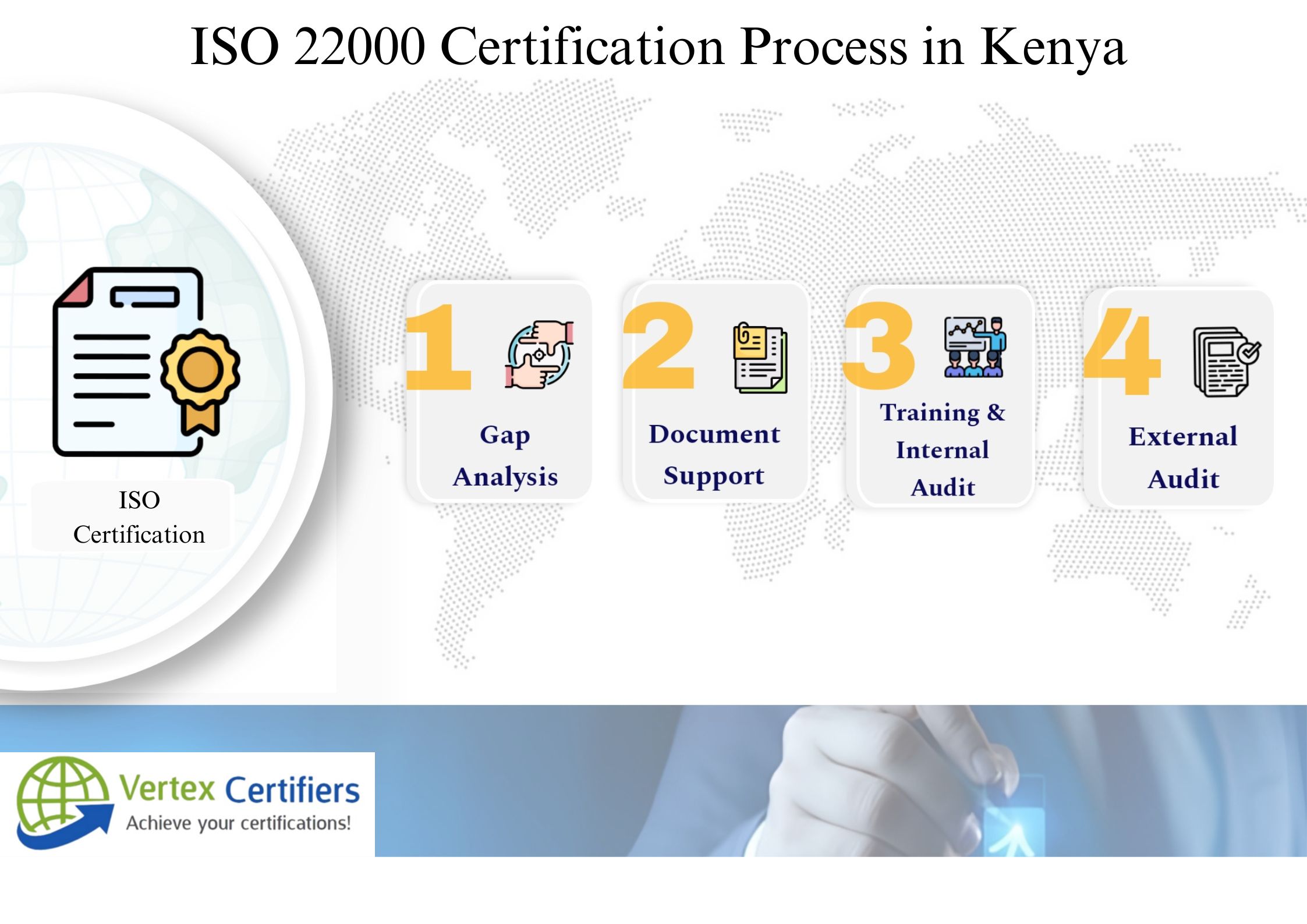
Step 1: Gap Analysis / Pre-assessment
An initial assessment is conducted to identify gaps between your existing practices and the requirements of ISO 22000 or HACCP standards.
Step 2: Documentation & FSMS/HACCP Plan Development
This stage focuses on preparing food safety manuals, procedures, policies, and hazard analysis plans that outline the potential risks and control measures.
Step 3: Implementation
The developed system is implemented across relevant departments. Staff training, process control, and monitoring techniques are introduced to ensure consistency.
Step 4: Internal Audit
An internal audit evaluates the system’s performance and identifies improvement areas before the formal certification audit.
Step 5: Certification Audit
A certified external auditor from an accredited body reviews documentation, interviews employees, and inspects operations to confirm compliance.
Step 6: Certification & Continual Improvement
Upon successful completion, the organization receives the ISO 22000 and/or HACCP certificate. Regular surveillance audits and continuous evaluation help maintain long-term compliance and improvement.
Â
HACCP Certification in Kenya is a globally recognized standard for managing food safety by identifying, evaluating, and controlling hazards throughout the food production process. It is essential for food businesses—including manufacturers, processors, restaurants, and exporters—to ensure that their products are safe for consumption and meet regulatory requirements. Implementing HACCP helps Kenyan organizations prevent contamination, reduce foodborne risks, and maintain high-quality standards, thereby enhancing consumer confidence and strengthening brand reputation. With growing demand for safe and hygienic food both locally and internationally, HACCP Certification in Kenya is a critical step for businesses aiming to compete in global markets and comply with international food safety standards.
Our Services
- GMP Certification
- GLP Certification
- GDP Certification
- Halal Certificate
- Organic Certificate
- CE Marking Certification
- RoHS Certification
- FDA Certification
- CMMI Certification
- Cyber Security
- VAPT Testing
- Security Assessment
Our Clients


Industries Benefiting from ISO 22000 & HACCP in Kenya
Food safety management is essential for multiple Kenyan industries involved in the food value chain. The implementation of ISO 22000 and HACCP ensures every stage—from production to consumption—remains safe and controlled.
Food Processing & Manufacturing
Kenya’s fast-growing food processing sector benefits immensely from standardized safety and management systems. Certification supports streamlined production, improved quality control, and compliance with export regulations.
Restaurants & Catering Services
Hospitality businesses use HACCP principles to manage hygiene, storage, and preparation processes effectively, protecting customers from contamination and foodborne illnesses.
Agriculture & Farming
From harvesting to packaging, ISO 22000 helps farmers adopt safe handling, storage, and transportation practices for raw agricultural products.
Exporters & Importers
Global buyers and regulators increasingly demand certified suppliers. Certification ensures Kenyan exporters comply with international safety and labeling norms, facilitating access to new markets.
Retail & Supply Chain
Supermarkets, distributors, and logistics providers maintain food safety throughout the supply chain, protecting product integrity and consumer trust.
Benefits of ISO 22000 & HACCP Certification in Kenya
- Enhanced food safety management and minimized risk of contamination.
- Compliance with both Kenyan food authority regulations and international import requirements.
- Greater consumer trust, leading to increased customer retention and brand differentiation.
- Improved operational efficiency through structured management systems.
- Easier market entry for exports, thanks to globally recognized certification.
- Ongoing process improvement enabled by regular audits, performance monitoring, and corrective actions.
These benefits make certification not only a compliance requirement but also a strategic investment for Kenya’s food sector.
Why Choose Vertex Certifiers
Vertex Certifiers is a trusted certification consulting partner offering complete ISO 22000 and HACCP certification solutions in Kenya. The organization provides expert services to help clients achieve and maintain compliance from start to finish.
- End-to-end guidance: From documentation preparation and implementation training to certification audit coordination.
- Experienced auditors: Certified professionals with extensive knowledge of food safety standards.
- Nationwide coverage: Services available in major cities such as Nairobi, Mombasa, Kisumu, Eldoret, and Nakuru.
- Cost-effective solutions: Flexible pricing models tailored to the size and scope of your business.
- Continuous support: Assistance for ongoing FSMS maintenance, internal audits, and renewal of certification.
By partnering with Vertex Certifiers, businesses can confidently demonstrate their commitment to food safety while ensuring smooth operations and compliance.
How to Get Started
Getting ISO 22000 or HACCP Certification in Kenya is a straightforward process when you have professional support.
- Contact Vertex Certifiers for a free consultation to understand your business requirements.
- Choose between online or onsite support for documentation, implementation, and training.
- Receive step-by-step assistance for system setup, internal audits, and certification readiness.
- Complete the external certification audit and begin your journey toward food safety excellence.
To start your certification process or to request a quotation, reach out to Vertex Certifiers at contact@vertexcertifiers.com.
Conclusion
Food safety is not just a regulatory requirement but a vital element in building consumer confidence and achieving sustainable business growth. With rising health awareness and expanding export opportunities, obtaining ISO 22000 and HACCP Certifications in Kenya has become an essential step for any organization handling food products.
These certifications help businesses strengthen internal processes, reduce risks, and comply with both local and international regulations. By adopting ISO 22000 and HACCP frameworks, Kenyan businesses can secure a competitive advantage, ensure consistent product safety, and demonstrate their commitment to excellence in food handling and production.
Vertex Certifiers stands ready to support organizations across Kenya—from Nairobi to Mombasa, Kisumu, Eldoret, and Nakuru—in implementing robust food safety systems that protect consumers and enhance brand value.
ISO 22000 Certification in Kenya - Cities Wise
ISO 22000 Certification in Nairobi
Nairobi, Kenya’s capital and commercial hub, hosts a wide range of food processing, manufacturing, and export businesses. ISO 22000 Certification in Nairobi helps organizations implement robust Food Safety Management Systems (FSMS), ensure compliance with local and international food safety regulations, and enhance consumer trust. Companies adopting ISO 22000 here can streamline operations, minimize foodborne risks, and gain a competitive advantage in both domestic and global markets.
ISO 22000 Certification in Mombasa
Mombasa, Kenya’s key port city, is central to logistics, shipping, and the food export industry. ISO 22000 Certification in Mombasa ensures that food businesses maintain consistent safety standards, comply with international regulations, and protect consumers from contamination, while facilitating smooth trade through local and global markets.
ISO 22000 Certification in Kisumu
Kisumu, a growing commercial and industrial hub in western Kenya, benefits from ISO 22000 Certification by standardizing food production processes and reducing safety risks. Certification enables local food processing and agricultural businesses to adopt international best practices, safeguard consumer health, and enhance brand credibility.
ISO 22000 Certification in Nakuru
Nakuru, a rapidly expanding industrial and agricultural city, hosts numerous food processing and retail businesses. ISO 22000 Certification in Nakuru helps organizations implement effective food safety management systems, minimize hazards, and comply with both Kenyan and global food safety standards, ensuring high-quality and safe food products for consumers.
Want to get ISO 22000 Certification for your food business in Kenya? Reach out to us today!
Email Us Contact Us