
ISO 22000 Certification in Sri Lanka:
ISO 22000 Certification in Sri Lanka, Vertex Certifiers provides end-to-end ISO 22000 certification services in Sri Lanka, supporting food businesses from initial gap analysis to final certification through a practical, compliant, and time-bound approach. Our experienced food safety consultants work closely with organizations across Colombo, Kandy, Galle, Jaffna, Negombo, Kurunegala, Anuradhapura, and major food processing & BOI zones, ensuring full alignment with ISO 22000:2018 requirements. Along with ISO 22000 (Food Safety Management System), we also offer complete consulting and certification support for ISO 9001 (Quality Management), ISO 14001 (Environmental Management), ISO 45001 (Occupational Health & Safety), FSSC 22000, HACCP, GMP, and Integrated Management Systems (IMS)—making Vertex Certifiers a single trusted partner for food safety and ISO certification in Sri Lanka.
Sri Lanka’s agri-food sector powers its economy, with tea, spices, seafood, and coconut exports generating billions annually. ISO 22000:2018 certification, the global Food Safety Management System (FSMS), ensures safety across the food chain amid rising contamination risks and stringent import regulations.
Food safety is critical in Sri Lanka, where the Food Act No. 26 and Export Inspection Department enforce compliance. ISO 22000 certification in Sri Lanka protects consumers, secures export markets (EU, US, Middle East), and boosts BOI incentives.
This standard applies universally—from tea plantations in Nuwara Eliya to seafood processors in Negombo, covering farmers, manufacturers, logistics, and retailers.
What Is ISO 22000 Certification?
ISO 22000 certification establishes a comprehensive FSMS integrating HACCP principles with management system elements. Its scope spans all food chain stages, from production to consumption.
It builds on HACCP (Hazard Analysis Critical Control Points), Prerequisite Programs (PRPs like GMP/GHP), and Operational Prerequisite Programs (OPRPs). Unlike standalone HACCP, ISO 22000 adds leadership, communication, and continual improvement.
Globally recognized by GFSI and adopted by 40,000+ organizations, ISO 22000:2018 emphasizes risk-based thinking, making it ideal for Sri Lanka’s diverse food exports.
Who Needs ISO 22000 Certification in Sri Lanka?
Sri Lanka’s food industry demands ISO 22000 certification. Key sectors include:
- Food manufacturers & processors: Tea factories (Ceylon Tea Board), spices (cinnamon, pepper), coconut (desiccated, oil), seafood (prawns, tuna), dairy.
- Food exporters and BOI-approved companies: Firms targeting EU REACH, US FDA, or Halal markets.
- Restaurants, hotels, and catering services: Colombo 5-star hotels, tourist resorts in Galle.
- Cold storage, warehousing, and logistics providers: Reefer transport in Colombo Port.
- Food packaging and labeling companies: Flexible packaging for exports.
- Animal feed manufacturers: Poultry and aquaculture feed mills.
Even SMEs in spice processing or rice milling benefit from mandatory buyer requirements.
How to get ISO 22000 Certification in Sri Lanka
The ISO 22000 certification procedure in Sri Lanka follows a proven FSMS roadmap:
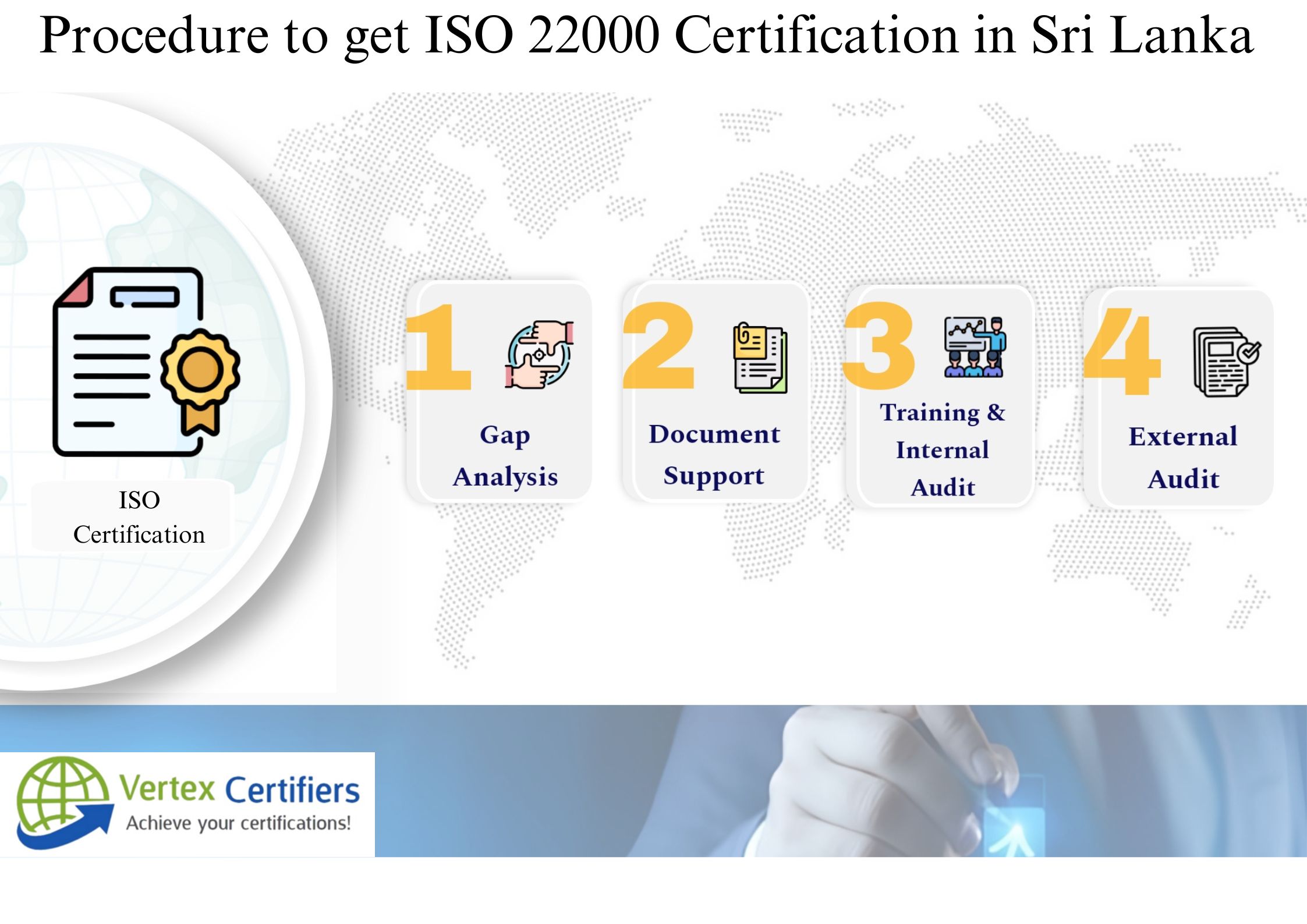
- Gap Analysis & Food Safety Risk Assessment (1 week): Identify gaps vs. ISO 22000:2018.
- Scope Definition & FSMS Planning: Define boundaries (e.g., tea processing only).
- PRPs & HACCP Plan Development: Implement GMP/GHP, hazard analysis.
- Documentation & Record Creation: Food Safety Manual, SOPs.
- FSMS Implementation & Staff Training: Hands-on hygiene training.
- Internal Audit & Management Review: Mock audits, leadership review.
- Certification Audit:
- Stage 1: Documentation review.
- Stage 2: On-site verification.
- ISO 22000 Certificate Issuance: 3-year validity, annual surveillance.