Procedure and Cost for ISO Certification in Kenya:
Procedure and Cost for ISO Certification in Kenya, Vertex Certifiers is a leading ISO certification and consultancy firm providing expert guidance to businesses across Kenya. With extensive experience in Nairobi, Mombasa, Kisumu, and Eldoret, we assist organizations in achieving internationally recognized ISO standards efficiently and reliably.
Our team helps companies navigate the entire certification journey—from selecting the appropriate standard and preparing documentation to guiding them through internal and external audits. Vertex Certifiers supports a wide range of ISO standards, including ISO 9001, ISO 14001, ISO 27001, ISO 45001, ISO 22000, ISO 50001, ISO 13485, ISO 21001, and ISO 22301, ensuring Kenyan businesses meet industry, regulatory, and export requirements.
ISO certification is a globally recognized standard that signifies an organization’s adherence to quality, safety, environmental, and management best practices. For businesses in Kenya, obtaining ISO certification signals credibility, operational excellence, and compliance with international standards, which are essential for building customer trust and competitive advantage. ISO certification opens doors to global markets, enhances reputation, and increases eligibility for government and private tenders.
The process, while rigorous, is systematic and achievable with the right knowledge and preparation. Understanding the ISO certification procedure in Kenya, including typical costs and steps involved, can help businesses approach certification confidently and efficiently. Keywords such as ISO certification Kenya, ISO cost Kenya, and ISO certification procedure Kenya are crucial for businesses aiming to improve online visibility and reach potential clients in need of certification services.
Common ISO Standards in Kenya
Kenyan organizations pursue a variety of ISO standards to address different operational needs and comply with local and international requirements. The most common ISO standards targeted by Kenyan businesses include:
- ISO 9001:Â Quality Management Systems, focusing on enhancing customer satisfaction and continuous improvement.
- ISO 14001:Â Environmental Management Systems, aimed at reducing environmental impact.
- ISO 27001:Â Information Security Management, ensuring protection of data and information assets.
- ISO 45001:Â Occupational Health and Safety Management, improving workplace safety.
- ISO 22000:Â Food Safety Management, critical for food industry companies to ensure safe production and handling.
These standards are essential for compliance, market expansion, and enhancing operational efficiencies in Kenya’s competitive business environment.
Procedure and Cost for ISO Certification in Kenya
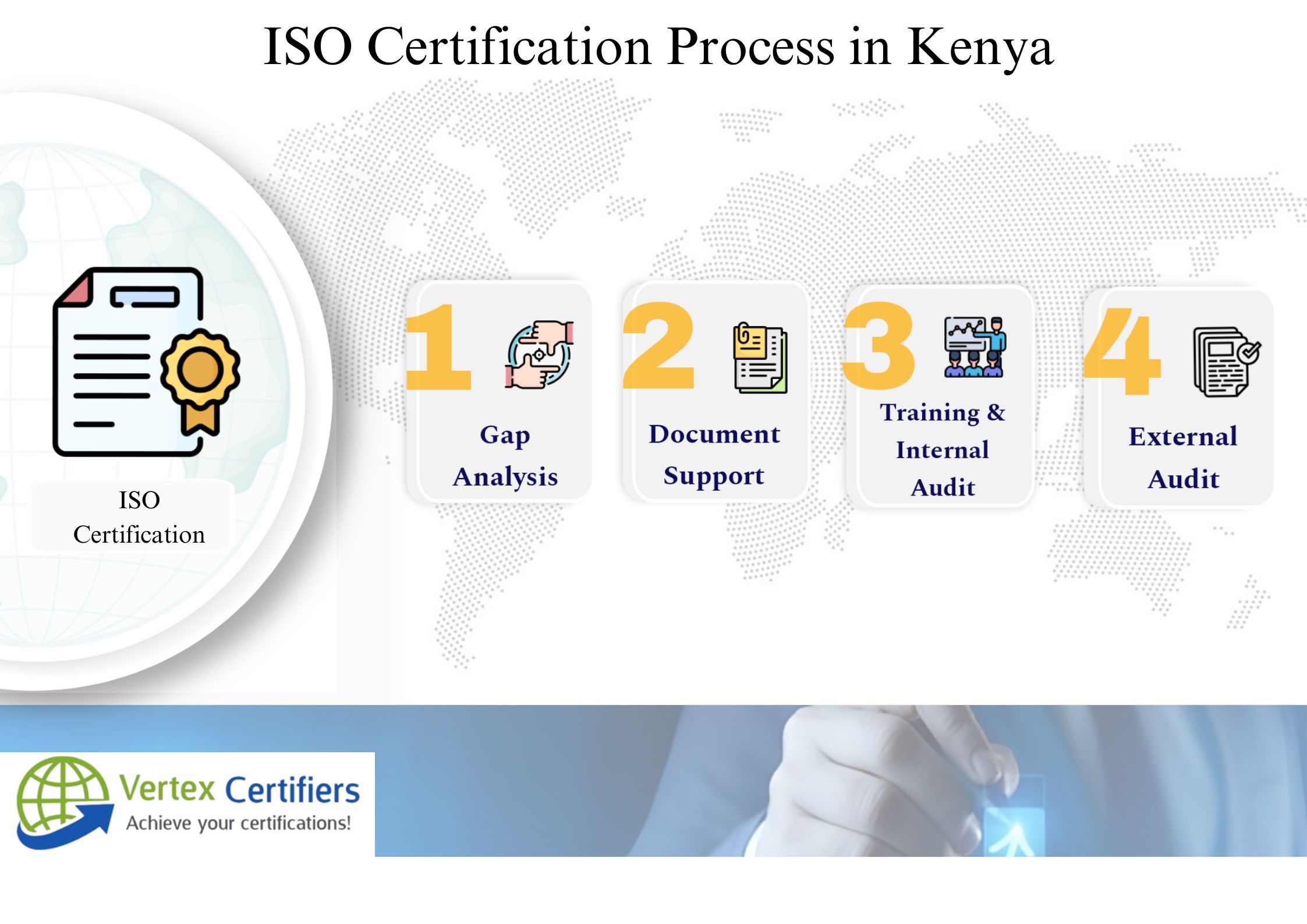
Obtaining ISO certification in Kenya involves a structured process that ensures your organization meets international standards for quality, safety, or information security. The procedure typically includes selecting the appropriate ISO standard, understanding the requirements, preparing your organization, conducting internal audits, choosing an accredited certification body, and completing the certification audit. Costs for ISO certification vary depending on factors such as the chosen standard, the size and complexity of the organization, and whether you engage an ISO consultancy. By following a systematic approach and planning effectively, Kenyan businesses can achieve certification efficiently, enhance credibility, and gain recognition both locally and internationally.
Our Services
- GMP Certification
- GLP Certification
- GDP Certification
- Halal Certificate
- Organic Certificate
- CE Marking Certification
- RoHS Certification
- FDA Certification
- CMMI Certification
- Cyber Security
- VAPT Testing
- Security Assessment
Our Clients


ISO Certification in Kenya: Cost, Procedure, and Step-by-Step Guide
ISO certification is a globally recognized standard that signifies an organization's commitment to quality, safety, environmental responsibility, and best management practices. For Kenyan businesses, gaining ISO certification enhances credibility, ensures compliance with international standards, and boosts eligibility for competitive tenders. It opens doors to local and international markets, leading to improved customer trust and operational excellence. In this guide, you will learn about the ISO certification procedure in Kenya, typical costs involved, and the key steps you need to follow to achieve certification successfully. Key topics covered include ISO certification Kenya, ISO cost Kenya, and ISO certification procedure Kenya.
Common ISO Standards in Kenya
- ISO 9001 - Quality Management Systems
- ISO 14001 - Environmental Management
- ISO 27001 - Information Security Management
- ISO 45001 - Occupational Health and Safety
- ISO 22000 - Food Safety Management
Kenyan organizations typically pursue these standards to meet compliance, market demands, and export requirements.
Procedure to Get ISO Certification in Kenya
Step 1 – Identify the Relevant ISO Standard
Begin by selecting the ISO standard that best aligns with your industry sector and organizational goals. For example, manufacturing and service companies often pursue ISO 9001 to establish quality management systems, while technology firms might prefer ISO 27001 for information security. Each ISO standard focuses on compliance and improvements specific to different business processes.
Step 2 – Understand the Requirements
Gain a thorough understanding of the required documentation, policies, procedures, and record keeping needed to meet the desired ISO standard. This foundational step sets you up for forming a compliant management system ready for audit.
Step 3 – Prepare Your Organization
Conduct a gap analysis to identify areas that do not yet comply with ISO requirements. Develop, document, and implement workflows, policies, and controls accordingly. Train your staff on ISO standards and internal procedures to ensure organizational readiness for certification audits.
Step 4 – Conduct Internal Audit
Perform internal audits to verify adherence to ISO standards. Identify non-conformities and remedy them through corrective actions. This internal review prepares your organization for the official certification audit.
Step 5 – Choose a Certification Body
Select an accredited certification body recognized by Kenya Bureau of Standards (KEBS) or international accreditation authorities. The chosen body will carry out the certification audit and, upon success, issue your ISO certificate.
Step 6 – Certification Audit
Stage 1: Document review to assess your organization's readiness.
Stage 2: On-site audit to verify process implementation.
Address any non-conformities detected before certification is granted.
Step 7 – Achieve Certification & Maintain Compliance
After successfully passing the audits, receive your ISO certificate valid for three years. Maintain compliance through regular surveillance audits and commit to continuous improvement to ensure certification retention.
Cost of ISO Certification in Kenya
The cost of obtaining ISO certification in Kenya varies widely depending on several factors:
- Type of ISO Standard: For example, ISO 9001 is generally less costly than more complex standards like ISO 27001.
- Organization Size: Larger companies with multiple departments or sites face higher audit effort and fees.
- Process Complexity: Highly regulated industries or fragmented processes require more consultancy and audit time.
- Consultancy Fees: Hiring experts such as Vertex Certifiers can enhance preparation but add professional fees.
- Certification Body Fees: Includes document reviews, initial audits, surveillance audits, and eventual recertification.
Typical cost ranges for ISO 9001 certification in Kenya span approximately between $5,000 and $20,000, subject to organizational scope and complexity.
Required Documents for ISO Certification in Kenya
- Quality Manual: Describes your management system structure.
- Policies and Procedures: Detailed operational documentation.
- Audit Records: Internal and external audit reports including corrective action summaries.
- Training Records: Evidence of staff training and competency.
- Management Review Reports: Senior management's review and improvement decisions.
Keeping these documents comprehensive and up to date is essential for certification success.
Tips to Reduce Cost and Streamline the Process
- Hire Experienced ISO Consultants: Their expertise can prevent costly errors and accelerate certification.
- Implement Processes Internally First: Reduce audit findings and revision costs by properly instituting systems beforehand.
- Plan Timelines Realistically: Avoid rushed preparations that can increase expenses and risk non-compliance.
- Keep Documentation Updated: Organized documentation saves time during audits and avoids rework.
Conclusion
Getting ISO certification in Kenya provides your business with enhanced credibility, compliance assurance, and international recognition. By following a structured, step-by-step procedure and planning carefully, your organization can effectively manage costs and streamline the certification process to achieve lasting success.
Want to get ISO certification in Kenya efficiently and cost-effectively?
Email us at info@vertexcertifiers.com or Contact Us to get started today!
