
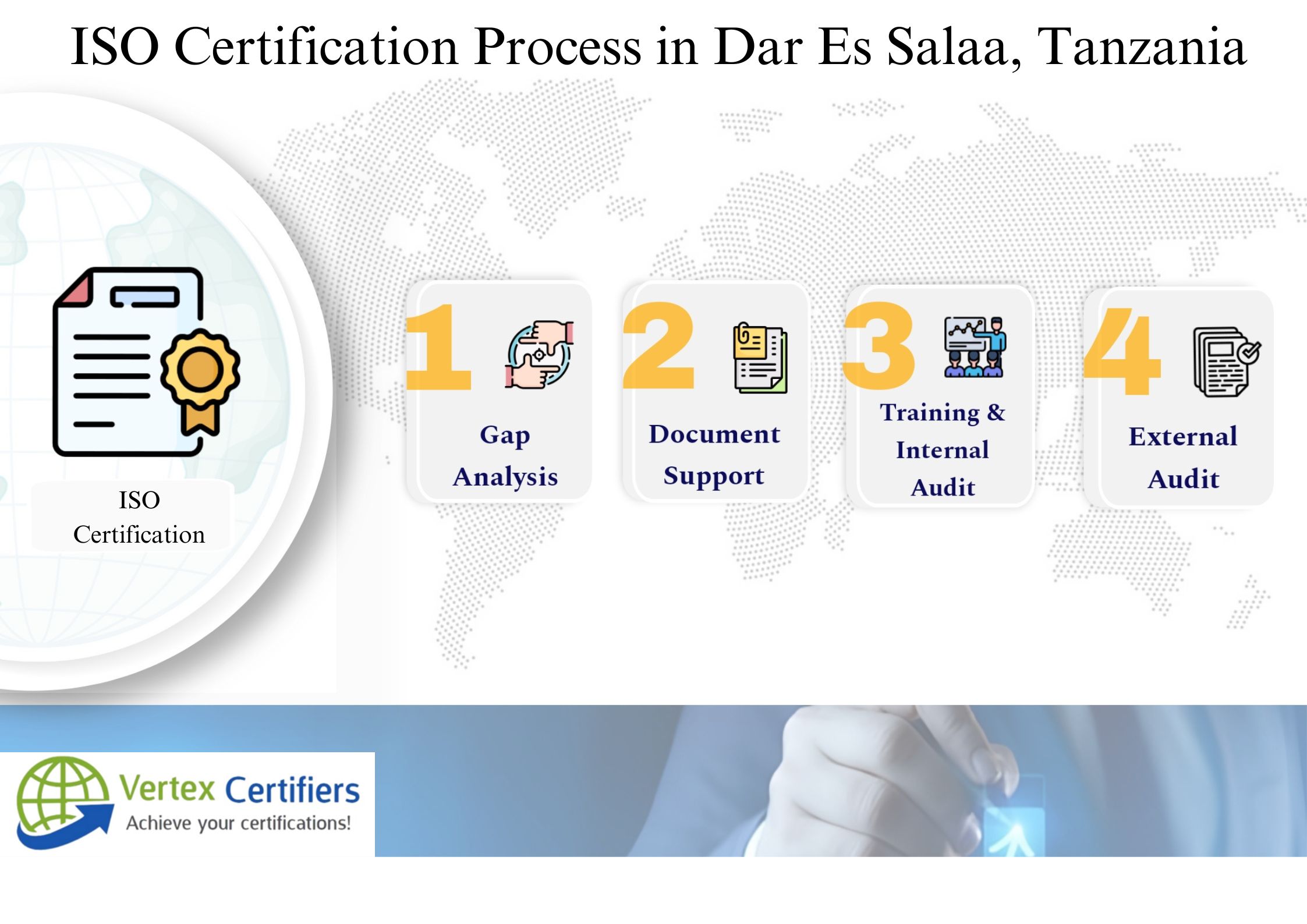
Step-by-Step Procedure to Get ISO Certification in Dar Es Salaam, Tanzania
Achieve globally recognized ISO Certification in Tanzania with a clear, simple, and transparent process designed for businesses based in Dar Es Salaam. This guide explains the complete step-by-step procedure, local requirements, certification body selection, timelines, and cost factors.
Why ISO Certification in Tanzania?
ISO Certification helps Tanzanian companies improve quality, reduce risks, enhance customer trust, and qualify for government or international tenders. In Dar Es Salaam, fast-growing sectors such as logistics, manufacturing, IT, construction, food processing, and healthcare rely on ISO standards to meet global compliance expectations. It also helps businesses gain a competitive edge and improve operational efficiency.
Step-by-Step Procedure for ISO Certification in Dar Es Salaam
Step 1: Select the Required ISO Standard
Start by choosing the standard suitable for your business such as ISO 9001, ISO 14001, ISO 45001, ISO 27001, ISO 22000, or ISO 50001. The choice depends on your industry, customer expectations, and compliance needs.
Step 2: Appoint a Project Leader / ISO Coordinator
Nominate an internal Management Representative or ISO Coordinator to oversee documentation, implementation, training, and communication with auditors.
Step 3: Conduct Gap Analysis
Assess your current system against ISO requirements. A Gap Analysis identifies missing processes, documentation, and action items required for full compliance.
Step 4: Prepare Required Documentation
Develop SOPs, policies, manuals, risk assessments, forms, and process controls. Documentation must be aligned with ISO’s mandatory clauses and operational needs.
Step 5: Implement ISO Practices
Execute the documented procedures, assign responsibilities, maintain records, and ensure all employees are trained on the new system.
Step 6: Conduct Internal Audit
Perform a thorough internal audit of all departments to evaluate compliance. Identify nonconformities and implement corrective actions.
Step 7: Management Review Meeting
Top management evaluates audit results, risks, objectives, effectiveness, and improvements before applying for certification.
Step 8: Stage 1 Audit (Documentation Audit)
The external Certification Body reviews your documentation and readiness. Any gaps identified must be corrected before Stage 2.
Step 9: Stage 2 Audit (Final Certification Audit)
Auditors visit your Dar Es Salaam office/site to verify implementation and effectiveness. If compliant, your organization qualifies for certification.
Step 10: Receive ISO Certificate
After successful audit completion, the Certification Body issues the ISO certificate valid for three years, with annual surveillance audits.
ISO Certification Timeline & Cost in Tanzania
The time required for ISO Certification in Tanzania typically ranges between 30 to 90 days depending on readiness, documentation, and organization size.
The cost varies based on:
- Number of employees
- Number of business locations
- The selected ISO standard
- Scope of work
- Certification Body fees
ISO Consultant Support in Dar Es Salaam
Dar Es Salaam hosts many experienced ISO consultants who assist with documentation, implementation, internal audits, and certification support. Working with experts ensures faster certification and 100% compliance with ISO standards.
FAQ – ISO Certification in Tanzania
- How long does ISO certification take? Usually 1 to 3 months depending on readiness.
- Is ISO certification mandatory in Tanzania? No, but highly recommended for credibility.
- Which ISO standard is best to start with? ISO 9001 is the most widely used baseline standard.


