
ISO 9001 Certification in Mali:
ISO 9001 Certification in Mali, Vertex Certifiers is a global ISO consulting and certification support firm providing end-to-end ISO 9001 implementation services across Mali, covering everything from gap analysis, QMS documentation, employee training, implementation, internal audits, and certification coordination to ensure a smooth and affordable compliance journey. We support organizations of all sizes across major cities such as Bamako, Sikasso, Kayes, Ségou, Mopti, Gao, Timbuktu, and Koutiala, helping manufacturing units, mining operations, logistics companies, NGOs, healthcare providers, and government entities align their processes with ISO 9001:2015 requirements and international best practices. In addition to ISO 9001, Vertex Certifiers also delivers expert consulting for ISO 14001, ISO 45001, ISO 27001, ISO 22000, ISO 22301, ISO 13485, ISO 21001, ISO 41001, ISO 17025, ISO 13485, ISO 37001, ISO 20000-1, and many other standards, enabling organizations in Mali to integrate multiple management systems, enhance credibility, and gain global recognition.
Mali’s economy is evolving rapidly, driven by sectors such as mining, agriculture, logistics, trading, construction, and services. With increasing foreign investments and regional trade, businesses in Mali are now focusing on improving quality, efficiency, and customer satisfaction to meet global standards.
One of the key steps organizations are taking is implementing the ISO 9001:2015 Quality Management System (QMS) — the world’s most recognized standard for quality assurance and process excellence. Across Mali, enterprises are realizing that ISO 9001 certification not only enhances internal performance but also opens access to international markets, builds client confidence, and strengthens their brand reputation.
What is ISO 9001?
ISO 9001:2015 is the international standard that defines the requirements for a Quality Management System (QMS). It provides a framework to ensure consistent product and service delivery that meets customer expectations and complies with regulatory requirements.
The standard emphasizes the following key principles:
- Customer satisfaction through quality consistency.
- Process optimization and standardization.
- Evidence-based decision-making.
- Continual improvement at every operational level.
ISO 9001 is globally recognized and applicable to all industries — from manufacturing and construction to education, healthcare, and non-profits. It enables businesses to demonstrate their commitment to quality and continuous improvement.
Why ISO 9001 is Important for Businesses in Mali
For Mali’s industries competing in domestic and international markets, ISO 9001 certification is an essential business tool.
Here’s why it matters:
- Supports international trade and supplier approval – Many global buyers and development partners require ISO-certified suppliers to ensure quality assurance.
- Enables competitiveness – Mali’s industries can align with international practices, making them more competitive against imported brands.
- Strengthens standardization – Helps streamline operations and reduce inefficiencies.
- Tier-1 compliance recognition – A certified company gains trust from customers, investors, and regulators.
Whether exporting gold, manufacturing textiles, or delivering services, ISO 9001 ensures that organizations in Mali maintain global quality benchmarks.
Step by Step Process to get ISO 9001 Certification in Mali
The ISO 9001 certification process typically involves a structured series of steps that ensure readiness, compliance, and successful certification.
Here’s a detailed breakdown:
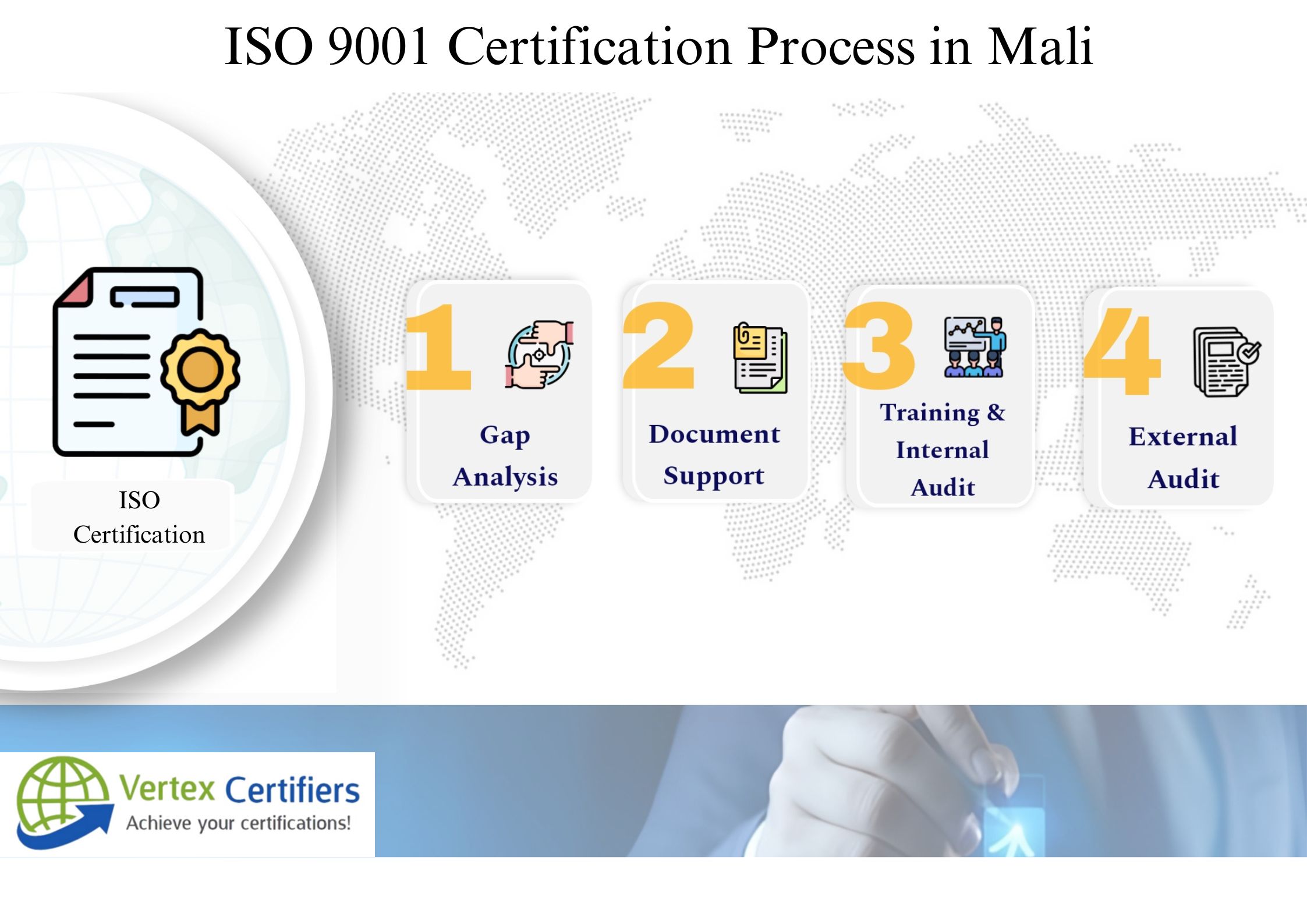
- Gap Analysis & QMS Planning:
The initial step is to compare existing processes with the ISO 9001 requirements to identify areas for improvement. - Documentation Development:
Prepare all required documents such as Quality Policy, Procedures, SOPs, KPIs, records, and registers. - Training & Awareness:
Conduct internal training sessions to ensure employees understand the QMS framework and their roles. - Implementation & Performance Monitoring:
Apply the documented processes across departments, monitor their performance, and gather feedback. - Internal Audit:
Internal auditors review the system to ensure conformity and identify corrections. - Management Review:
Leadership evaluates system performance, audit results, and improvement areas. - Stage 1 Audit (Document Review):
The certification body reviews your documentation for compliance readiness. - Stage 2 Audit (Onsite Certification Audit):
The auditors verify the on-ground implementation of the Quality Management System. - Award of ISO 9001 Certificate:
Upon successful audit completion, the organization receives the ISO 9001:2015 certificate. - Surveillance Audits:
Annual audits for three years to ensure consistent compliance and improvement.
Typical timeline:
Small organizations may complete the process within 45–60 days, while medium and large enterprises may take up to 90 days, depending on their size and complexity.