
ISO 22000 Certification in Malaysia:
ISO 22000 Certification in Malaysia, Vertex Certifiers is a leading ISO consulting and certification support firm providing end-to-end ISO 22000 Food Safety Management System services across Malaysia, including Kuala Lumpur, Selangor, Penang, Johor Bahru, Melaka, Negeri Sembilan, Perak, Kedah, Sabah, and Sarawak. We support food manufacturers, processors, restaurants, catering units, and export-oriented businesses with complete assistance from gap analysis, HACCP-based documentation, implementation, training, internal audit, and certification audit coordination through to final ISO 22000 certificate issuance. With practical, industry-focused expertise and cost-effective solutions, Vertex Certifiers helps Malaysian organizations achieve regulatory compliance, food safety excellence, and internationally recognized ISO 22000 certification efficiently.
Malaysia’s food industry is one of the most vibrant sectors contributing significantly to the national economy. From large-scale manufacturing and processing units to restaurants, catering, and export-oriented businesses, food safety remains a top priority. With increasing scrutiny from the Ministry of Health Malaysia (MOH) and the demands of international trade partners, maintaining high standards of food hygiene and safety has become essential.
That’s where ISO 22000 Certification in Malaysia comes in. This globally recognized Food Safety Management System (FSMS) standard helps organizations manage food safety risks, comply with national and international regulations, and enhance customer trust. It applies to every segment of the food supply chain, ensuring safe food “from farm to fork.”
What is ISO 22000 Certification?
ISO 22000 is an international standard developed by the International Organization for Standardization (ISO) that specifies requirements for a Food Safety Management System (FSMS). It integrates Hazard Analysis and Critical Control Points (HACCP) principles, Prerequisite Programs (PRPs), and risk-based thinking to systematically manage food safety hazards.
The standard emphasizes continuous improvement, effective communication across the supply chain, and leadership commitment. When properly implemented, ISO 22000 ensures that food products are consistently safe for consumption — covering every stage from raw material handling to final distribution.
The main pillars of ISO 22000 include:
- HACCP principles and hazard analysis.
- Systematic control of critical food safety points.
- Preventive programs addressing sanitation, hygiene, and supplier management.
- Ongoing improvement and competence-based training.
Why ISO 22000 Matters in Malaysia
The Malaysian food industry is subject to Food Act 1983 and Food Regulations 1985, which mandate food safety compliance across production and distribution. Besides legal conformity, ISO 22000 gives businesses a competitive edge in the export market.
Key reasons ISO 22000 certification is vital in Malaysia:
- Regulatory Compliance: Aligns business processes with MOH regulations and international food safety norms.
- Export Readiness: Many export destinations such as Singapore, GCC, EU, and other ASEAN nations require certified food safety systems.
- Halal Food Market Growth: Malaysian halal manufacturers benefit by integrating ISO 22000 with Halal requirements, showcasing dual compliance.
- Business Credibility: Certification assures customers, partners, and authorities about consistent food safety practices.
- Risk Prevention: Reduces possibilities of contamination, product recalls, or non-compliance penalties.
Process to get ISO 22000 Certification in Malaysia
Getting certified involves several structured steps to build, implement, and verify compliance with ISO 22000 requirements. The process ensures your organization is audit-ready and capable of maintaining effective food safety controls.
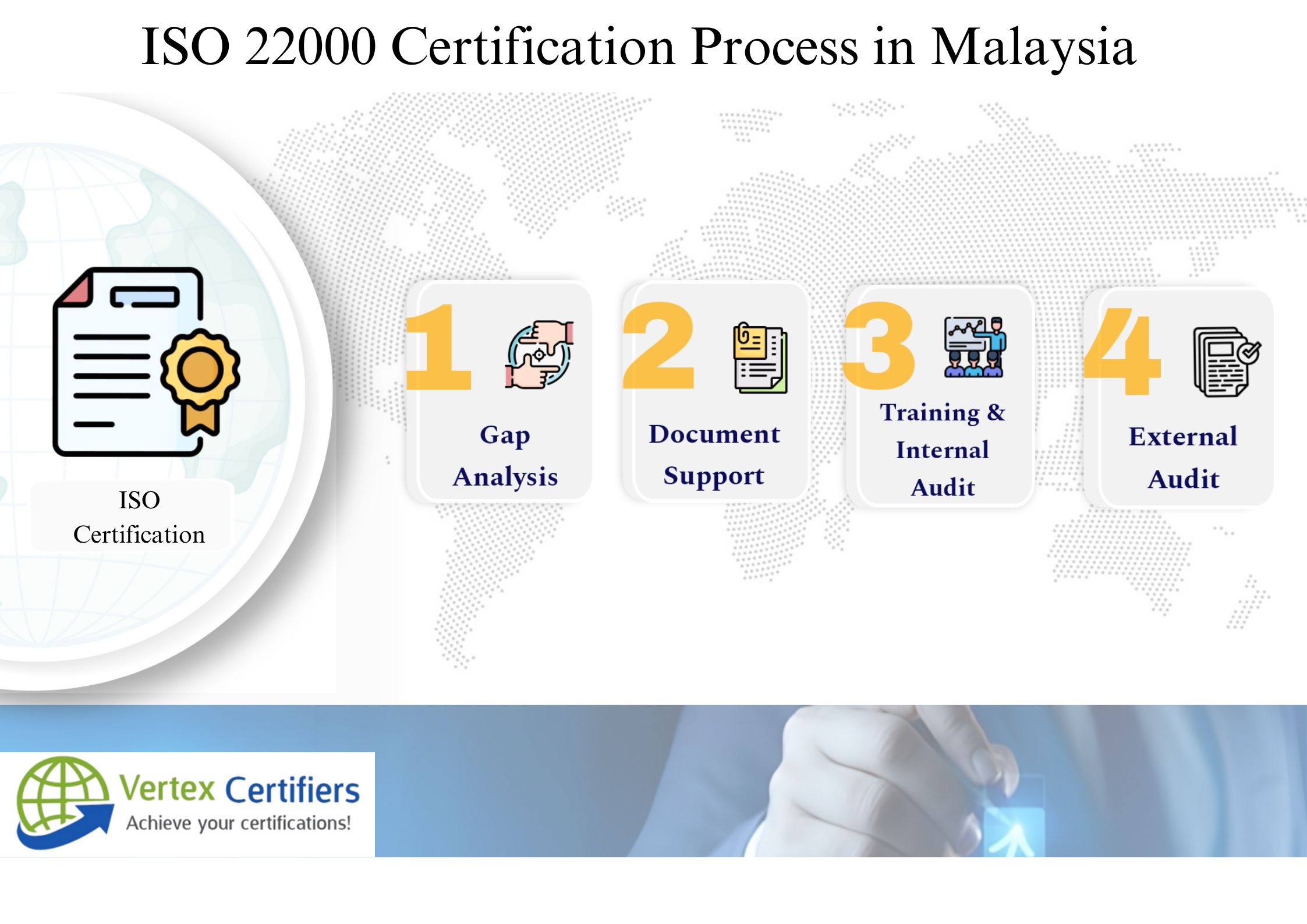
1. Gap Analysis
An initial assessment compares current food safety practices against ISO 22000 standards to identify areas for improvement.
2. Documentation Development
Preparing detailed manuals, policies, and records for the FSMS, HACCP studies, PRPs, and related processes.
3. Implementation and Training
Employees receive awareness and hygiene training, while food safety policies are integrated into daily operations and monitoring systems.
4. Internal Audit and Corrective Actions
Internal audits evaluate system performance; any nonconformities are corrected before the external audit.
5. Certification Audit (Stage 1 & Stage 2)
Accredited auditors conduct a two-stage assessment to verify compliance. Stage 1 reviews documentation, while Stage 2 validates actual implementation.
6. Certification and Maintenance
After successful completion, the organization receives an ISO 22000 Certificate. Surveillance audits ensure continuous improvement and adherence each year.