
ISO 13485 Certification in UAE:
ISO 13485 Certification in UAE, Vertex Certifiers is a global ISO consulting and certification service provider, offering end-to-end ISO 13485 Quality Management System certification for medical devices along with other ISO standards such as ISO 9001, ISO 14001, ISO 27001, ISO 45001, ISO 22301, and ISO 50001 across the UAE. We support medical device manufacturers, importers, distributors, and service providers from gap analysis and regulatory documentation to implementation, internal audits, and final certification. Our experienced ISO 13485 consultants assist organizations in Dubai, Abu Dhabi, Sharjah, Ajman, Ras Al Khaimah, Fujairah, and Umm Al Quwain, ensuring compliance with international medical device requirements, improved patient safety, and smooth access to regional and global healthcare markets.
How to get ISO 13485 Certification in UAE
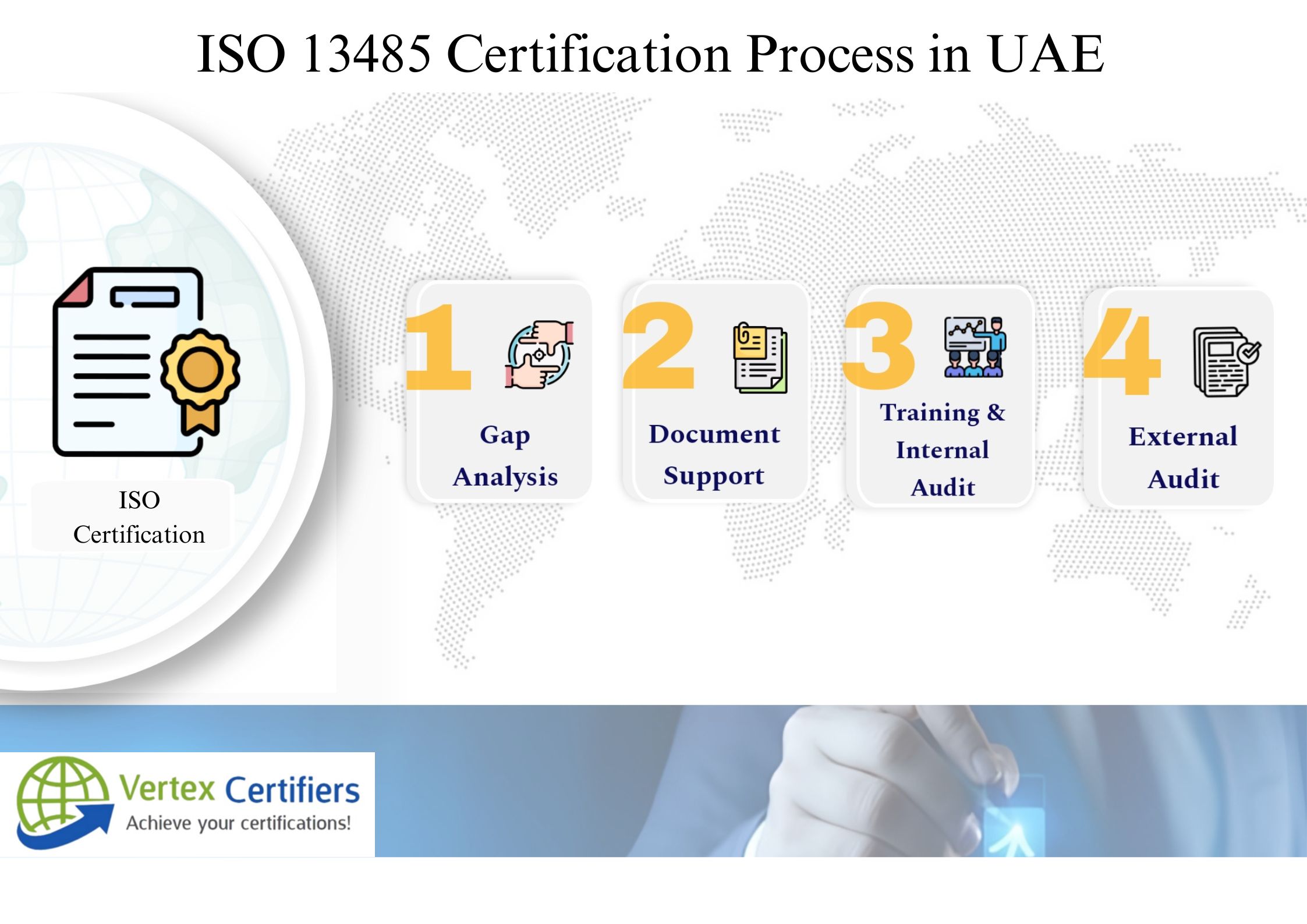
ISO 13485 Certification in UAE – Quality Management Excellence for Medical Devices
1. Introduction to ISO 13485 Certification in UAE
The UAE healthcare sector is experiencing rapid growth, driven by Vision 2031, Dubai Health Strategy 2021, and increasing demand for advanced medical technologies. As the UAE becomes a regional hub for healthcare innovation, ISO 13485 Certification in UAE has emerged as the gold standard for quality management in medical devices. This certification demonstrates that organizations have robust systems to ensure product safety, regulatory compliance, and consistent quality.
ISO 13485:2016 is the internationally recognized standard specifically developed for quality management systems (QMS) in the medical device industry. It addresses the unique regulatory, risk management, and lifecycle requirements of medical devices, from design and development to manufacturing, distribution, and servicing.
ISO 13485 is applicable to:
- Medical device manufacturers and assemblers.
- Importers, distributors, and suppliers of medical equipment.
- Sterilization, packaging, and maintenance service providers.
- Software developers for medical applications (SaMD).
- In-vitro diagnostic (IVD) manufacturers and suppliers.
In the UAE’s competitive healthcare market, ISO 13485 Certification is increasingly required by hospitals, clinics, regulatory authorities, and international partners to ensure patient safety and product reliability.
2. What is ISO 13485 Quality Management System for Medical Devices?
ISO 13485 specifies requirements for a QMS that demonstrates an organization’s ability to provide medical devices and related services that consistently meet customer and regulatory requirements. Unlike general quality standards, ISO 13485 incorporates specific medical device lifecycle considerations.
Purpose and scope of ISO 13485
The primary purpose is to facilitate harmonized medical device regulatory requirements globally. ISO 13485 helps organizations:
- Ensure products meet applicable regulatory requirements.
- Demonstrate effective risk management throughout the product lifecycle.
- Maintain traceability and control from design to end-user.
- Support post-market surveillance and continual improvement.
Regulatory-focused quality management approach
ISO 13485 emphasizes regulatory compliance, risk-based thinking, and lifecycle management. Key focus areas include design controls, validation, supplier controls, and post-market monitoring – all critical for medical devices.
Relationship with ISO 9001 and medical device regulations
- Builds upon ISO 9001 with medical device-specific requirements.
- Harmonized with global regulations (EU MDR, FDA QSR, IMDRF).
- Supports UAE MOHAP, DHA, DOH registration requirements.
3. Scope of ISO 13485 Certification in the UAE
ISO 13485 certification scope in UAE covers the full spectrum of medical device activities:
Medical device manufacturing and assembly
- Class I, II, and III medical devices.
- Electromechanical devices, implants, and consumables.
- Cleanroom manufacturing and sterile packaging.
Importers, distributors, and suppliers
- Storage, handling, and distribution of medical devices.
- Labeling, repackaging, and traceability requirements.
- Supplier qualification and incoming inspection.
Sterilization, packaging, and servicing organizations
- Ethylene oxide, gamma radiation, and steam sterilization.
- Primary and secondary packaging validation.
- Repair, maintenance, and refurbishment services.
Software and IVD-related medical devices
- Software as a Medical Device (SaMD).
- In-vitro diagnostics (IVD) reagents and instruments.
- Cybersecurity and software lifecycle management.
4. Why ISO 13485 is Important for Organizations in the UAE
UAE health authorities (MOHAP, DHA, DOH) have strengthened medical device regulations, making ISO 13485 essential for market access and compliance.
Compliance with UAE health authority requirements
- Mandatory for medical device registration and licensing.
- Required for hospital procurement and tender participation.
- Supports HAAD/DOH accreditation requirements.
Enhanced patient safety and product quality
ISO 13485 ensures:
- Risk-based design and manufacturing controls.
- Validated processes and equipment calibration.
- Traceability from raw materials to patient use.
Support for market access and international trade
- Recognized by GCC countries and international regulators.
- Facilitates exports to EU, US, and emerging markets.
- Essential for multinational partnerships and OEM contracts.
Reduced regulatory and operational risks
- Structured CAPA and complaint handling processes.
- Post-market surveillance and vigilance reporting.
- Supplier quality management and audit readiness.
5. Benefits of ISO 13485 Certification in UAE
ISO 13485 Certification delivers strategic advantages for UAE medical device organizations:
Improved product quality and consistency
- Standardized processes reduce variability.
- Validated manufacturing ensures reproducible quality.
- Design controls prevent quality issues early.
Strong regulatory compliance framework
- Harmonized approach across multiple jurisdictions.
- Audit-ready documentation and processes.
- Faster regulatory approvals and renewals.
Effective risk management throughout product lifecycle
- ISO 14971 risk management integration.
- Design FMEA and process FMEA implementation.
- Post-market risk monitoring and mitigation.
Increased customer and regulator confidence
- Independent third-party verification.
- Global recognition and market credibility.
- Preferred supplier status with hospitals and distributors.
Competitive advantage in healthcare tenders
- Mandatory requirement for government healthcare procurement.
- Differentiator in private hospital supplier selection.
- Essential for international medical tourism facilities.
6. ISO 13485 Certification Process in UAE
The certification journey follows these structured phases:
Gap analysis and QMS scope definition
- Current practices vs. ISO 13485 requirements assessment.
- Definition of devices, processes, and locations in scope.
- Risk-based prioritization of implementation activities.
Risk management and design control implementation
- ISO 14971 risk management file development.
- Design and development planning and controls.
- Design verification, validation, and transfer processes.
Documentation and quality system implementation
- Quality manual, procedures, work instructions.
- Device master records and manufacturing instructions.
- Calibration, validation, and traceability systems.
Training, internal audit, and management review
- Regulatory and ISO 13485 awareness training.
- Internal audits and non-conformance management.
- Management review with KPIs and improvement planning.
Stage 1 and Stage 2 certification audits
- Stage 1: Documentation review and readiness assessment.
- Stage 2: Implementation audit with process verification.
- Certification issuance (valid 3 years with surveillance audits).
7. Key ISO 13485 Requirements for UAE Organizations
Critical requirements include:
Quality policy and regulatory compliance
- Management commitment to QMS and regulatory compliance.
- Identification of applicable regulatory requirements.
- Resource allocation and competence management.
Design and development controls
- Design planning with inputs, outputs, review, verification, validation.
- Design transfer to manufacturing with controls.
- Design changes with risk assessment and validation.
Supplier evaluation and purchasing controls
- Approved supplier list and qualification process.
- Purchase order requirements and incoming inspection.
- Supplier monitoring and re-evaluation.
Production, traceability, and validation
- Validated manufacturing processes and equipment.
- Device identification, traceability, and lot control.
- Cleanroom validation and environmental controls.
Corrective and preventive actions (CAPA)
- Structured non-conformance and complaint handling.
- Root cause analysis and effectiveness verification.
- Post-market surveillance and field safety corrective actions.
8. Documentation Required for ISO 13485 Certification
Comprehensive documentation is the backbone of ISO 13485 certification:
Quality manual and procedures
- Quality manual describing QMS scope and processes.
- Documented procedures for all ISO 13485 clauses.
- Work instructions for critical manufacturing operations.
Risk management files
- ISO 14971 risk management plan and reports.
- Design FMEA, process FMEA, and use FMEA.
- Post-market risk management and surveillance data.
Design history files (DHF)
- Complete design and development records.
- Verification, validation, and testing protocols/results.
- Design reviews, changes, and transfer documentation.
Device master records (DMR)
- Specifications for components, materials, and labeling.
- Manufacturing, packaging, and servicing procedures.
- Acceptance criteria and quality control requirements.
Records of validation and verification
- Process validation protocols and reports.
- Equipment calibration and maintenance records.
- Batch/lot records and traceability documentation.
9. Cost and Timeline for ISO 13485 Certification in UAE
Factors affecting costs:
- Medical device classification (Class I, II, III).
- Scope complexity and manufacturing processes.
- Existing QMS maturity and documentation.
- Number of sites and product lines included.
Typical timeline for SMEs: 8–12 weeks. Complex Class III device manufacturers may require 4–6 months.
UAE accredited certification bodies (e.g., IAS, UKAS) provide recognized certificates accepted by MOHAP, DHA, DOH.
10. Why Choose Vertex Certifiers for ISO 13485 Certification in UAE
Vertex Certifiers offers specialized ISO 13485 expertise:
- Experienced medical device consultants and auditors.
- End-to-end implementation from gap analysis to certification.
- Regulatory-aligned documentation for UAE and international markets.
- Cost-effective solutions across all Emirates.
🚀 Start Your ISO 13485 Certification Journey Today!
Contact Vertex Certifiers for expert guidance and guaranteed results
📧 Email Us Now!info@vertexcertifiers.com