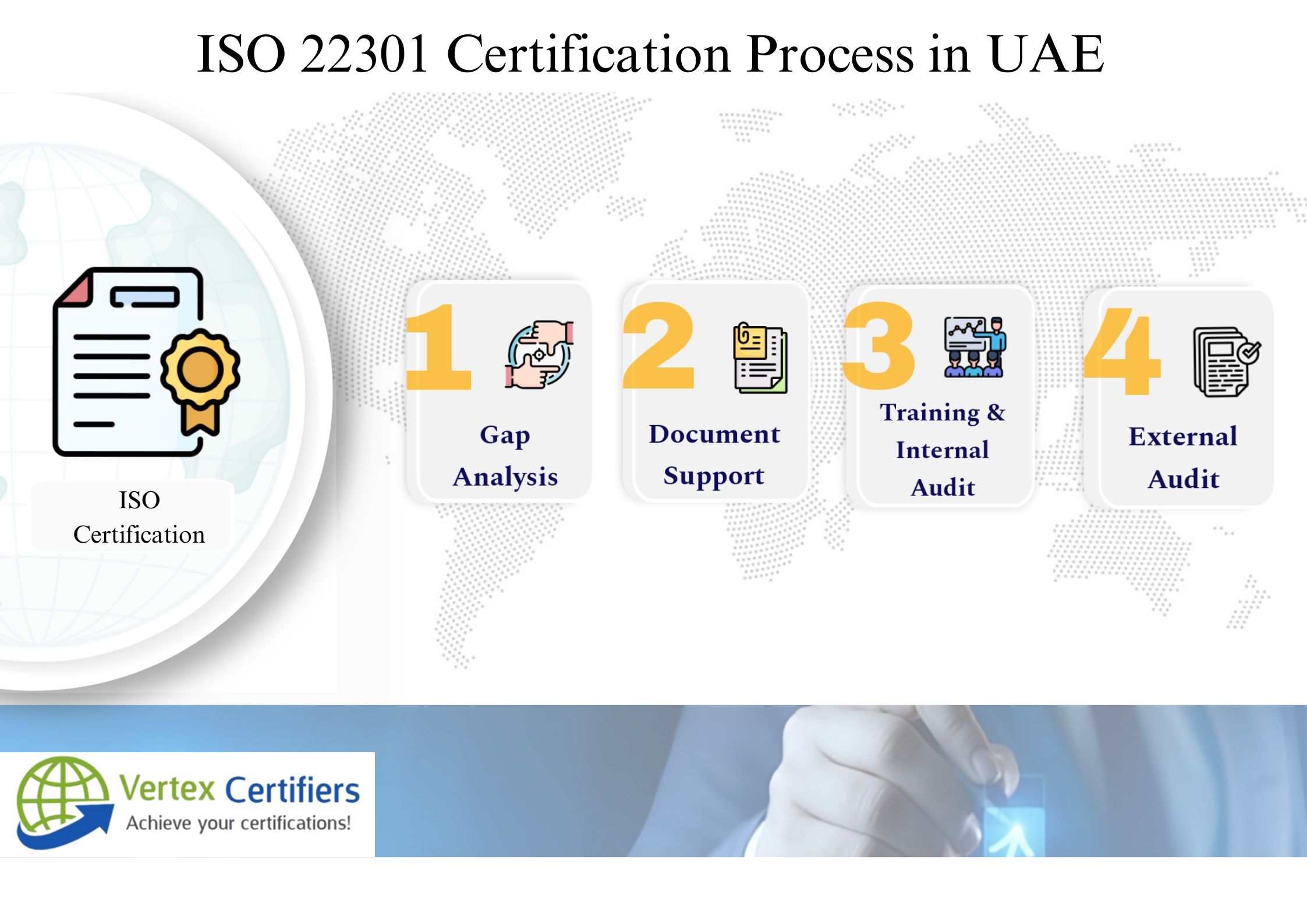
Why ISO 22301 is Important for Organizations in the UAE
The UAE is a major global hub for finance, trade, logistics, energy, tourism, and technology. Organizations operating in this fast-paced environment face a complex mix of risks, including cyber incidents, technology failures, global supply chain issues, regulatory changes, and natural or man-made events. ISO 22301 helps organizations in the UAE manage these disruptions in a systematic and proven manner.
ISO 22301 is especially important for organizations that must ensure uninterrupted services to customers, regulators, and critical stakeholders. It provides a structured framework to prepare for, respond to, and recover from disruptions while maintaining essential operations at acceptable levels of performance.
Managing modern business disruptions
- Prepares organizations for cyber incidents, ransomware attacks, and data breaches.
- Supports continuity during cloud outages, data center failures, and IT infrastructure breakdowns.
- Addresses supply chain disruptions affecting logistics, imports, exports, and critical materials.
- Helps organizations respond effectively to physical incidents, facility issues, and external events.
ISO 22301 ensures that incident response teams know what to do, how to escalate issues, and how to maintain essential services during an IT or cyber crisis. This leads to faster decision-making, reduced confusion, and more effective coordination across departments and locations.
Supporting regulatory and contractual compliance
In the UAE, many sectors operate under strict regulatory and contractual obligations. ISO 22301 directly supports these requirements by demonstrating that your organization has a robust and tested Business Continuity Management System (BCMS).
- Meets expectations of government entities, free zones, and regulatory authorities.
- Aligns with requirements from banks, financial institutions, and global clients.
- Strengthens compliance for high-risk sectors such as healthcare, energy, logistics, and IT services.
- Provides independent verification through third-party certification audits.
ISO 22301 Certification offers clear, objective evidence that your organization can maintain services and meet obligations even during major disruptions, which is often a key requirement in vendor and partner evaluations.
Protecting critical operations and services
Through Business Impact Analysis (BIA), ISO 22301 enables organizations to identify and prioritize their most important products, services, and supporting processes. This structured approach ensures that continuity planning focuses on what truly matters for survival and reputation.
- Identifies critical processes, locations, systems, and key resources.
- Defines maximum acceptable downtime and recovery time objectives (RTOs).
- Aligns business continuity strategies with legal, regulatory, and contractual obligations.
- Ensures life-safety, essential services, and key customer commitments are protected.
As a result, organizations can allocate resources more efficiently and design continuity strategies that keep core services running while less critical activities are restored later.
Building stakeholder and customer confidence
Stakeholders today expect reliability and resilience. ISO 22301 Certification signals that your organization is prepared for unexpected events and has robust recovery capabilities.
- Increases confidence among customers, regulators, investors, and partners.
- Demonstrates maturity and professionalism in risk and continuity management.
- Strengthens your brand as a reliable and resilient service provider.
- Influences supplier selection for high-risk or mission-critical activities.
In competitive and regulated markets across the UAE, this assurance can be a decisive factor when clients compare service providers or long-term partners.
Benefits of ISO 22301 Certification in UAE
Implementing and certifying a BCMS according to ISO 22301 delivers a wide range of tangible and intangible benefits for organizations in the UAE. These benefits apply to both large enterprises and growing SMEs across sectors such as banking, IT, healthcare, logistics, oil and gas, government, and professional services.
Improved organizational resilience and disaster preparedness
- Helps organizations understand vulnerabilities, dependencies, and single points of failure.
- Supports scenario-based planning for worst-case events and cascading failures.
- Establishes documented continuity and recovery procedures for critical operations.
- Enables faster, more coordinated responses during emergencies and crises.
With ISO 22301, organizations move from reactive firefighting to proactive preparedness, significantly improving their ability to cope with both expected and unexpected disruptions.
Reduced downtime and financial losses
Business disruptions can quickly translate into revenue loss, reputation damage, and contractual penalties. ISO 22301 addresses this by helping organizations define realistic recovery objectives and resource requirements.
- Defines clear recovery time objectives (RTOs) for critical services and processes.
- Supports faster restoration of operations after disruptions.
- Minimizes operational interruptions and service outages.
- Reduces the risk of penalties, legal issues, and non-compliance with contracts.
By reducing both the duration and impact of incidents, ISO 22301 contributes directly to financial stability and long-term business sustainability.
Structured incident response and recovery
ISO 22301 promotes a structured, organized approach to incident management rather than ad-hoc responses. This is critical in complex organizations with multiple departments, locations, and stakeholders.
- Defines clear roles and responsibilities for incident response teams.
- Establishes communication protocols and escalation procedures.
- Ensures staff receive training on their specific continuity roles.
- Includes regular tests, exercises, and simulations to validate plans.
When real incidents occur, response teams can act with confidence, following pre-approved procedures instead of improvising under pressure.
Enhanced reputation and client trust
From a reputational perspective, ISO 22301 strengthens how your organization is perceived by key stakeholders in the UAE and globally.
- Demonstrates commitment to continuity of services and customer satisfaction.
- Builds trust with regulators, authorities, and strategic partners.
- Supports brand positioning as a dependable, risk-aware organization.
- Shows that your business is aligned with international best practices.
This is especially important in sectors where any disruption can have serious consequences, such as healthcare, banking, energy, transportation, and critical IT services.
Competitive advantage in tenders and contracts
Many public and private sector clients in the UAE include business continuity as a mandatory or preferred evaluation criterion in RFPs and vendor selection processes.
- Provides a clear differentiator against competitors without a formal BCMS.
- Improves scoring in tenders that evaluate risk and continuity management.
- Supports long-term contracts where service reliability is a critical factor.
- Enhances credibility when entering new markets or working with global clients.
As a result, ISO 22301 Certification does not just reduce risk; it actively contributes to business growth and market expansion opportunities.
Cost and Timeline for ISO 22301 Certification in UAE
The cost and duration of ISO 22301 Certification in the UAE vary depending on organizational size, complexity, and readiness. Understanding these factors helps organizations plan their BCMS implementation more effectively.
Key factors affecting certification cost
- Scope of the BCMS, including number of processes and services covered.
- Number of employees and departments involved in the BCMS.
- Number and geographical spread of locations, branches, or data centers.
- Complexity of operations, technology, and supply chain dependencies.
- Maturity of existing risk management and continuity practices.
- Need for integration with other ISO standards (e.g., ISO 9001, ISO 27001).
- Extent of external consulting, training, and documentation support required.
A tailored cost estimate is usually prepared after understanding the organization’s structure, existing controls, and desired BCMS scope.
Typical implementation timeline in the UAE
For small and medium-sized enterprises (SMEs) in the UAE, a typical implementation timeline for ISO 22301 ranges from approximately 6 to 10 weeks, assuming strong management support and availability of internal resources.
- Week 1–2: Gap analysis, scope definition, and initial planning.
- Week 2–4: Business Impact Analysis (BIA) and risk assessment workshops.
- Week 4–6: Development of strategies, plans, and BCMS documentation.
- Week 6–8: Training, awareness sessions, and initial testing or drills.
- Week 8–10: Internal audit, management review, and certification readiness.
Larger organizations with multiple sites, critical infrastructure, or heavily regulated operations may require a longer timeline to complete detailed analysis, complex recovery strategies, and comprehensive testing.
Role of accredited certification bodies
Accredited certification bodies in the UAE are responsible for independently assessing your BCMS against ISO 22301 requirements and issuing the certificate.
- Conduct Stage 1 (documentation and readiness) and Stage 2 (implementation) audits.
- Verify that the BCMS is implemented, maintained, and continually improved.
- Issue ISO 22301 certificates valid typically for three years.
- Perform annual surveillance audits to ensure ongoing compliance.
Working with recognized, accredited certification bodies ensures that your ISO 22301 certificate is widely accepted by regulators, enterprise customers, and international business partners.
Why Choose Vertex Certifiers for ISO 22301 Certification in UAE
Choosing the right implementation and certification support partner is critical for achieving a practical, effective, and audit-ready ISO 22301 BCMS. Vertex Certifiers specializes in Business Continuity Management and ISO 22301 Certification in the UAE, supporting organizations across diverse industries and sizes.
Experienced ISO 22301 BCMS consultants and auditors
- Team of professionals with hands-on experience in ISO 22301 projects.
- Strong understanding of UAE regulatory expectations and sector-specific risks.
- Experience across banking, IT, healthcare, logistics, oil and gas, government, and services.
- Ability to translate ISO requirements into realistic, business-focused controls.
End-to-end business continuity implementation support
- Support from initial gap analysis and scope definition to certification readiness.
- Facilitation of BIA and risk assessment workshops with key stakeholders.
- Development of continuity strategies, response plans, and recovery procedures.
- Guidance on integrating ISO 22301 with existing management systems.
Practical, audit-ready documentation and testing
- Clear, user-friendly templates for policies, procedures, and continuity plans.
- Documentation tailored to your organizational structure and operational reality.
- Support in planning and conducting drills, simulations, and test exercises.
- Preparation for internal audits and external certification assessments.
Affordable and reliable solutions across the UAE
- Cost-effective implementation and consulting packages for SMEs and large enterprises.
- Flexible engagement models to match your internal capabilities and budget.
- Support for organizations across all Emirates and major industry sectors.
- Focus on delivering a BCMS that adds real operational and commercial value.
Contact Vertex Certifiers today to discuss your ISO 22301 Certification needs in the UAE and start building a stronger, more resilient Business Continuity Management System.