ISO 50001 Certification in Iraq:
ISO 50001 Certification in Iraq, Vertex Certifiers is a trusted global ISO consulting company supporting organizations across Iraq in implementing ISO 50001 – Energy Management System (EnMS). With rising energy costs and increasing demand for efficient energy performance, we help industries in Iraq build a strong, sustainable, and globally compliant energy management framework. We serve all major Iraqi cities — Baghdad, Basra, Erbil, Mosul, Sulaymaniyah, Najaf, Karbala, Kirkuk, and Dohuk — offering complete, end-to-end services including gap analysis, documentation, system implementation, staff training, internal audits, and coordination with accredited certification bodies.
Vertex Certifiers has extensive expertise in ISO 50001 along with more than 12 other ISO standards such as ISO 9001, ISO 14001, ISO 45001, ISO 27001, ISO 22000, ISO 50001, ISO 37001, ISO 22301, ISO 20000-1, ISO 31000, ISO 27701, and ISO 17025. Our consultants deliver both online and onsite support, ensuring a smooth, fast, and successful certification journey for organizations of all sizes.
ISO 50001 is the international standard for Energy Management Systems (EnMS), designed to help organizations control, monitor, and improve their energy performance in a systematic way. In Iraq, where industries such as oil and gas, power plants, manufacturing, construction, and government facilities consume large amounts of energy, managing energy efficiently is no longer optional but essential for cost control and sustainability. Energy prices, aging infrastructure, and pressure from global markets make it critical for Iraqi organizations to adopt structured energy management practices. Vertex Certifiers is a global ISO consulting firm that provides end-to-end ISO 50001 consulting, documentation, training, and certification support across major Iraqi cities including Baghdad, Basra, Erbil, Mosul, Sulaymaniyah, Najaf, Karbala, and Kirkuk, helping organizations implement effective Energy Management Systems and achieve certification successfully.
What is ISO 50001?
ISO 50001 is a management system standard focused specifically on energy performance, guiding organizations to set up an Energy Management System (EnMS) that controls how energy is planned, used, monitored, and improved over time. It provides a structured framework to identify where energy is being wasted, define clear objectives for energy reduction, and implement controls that help reduce energy consumption while maintaining or improving operational output. For Iraq’s heavy industrial and production sectors—especially oil refineries, petrochemical plants, steel manufacturing, cement plants, power generation units, and large construction projects—ISO 50001 is particularly valuable because these operations depend on high energy input and any improvement in efficiency directly translates into significant cost savings and improved profitability. An effective EnMS under ISO 50001:2018 helps these organizations set baselines, track energy KPIs, and drive continuous improvement in energy performance.
Why ISO 50001 Certification Is Important in Iraq
Energy costs form a major part of operating expenses in Iraqi industries, and fluctuations in energy prices can impact profitability and long-term planning. ISO 50001 certification helps organizations in Iraq implement a disciplined approach to energy usage, ensuring that every kilowatt-hour or liter of fuel is used efficiently, monitored properly, and justified by operational needs. Government authorities and international clients increasingly prefer to work with companies that can demonstrate strong energy management practices, especially in oil and gas supply chains, infrastructure contracts, and public–private partnership projects. ISO 50001 certification can make Iraqi organizations more attractive partners by demonstrating that they manage energy responsibly and systematically. At the same time, better energy management reduces environmental impact through lower greenhouse gas emissions and less resource wastage, helping Iraq’s industries align with global sustainability expectations and international environmental commitments.
Process to Get ISO 50001 Certification in Iraq (6 Simple Steps)
The certification journey becomes much easier when broken down into clear, practical steps. A typical ISO 50001 certification process in Iraq includes:
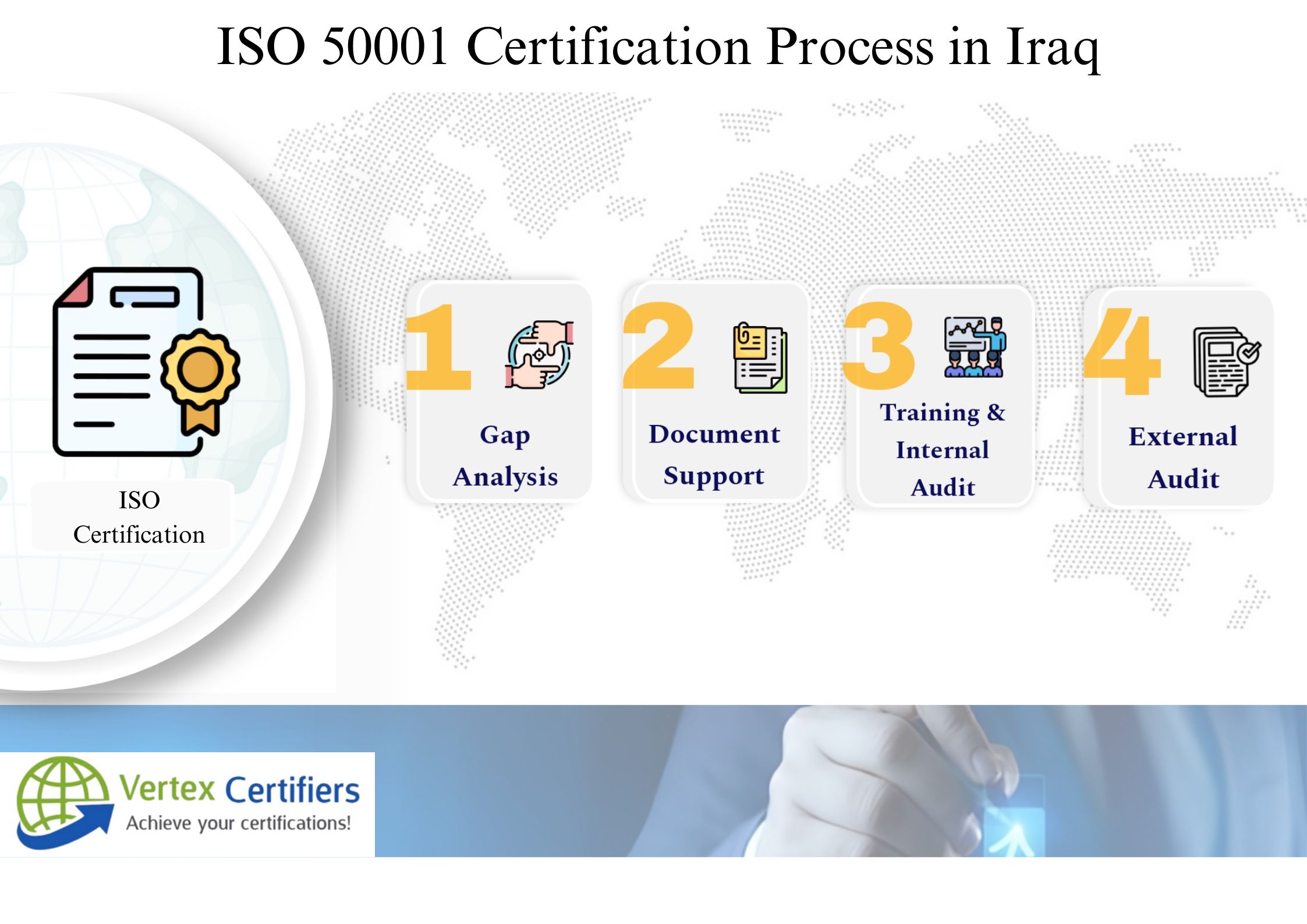
- Contact us to discuss your energy management goals
The process begins with an initial discussion about your current operations, energy challenges, and business objectives so that the project scope can be defined clearly. - Gap analysis to understand your current energy performance
A gap assessment compares your existing practices with ISO 50001 requirements and identifies where changes, documentation, or monitoring systems are needed. - Documentation for energy policy, procedures, and monitoring controls
Your energy policy, objectives, energy review records, baseline, EnPIs, and operational controls are documented in line with ISO 50001, along with procedures for data collection and analysis. - Implementation & training for your team
The documented system is put into practice, energy meters and monitoring tools are used, and staff at all levels are trained to follow the new processes and support energy-saving initiatives. - Internal audit & management review to verify readiness
Internal auditors check whether the EnMS is functioning as intended, and top management reviews performance, resources, and improvement actions to confirm readiness for external certification. - Certification audit by an accredited body
An independent, accredited certification body evaluates your ISO 50001 Energy Management System. If requirements are met, the organization is awarded ISO 50001 certification, usually valid for three years with annual surveillance audits.
With professional guidance, this process becomes structured and predictable, helping Iraqi companies avoid confusion and delays while preparing for external audits.
ISO 50001 Certification in Baghdad
Baghdad, Iraq’s capital, is home to numerous industries including oil & gas, power generation plants, manufacturing, construction, and government facilities. These sectors face significant energy challenges like unreliable electricity supply and rising fuel costs. Implementing ISO 50001 certification in Baghdad helps organizations systematically improve energy efficiency, reduce operational costs, and meet regulatory requirements. Certified companies in Baghdad can strengthen their competitive edge by demonstrating commitment to sustainable energy management and compliance with international standards.
ISO 50001 Certification in Basra
Basra, a strategic port city and oil production hub, has large-scale energy-intensive industries requiring robust energy management practices. ISO 50001 supports Basra’s industrial players by providing frameworks to monitor and optimize energy use, reduce waste, and cut greenhouse gas emissions. Certification also aids organizations in meeting government energy-saving initiatives as well as international sustainability expectations, making Basra’s firms more attractive to global investors and partners.
ISO 50001 Certification in Erbil
Erbil, the capital of Kurdistan Region, is expanding its industrial base with construction and manufacturing sectors growing rapidly. ISO 50001 certification in Erbil enables companies to implement effective energy controls, reduce dependency on costly imported fuels, and improve their environmental footprint. Energy management systems help local organizations lower energy consumption and comply with regional and international energy regulations, fueling sustainable growth in Erbil.
ISO 50001 Certification in Sulaymaniyah
Sulaymaniyah, another prominent city in Iraqi Kurdistan, is witnessing increasing industrial and commercial activity. Energy costs and environmental performance are critical concerns. Obtaining ISO 50001 certification in Sulaymaniyah supports companies in establishing a structured energy management system to improve efficiency, reduce costs, and align with global best practices. This fosters improved operational resilience and positions businesses to meet future energy regulations and sustainability goals.
Key Benefits of ISO 50001 Certification in Iraq
ISO 50001 delivers both financial and strategic advantages to organizations operating in Iraq’s energy-intensive environment. Some of the most important benefits include:
- Reduces overall energy consumption and operational costs by identifying inefficiencies and implementing targeted improvement projects.
- Improves energy efficiency through systematic monitoring, metering, analysis, and control of energy use in processes, buildings, utilities, and equipment.
- Enhances compliance with national and international energy-related regulations, tender requirements, and sustainability criteria, reducing the risk of penalties or contract losses.
- Builds customer and stakeholder trust by showcasing a clear commitment to sustainable energy use and responsible resource management.
- Reduces greenhouse gas (GHG) emissions and environmental impact, supporting cleaner operations and CSR goals.
- Enables better use of energy resources, helping organizations prioritize high-impact projects, plan investments wisely, and achieve long-term savings.
- Improves competitiveness in local and global markets by lowering energy-related overheads and meeting international sustainability expectations.
These benefits are especially relevant for Iraqi oil & gas operators, power producers, industrial plants, and public facilities, where even small improvements in energy performance can result in major savings.
Requirements of ISO 50001 (Explained Simply)
Although ISO 50001 is a technical standard, its requirements can be understood easily. Organizations seeking certification in Iraq should be ready to:
- Understand energy needs and consumption patterns: Identify where and how energy is used across equipment, processes, and buildings.
- Establish an energy policy and set clear objectives: Management must define a formal commitment to energy performance improvement.
- Conduct energy reviews and identify improvement areas: Analyze energy data, major energy users, and opportunities for optimization.
- Create an energy baseline and performance indicators: Set a reference point (baseline) and select energy KPIs (EnPIs).
- Implement operational and energy controls: Introduce procedures, maintenance plans, and technical controls for efficient energy use.
- Monitor energy performance and report results: Track consumption, KPIs, and cost savings regularly.
- Continually improve the EnMS: Use audits, data analysis, and reviews to update objectives and launch new energy projects.
With these steps, organizations can shift from reactive to proactive, data-driven energy management.
Cost of ISO 50001 Certification in Iraq
The cost of ISO 50001 certification in Iraq depends on practical factors such as the size of the organization, the number of facilities, and the complexity of the energy systems. Large industrial plants or multi-site operations may require more consulting time and audits, while smaller companies usually incur lower costs due to simpler processes. The level of existing energy monitoring, staff competence, and integration with other ISO standards also influence the pricing.
Vertex Certifiers provides fully customized and affordable pricing for organizations of all sizes, helping both high-energy users and small businesses implement ISO 50001 in a cost-effective way.
Why Choose Vertex Certifiers?
Vertex Certifiers is a global ISO consulting leader with specialized expertise in ISO 50001 and strong experience working with high-energy industries. Our team offers practical documentation, hands-on training, and complete implementation support—from gap analysis to certification audit coordination.
We provide services across major Iraqi cities including Baghdad, Basra, Erbil, Mosul, Sulaymaniyah, Najaf, Karbala, and Kirkuk, ensuring accessible and expert assistance for every sector.
Vertex also provides consulting for more than 12 international ISO standards, including ISO 9001, ISO 14001, ISO 45001, ISO 27001, ISO 22301, ISO 37001, ISO 22000, ISO 20000-1, ISO 31000, ISO 27701, and ISO 17025, enabling organizations to build a fully integrated management system.
Frequently Asked Questions (FAQ)
How long does ISO 50001 certification take in Iraq?
Most organizations complete the ISO 50001 certification process in 2–6 months, depending on energy data availability and readiness of systems and staff.
Is ISO 50001 certification internationally recognized?
Yes. ISO 50001 is globally accepted and strengthens international business credibility, sustainability compliance, and supply-chain acceptance.
Do you provide training and documentation?
Yes. We provide full documentation, templates, energy review formats, monitoring tools, and structured training for management, engineers, and internal auditors.
Contact Us
Email us at: info@vertexcertifiers.com
Get a free consultation or quotation for ISO 50001 certification in Iraq and start improving your energy efficiency and sustainability performance.
- ★ ISO Certification in Iraq
- ★ ISO 9001 Certification in Iraq
- ★ ISO 14001 Certification in Iraq
- ★ ISO 45001 Certification in Iraq
- ★ ISO 27001 Certification in Iraq
- ★ ISO 22000 Certification in Iraq
- ★ ISO 41001 Certification in Iraq
- ★ ISO 50001 Certification in Iraq
- ★ How to Get ISO Certification in Iraq?
- ★ Cost of ISO Certification in Iraq
- ★ GMP Certification in Iraq
