
How to get GMP Certification in Philippines?
How to get GMP Certification in Philippines, In the dynamic manufacturing landscape of the Philippines, GMP Certification in Philippines stands out as a cornerstone for quality and compliance. As businesses in pharmaceuticals, food processing, cosmetics, and beyond gear up for stricter regulations in 2026, understanding GMP certification becomes essential. This complete guide breaks down everything from basics to procedures, helping manufacturers in Manila, Cebu, Quezon, and beyond achieve certification efficiently. Whether you’re seeking GMP consultants in Philippines or navigating the procedure for GMP, we’ve got you covered.
What is GMP Certification?
GMP, or Good Manufacturing Practices, forms the backbone of a robust quality assurance system worldwide. It ensures products are consistently produced and controlled to meet stringent quality standards, minimizing risks like contamination or defects. In essence, GMP Certification in Philippines verifies that your facility adheres to guidelines covering personnel hygiene, equipment maintenance, production processes, and documentation.
This certification applies across key sectors:
- Pharmaceutical manufacturers: Ensuring drug safety and efficacy.
- Food & beverage companies: Preventing microbial growth and adulteration.
- Cosmetics manufacturers: Guaranteeing safe skincare and beauty products.
- Nutraceutical & dietary supplement companies: Maintaining purity in health supplements.
- Medical device manufacturers: Validating sterile production lines.
In the Philippines, the Food and Drug Administration Philippines (FDA Philippines) oversees GMP compliance. Updated guidelines for 2026 emphasize digital record-keeping and risk-based audits, aligning with global standards like those from the WHO and PIC/S. For instance, a Cebu-based nutraceutical firm recently upgraded its processes under GMP to export herbal supplements to the EU, showcasing its real-world impact.
Why GMP Certification is Important in the Philippines
The Philippines’ manufacturing sector is booming, with exports hitting record highs in 2025. Food processing alone contributes over PHP 1 trillion annually, while pharmaceuticals and cosmetics eye ASEAN markets. Yet, without GMP Certification in Philippines, businesses face barriers like rejected shipments or recalls.
Key reasons to prioritize it:
- Product safety & compliance: GMP minimizes hazards, protecting consumers.
- FDA Philippines requirements: Mandatory for licensing and renewals.
- Export approvals: Essential for markets like the US, EU, and Japan.
- Operational efficiency: Streamlines workflows, cutting waste by up to 20%.
- Consumer trust: Certified brands command premium pricing.
- Risk reduction: Lowers recalls, lawsuits, and shutdowns.
Consider a Manila pharmaceutical plant: Post-GMP certification, it slashed contamination incidents by 40%, boosting exports. For export-focused firms, GMP isn’t optional—it’s a gateway to international trade amid rising FDA scrutiny in 2026.
Who Needs GMP Certification?
Not every business requires it, but if you manufacture ingestibles, topicals, or devices, GMP Certification in Philippines is non-negotiable. Primary candidates:
- Pharmaceutical manufacturers: From tablets to injectables.
- Food & beverage processing companies: Packaged goods and ready-to-eat items.
- Cosmetics and skincare brands: Lotions, creams, and makeup.
- Herbal product manufacturers: Traditional Filipino remedies like lagundi extracts.
- Medical device companies: Syringes, bandages, and diagnostics.
- Contract manufacturing organizations (CMOs): Third-party producers serving multiple brands.
Even startups scaling up should pursue it early. A Quezon herbal firm, for example, gained GMP certification in Philippines to partner with global nutraceutical brands, illustrating its versatility.
How to get GMP Certification in Philippines ?
Procedure for GMP Certification in Philippines
Securing GMP certification demands a structured approach. Here’s the step-by-step procedure for GMP in the Philippines, optimized for 2026 FDA updates:
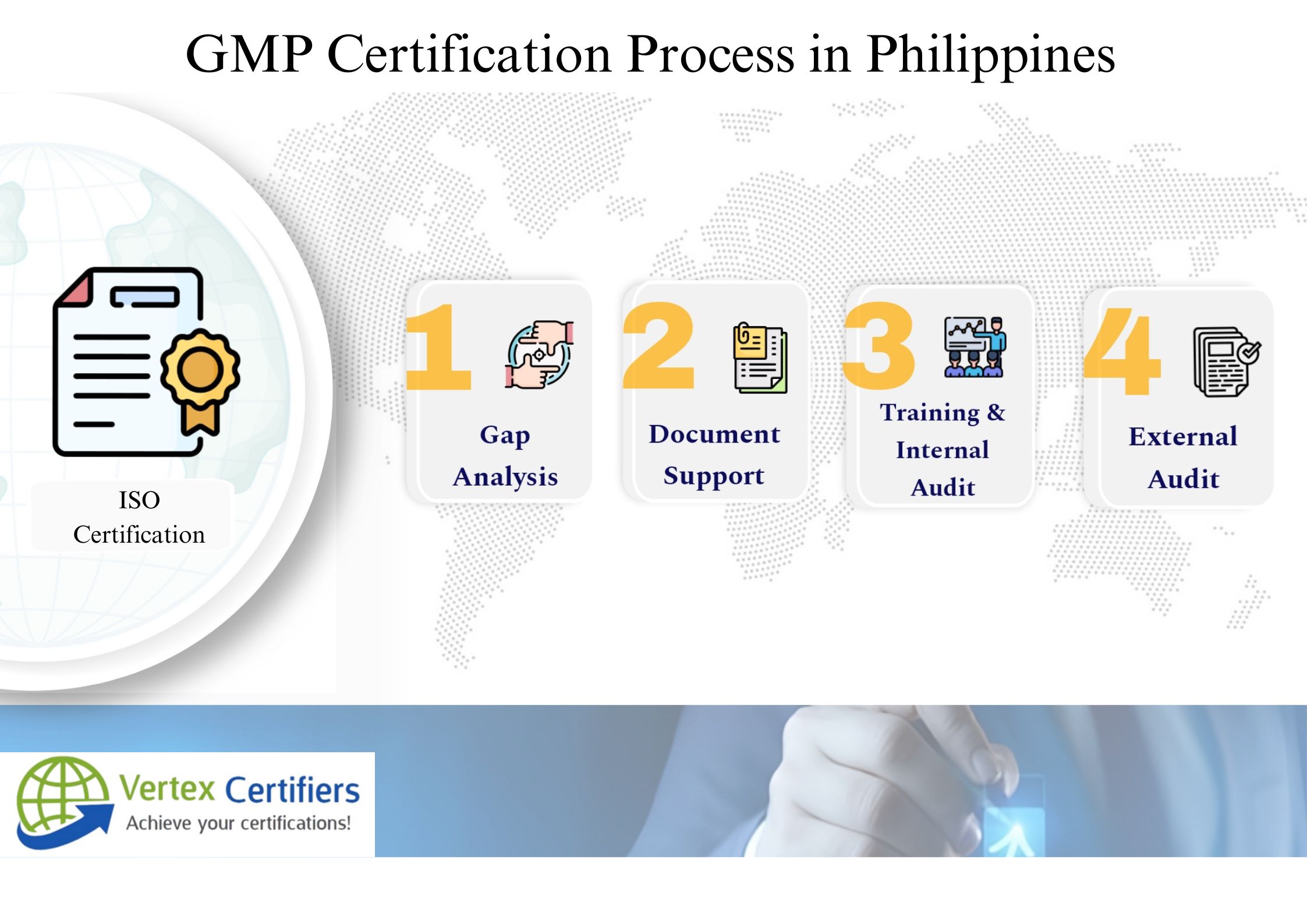
Step 1: Gap Analysis
Kick off with a thorough audit. GMP consultants in Philippines evaluate your facility against FDA checklists, pinpointing gaps in hygiene, documentation, or training. This phase typically lasts 2-4 weeks.
Step 2: GMP Consultation & Documentation
Craft compliant documents with expert GMP consultation:
- Standard Operating Procedures (SOPs) for every process.
- Quality Manual outlining your system.
- Risk assessments for hazards.
- Process controls and hygiene policies.
Professional GMP consultants in Philippines streamline this, ensuring alignment with PIC/S GMP.
Step 3: Implementation
Put plans into action:
- Train staff on GMP protocols.
- Standardize processes and validate equipment.
- Enforce sanitation, pest control, and batch tracking.
Real-time monitoring tools, now emphasized in 2026, enhance traceability.
Step 4: Internal Audit
Conduct mock audits to fix non-conformities. This builds confidence for the real deal.
Step 5: Application to Regulatory Authority
Submit via FDA Philippines portal, including fees and docs.
Step 6: GMP Inspection / Audit
FDA auditors visit for 2-5 days, scrutinizing everything from cleanrooms to records.
Step 7: Certification Approval
Close minor issues within deadlines; receive your GMP certificate, valid 2-3 years with surveillance audits.
Partnering with GMP consultants in Philippines cuts procedure for GMP time by 30-50%.