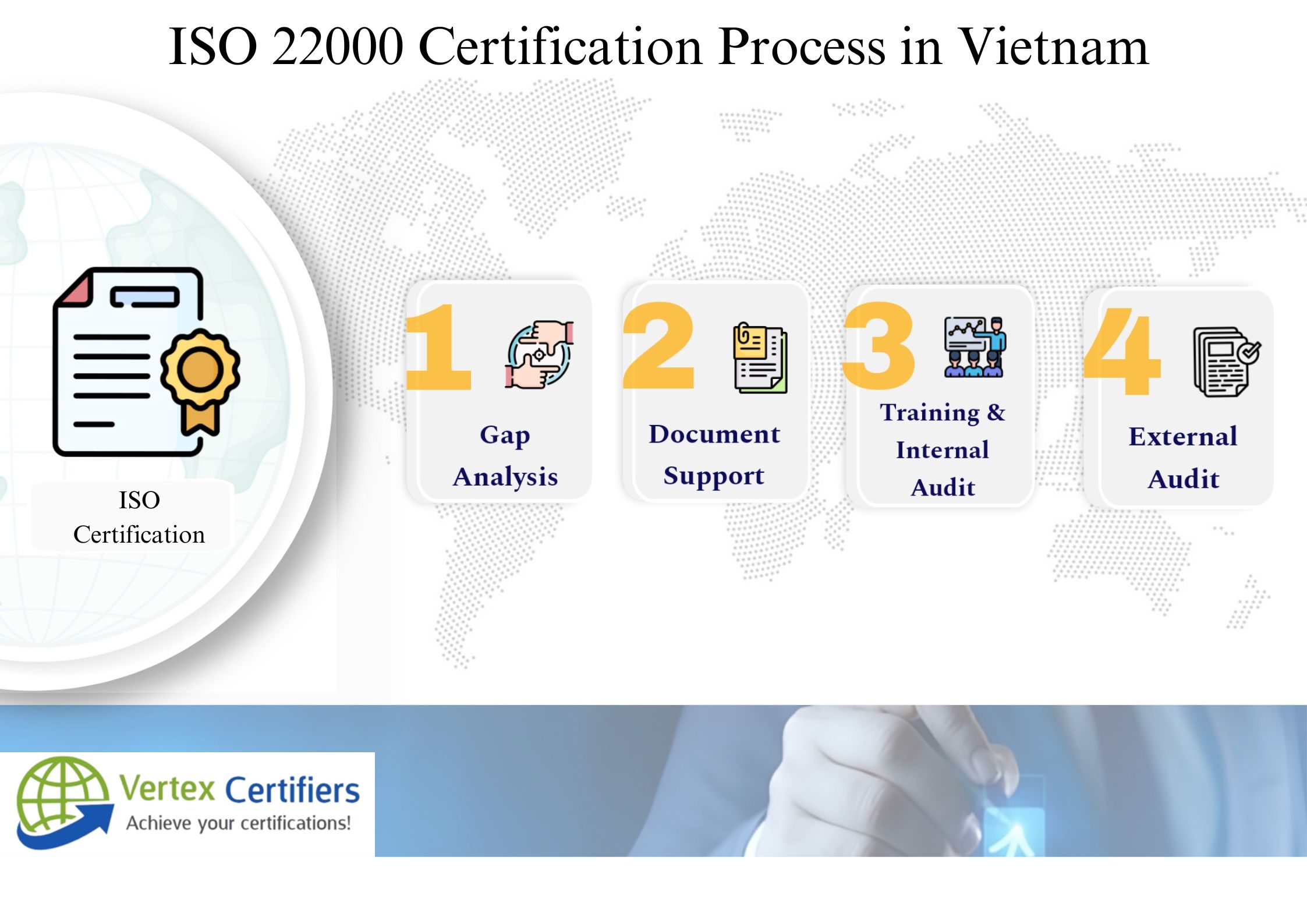
How Long Does ISO 22000 Certification Take in Vietnam?
The timeline for ISO 22000 certification in Vietnam depends on process complexity, HACCP readiness, the number of production sites, existing documentation, and how prepared the organization is for implementation and audit.
- Small Food Businesses: Typically 4 to 8 weeks where food safety controls are simple and the business already follows basic documented procedures.
- Medium Organizations: Usually 6 to 10 weeks depending on product range, departments involved, and food safety system maturity.
- Large Manufacturers or Exporters: Commonly 8 to 16 weeks or longer where multiple product lines, higher documentation needs, or several sites are involved.
Organizations that already have structured HACCP systems or related ISO management systems may complete implementation faster because many controls, records, and review processes are already established. ISO 22000 is designed for any organization in the food chain and can be integrated into existing management systems. [web:21]
Documents Required for ISO 22000 Certification in Vietnam
In addition to meeting food safety requirements in practice, organizations also need documented information that demonstrates how food safety hazards are identified, controlled, monitored, and reviewed. ISO explains that ISO 22000 requires organizations to show their ability to control food safety hazards and ensure food is safe for its intended use. [web:21]
- Food Safety Policy: A documented policy showing top management’s commitment to food safety objectives and compliance.
- HACCP Plan: A structured plan covering hazard analysis, critical control points, limits, monitoring, and corrective actions.
- PRPs: Prerequisite programs for hygiene, sanitation, pest control, cleaning, maintenance, personnel practices, and facility controls.
- Risk Assessment: Documented food safety hazard identification and evaluation based on products, processes, and operational conditions.
- CCP Monitoring Records: Records showing that critical control points are monitored and kept under control.
- Internal Audit Reports: Evidence that the food safety management system is periodically reviewed internally.
- Management Review Records: Records of leadership review of system performance, objectives, and improvement actions.
- Traceability Records: Documentation demonstrating product traceability through the supply chain.
- Supplier Evaluation Records: Approved supplier assessments and monitoring records for raw materials, packaging, and outsourced services.
- Corrective Action Records: Evidence of actions taken to address nonconformities, incidents, deviations, or audit findings.
Who Needs ISO 22000 Certification in Vietnam?
ISO 22000 is suitable for any organization in the food chain, whether directly or indirectly involved in food production, handling, storage, transport, or service. ISO specifically states that the standard can be used by organizations regardless of size or position in the food chain. [web:21][web:24]
- Food Manufacturers: Producers of processed, packaged, frozen, canned, or ready-to-eat food products.
- Seafood Exporters: Seafood processors and exporters supplying international buyers with strict food safety expectations.
- Beverage Companies: Manufacturers of bottled drinks, juices, soft drinks, alcoholic beverages, and related products.
- Restaurants: Food service businesses seeking better food safety control and stronger customer trust.
- Catering Companies: Caterers managing large-scale food preparation and delivery operations.
- Dairy Processors: Milk, cheese, yogurt, and related dairy product manufacturers.
- Meat Processors: Organizations involved in slaughtering, processing, packaging, and distributing meat products.
- Cold Storage Facilities: Warehouses and storage businesses handling temperature-sensitive food products.
- Packaging Companies: Manufacturers of food-contact packaging materials used across the food industry.
- Food Ingredient Suppliers: Suppliers of additives, flavorings, raw materials, and food ingredients to processors and manufacturers.
Why ISO 22000 Matters for Food Exporters in Vietnam
ISO 22000 is especially valuable for exporters because it strengthens food safety credibility across global supply chains and supports trust with overseas buyers, importers, retailers, and brand owners. ISO notes that the standard helps provide reassurance within the global food supply chain and helps products cross borders more confidently. [web:21]
- Seafood Exports: Supports stronger food safety controls for exporters serving international seafood markets.
- Coffee Exports: Helps coffee processors and exporters maintain documented controls expected by global buyers.
- Cashew Processing: Improves hazard control, traceability, and export readiness for processed nut products.
- Rice Exporters: Strengthens process consistency and product safety credibility in international rice trade.
- Fruit Exporters: Supports traceability, hygiene, and food safety management for fresh and processed fruit exports.
- Global Food Supply Chains: Builds confidence among importers, distributors, retailers, and private-label customers worldwide.
Vietnam’s export profile includes strong performance in seafood, coffee, rice, fruit and vegetables, and cashew products, making food safety certification particularly relevant for businesses targeting international growth. [web:23]
Integrating ISO 22000 with Other Standards
Many food companies implement multiple standards together to improve efficiency and reduce duplication. ISO states that ISO 22000 works alongside other ISO management system standards, including ISO 9001, which makes integration a practical approach for food businesses. [web:21]
- ISO 9001: Combine food safety and quality management for better process consistency, customer confidence, and continual improvement.
- ISO 14001: Align food safety controls with environmental management objectives across operations.
- ISO 45001: Integrate food safety with occupational health and safety for more effective operational governance.
- HACCP: Build ISO 22000 on HACCP principles to create a more complete and certifiable food safety management system.
- GMP: Integrate good manufacturing practices with documented food safety controls and monitoring systems.
Cost of ISO 22000 Certification in Vietnam
The cost of ISO 22000 certification in Vietnam depends on more than organization size alone. Certification cost is commonly influenced by the number of production sites, product categories, HACCP maturity, existing documentation, employee count, audit duration, and the selected certification body. [web:25][web:28]
- Number of Production Sites: Multi-site operations generally require more planning, more audit coverage, and more implementation effort.
- Product Categories: Broader or higher-risk product ranges often increase food safety complexity and audit attention.
- HACCP Maturity: Businesses with a well-established HACCP system may need less implementation effort than those starting from scratch.
- Existing Documentation: Companies with documented procedures, records, and review systems may reduce development time and consulting effort.
- Number of Employees: Larger workforces often require broader training, process coordination, and internal control coverage.
- Certification Body: Fees vary depending on the certification provider, audit scope, accreditation status, and required audit days.
Working with an experienced ISO 22000 consultant helps organizations control costs by reducing delays, avoiding unnecessary rework, and improving audit readiness from the beginning.
Cities We Serve for ISO 22000 Certification in Vietnam
We provide ISO 22000 certification consulting across Vietnam's major food processing and manufacturing hubs, including Hanoi, Ho Chi Minh City, Hai Phong, Da Nang, Can Tho, Nha Trang, Bac Ninh, Binh Duong, and Dong Nai.
Get ISO 22000 Certified Today!
Strengthen food safety, improve buyer confidence, and position your business for long-term growth with ISO 22000 certification in Vietnam.
Ready to improve compliance, support exports, and build a stronger food safety management system?
📩 Email us at info@vertexcertifiers.com for expert support with ISO 22000 Certification in Vietnam.
FAQs for ISO 22000 Certification in Vietnam
Q1: Is ISO 22000 mandatory in Vietnam?
No, ISO 22000 is not universally mandatory as an ISO requirement, but many organizations pursue it to improve food safety control, strengthen customer trust, and meet buyer or supply-chain expectations. [web:21]
Q2: Is HACCP enough without ISO 22000?
HACCP is important, but ISO 22000 provides a broader management system framework that integrates HACCP with policy, communication, documentation, verification, and continual improvement. [web:21]
Q3: How much does ISO 22000 certification cost?
The cost depends on production sites, product categories, HACCP maturity, employee count, existing documentation, audit scope, and the certification body. [web:25][web:28]
Q4: How long does ISO 22000 certification take?
Small food businesses may take 4 to 8 weeks, medium organizations 6 to 10 weeks, and large manufacturers or exporters 8 to 16 weeks or longer depending on complexity and readiness.
Q5: Can restaurants get ISO 22000 certification?
Yes, ISO 22000 can be applied to restaurants and other food service organizations because it is relevant to any organization in the food chain. [web:21][web:24]
Q6: Can seafood exporters benefit from ISO 22000?
Yes, seafood exporters can use ISO 22000 to strengthen food safety control, supply-chain confidence, and export credibility in international markets. [web:21][web:23]
Q7: Can SMEs get ISO 22000 certified?
Yes, ISO states the standard can be used by organizations of any size, including smaller food businesses and less complex operations. [web:21][web:24]
Q8: Is training mandatory for ISO 22000?
Staff competence and food safety awareness are essential in practice, so training is typically required for relevant roles even if the format depends on the organization’s operations.
Q9: How often are surveillance audits conducted?
Surveillance audits are commonly conducted annually during the three-year certification cycle, with recertification before the certificate expires. [web:25][web:28]
Q10: Can ISO 22000 be integrated with ISO 9001?
Yes, ISO states ISO 22000 works together with other ISO management system standards such as ISO 9001, which makes integration practical for many businesses. [web:21]
Q11: Who should get ISO 22000 certification in Vietnam?
Food manufacturers, exporters, processors, restaurants, caterers, storage facilities, packaging suppliers, and ingredient suppliers can all benefit from ISO 22000. [web:21][web:24]
Q12: Does ISO 22000 help food exporters in Vietnam?
Yes, it can strengthen trust with foreign buyers and support export growth in seafood, coffee, rice, cashew, and fruit-related sectors. [web:21][web:23]
Q13: Can multi-site food businesses obtain ISO 22000 certification?
Yes, but implementation time, audit planning, and certification cost generally increase with the number of production or storage sites. [web:25][web:28]
Q14: What records are important during the audit?
Auditors commonly review HACCP records, CCP monitoring logs, traceability records, supplier evaluations, internal audits, corrective actions, and management review evidence.
Q15: What is the difference between ISO 22000 and HACCP certification?
HACCP focuses mainly on food safety hazard control, while ISO 22000 includes HACCP within a broader food safety management system that can be certified and integrated with other ISO standards. [web:21]