
Digital Transformation and ISO Standards
Digital transformation is transforming industries at an unprecedented pace. Organizations are implementing cloud infrastructure, automation, artificial intelligence, and data analytics to stay competitive, responsive, and customer-focused. But speed goes hand in hand with greater risk of cyberattacks, complexity in operations, and compliance issues.
As companies embrace digital technologies, the ISO standards adapt to enable this—to supply internationally accepted blueprints for secure, stable, and efficient digital behavior. Of these, ISO/IEC 27001 and ISO/IEC 20000-1:2018 are becoming essential facilitators for companies to manage information security and IT services with ease.
It is the purpose of Vertex Certifiers to help firms coordinate their digital transformation efforts with such standards—tech adoption that not only is cutting-edge but also safe, environmentally friendly, and compliant.
How ISO Standards Accelerate Digital Transformation
Digital transformation is not simply the adoption of new technologies. Successful transformation requires organizations to redesign processes, improve governance, manage risks, protect information assets, and create a culture of continual improvement. This is where ISO standards play a critical role.
ISO standards provide structured management frameworks that help organizations implement digital technologies while maintaining operational control, compliance, and business resilience.
ISO 9001 and Digital Process Optimization
ISO 9001 supports digital transformation by encouraging organizations to streamline workflows, automate repetitive tasks, and improve data-driven decision-making. Businesses implementing enterprise resource planning (ERP) systems, customer relationship management (CRM) platforms, and workflow automation solutions can align these initiatives with ISO 9001 requirements to ensure process consistency and continual improvement.
Digital transformation initiatives often generate large volumes of operational data. ISO 9001 helps organizations use this information effectively to monitor performance, identify improvement opportunities, and enhance customer satisfaction.
ISO 27001 and Information Security in Digital Environments
As organizations increase their reliance on cloud computing, remote work technologies, artificial intelligence, and interconnected systems, information security becomes a critical concern.
ISO 27001 provides a framework for identifying and managing information security risks associated with digital transformation initiatives. The standard helps organizations protect sensitive information, secure digital assets, manage cyber threats, and establish robust security controls across digital infrastructure.
Organizations undergoing digital transformation frequently adopt cloud-based applications, digital collaboration tools, and online customer platforms. ISO 27001 helps ensure these technologies are implemented securely and responsibly.
ISO 20000-1 and IT Service Management
Digital transformation often depends on reliable IT services. ISO 20000-1 supports organizations by establishing best practices for delivering consistent and efficient IT services.
The standard helps businesses manage service availability, incident response, change management, service performance, and customer expectations. Organizations implementing digital technologies can use ISO 20000-1 to improve service quality while reducing operational disruptions.
ISO 22301 and Business Continuity
Digital operations increase dependency on technology platforms, networks, and digital services. System failures, cyberattacks, infrastructure outages, and data loss incidents can significantly impact business operations.
ISO 22301 helps organizations develop business continuity strategies that ensure critical operations can continue during disruptions. The standard supports disaster recovery planning, resilience management, and operational continuity in increasingly digital business environments.
ISO 42001 and Artificial Intelligence Governance
Artificial intelligence is becoming a major driver of digital transformation. Organizations are increasingly deploying AI solutions for customer service, predictive analytics, automation, risk assessment, and decision support.
ISO 42001 provides a framework for managing AI systems responsibly. It helps organizations address governance, transparency, accountability, risk management, and ethical considerations associated with artificial intelligence technologies.
As AI adoption grows, ISO 42001 is expected to become increasingly important for organizations seeking to demonstrate responsible AI management practices.
Benefits of Integrating ISO Standards with Digital Transformation
Organizations that align digital transformation initiatives with internationally recognized ISO standards can achieve several benefits:
- Improved operational efficiency.
- Enhanced information security.
- Better regulatory compliance.
- Increased customer trust.
- Reduced business risks.
- Stronger governance and accountability.
- Improved business continuity.
- Greater return on technology investments.
- Better decision-making through reliable data.
- Sustainable long-term growth.
Future Trends in Digital Transformation and ISO Standards
The future of digital transformation will increasingly involve artificial intelligence, automation, cloud computing, advanced analytics, digital twins, and smart manufacturing technologies. Organizations that combine technological innovation with robust management systems will be better positioned to manage risks and capitalize on emerging opportunities.
ISO standards provide the governance structure needed to ensure that digital transformation initiatives remain secure, compliant, efficient, and aligned with organizational objectives. Businesses that integrate these frameworks into their digital strategy can build stronger foundations for sustainable growth and competitive advantage.
ISO/IEC 27001: Making Digital Business Safe
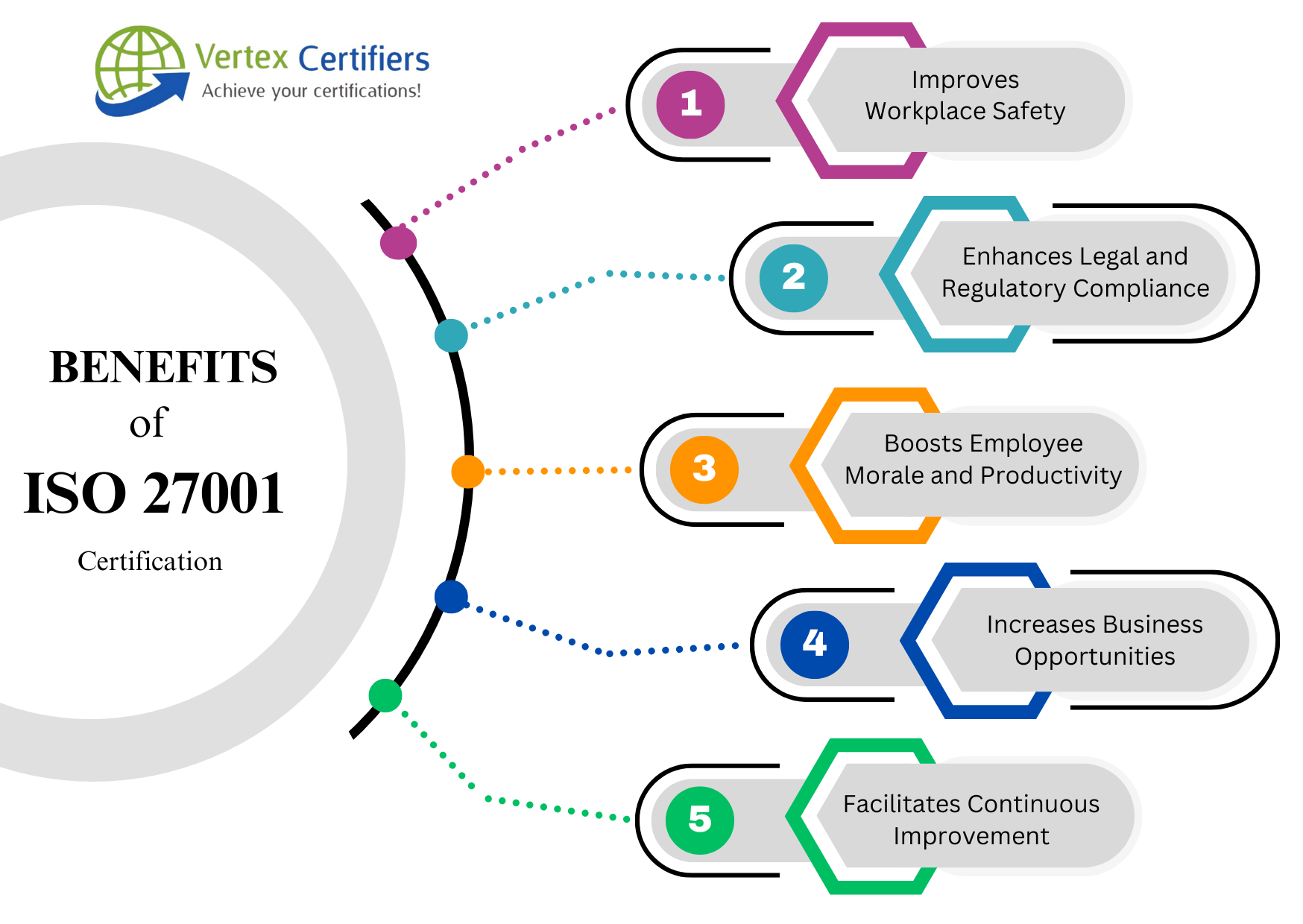
ISO/IEC 27001 is the worldwide standard for Information Security Management Systems (ISMS). Increasing volumes, sharing, and dependence on information caused by quickened digital change lead to a requirement that information assets have to be protected as a business-driven agenda.
Principal benefits of ISO 27001 are:
- Risk-driven security management of digital assets
- Compliance for data privacy like GDPR and other data protection laws
- Protection against cyber attacks like malware, ransomware, and insider threats
- IT business continuity planning for disruption and incident
- Trust from partner and customer through security assured practices
ISO 27001 ensures security is embedded in all aspects of your digital infrastructure—making you more resilient in today’s fast-changing cyber world.
ISO/IEC 20000-1:2018 – Enhancing IT Services
Although information security is included in ISO 27001, its equivalent for ITSMS is ISO/IEC 20000-1:2018. It provides a model to deliver effective, reliable, customer-oriented IT services—crucial in digital-first businesses.
As more businesses rely on IT systems, cloud infrastructure, and managed services, there will need to be good service management models. ISO 20000-1 offers:
- IT service delivery structured by business requirements
- Incident and problem management to restore quickly
- Service continuity planning to reduce disruptions
- Continuous monitoring and performance improvement
- Practice ITIL alignment for process optimization
ISO 20000-1 helps organizations to make IT operations more efficient, downtime reduced, and end-users more content.
ISO Standards Integration in Digital Transformation
Security and service management are interrelated in the digital age. For example, a cloud migration initiative must be secure (ISO 27001) and IT operations ITIL-worthy (ISO 20000-1).
Integrative management systems help organizations to:
- Integrate ISO 27001 and ISO 20000-1 compliance efforts
- Share risk assessments, policies, and audits between each other
- Simplify training, documentation, and internal processes
- Allow cost-effective establishment and upkeep
- Show one seamless approach to digital governance
By integrating the models, organizations are able to construct strong digital competencies without having to compromise security or service delivery.
Government and Industry Drive for Secure Digital Practices
With ever-more-frequent cyber incidents and IT service outages affecting key infrastructure, governments and regulatory bodies increasingly promote awareness of safe online practices and best practices. Most sectors now have mandatory data security, cyber security, and digital service legislation.
By complying with ISO standards, organizations are able to:
- Anticipate upcoming regulation
- Better cope with government audits and inspections
- Signal commitment to ethical online practices
- Eligible for government contracts and sector-specific opportunities
Standards like ISO 27001 and ISO 20000-1 lay a solid foundation of public trust and regulatory compliance.
Vertex Certifiers: Your Cybersecurity Compliance Partner
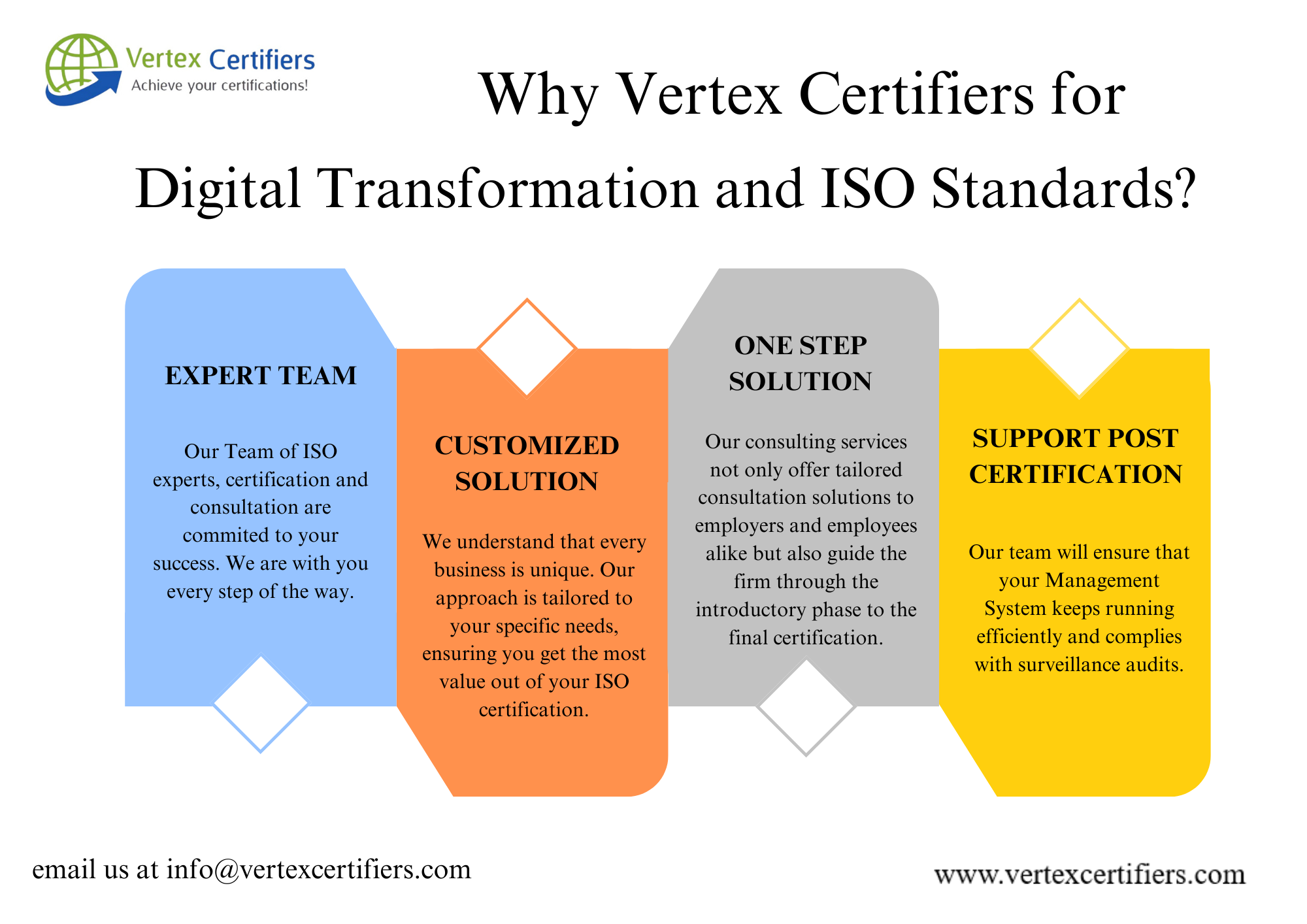
At Vertex Certifiers, we’re committed to helping your organization achieve and maintain ISO certification that enables its digital transformation path. We think we have a better plan than forms—let’s partner together with you to create systems that are actionable, scalable, and future-proof.
We offer:
- Professional specialists with IT service management and cybersecurity expertise
- Tailored implementation plan for ISO 20000-1 and ISO 27001
- Gap analysis to facilitate certification audit end-to-end
- Integration with other standards like ISO 9001 and ISO 14001
- Regular advisory to keep your systems compliant and in best state
Start your digital journey or upgrade your existing IT infrastructure – Vertex Certifiers makes you do it more efficient and secure.
Last Words
Digital transformation is revolutionizing the world of business-but, left unmanaged, it could prove more perilous than productive. ISO standards such as ISO/IEC 27001 and ISO/IEC 20000-1:2018 are precious instruments that provide shape, protection, and service warranty along the digital journey.
By adopting such widely recognized standards, organizations not only improve their performance in operations but also build confidence in their digital proficiency.
Get In Touch With Us
Our Services
- GMP Certification
- GLP Certification
- GDP Certification
- Halal Certificate
- Organic Certificate
- CE Marking Certification
- RoHS Certification
- FDA Certification
- CMMI Certification
- Cyber Security
- VAPT Testing
- Security Assessment
Our Clients


