
ISO 22000 Certification in Tunisia:
ISO 22000 Certification in Tunisia, Vertex Certifiers is a trusted global ISO consulting firm providing end-to-end support for ISO 22000 Certification in Tunisia. With an expert team of food safety consultants and HACCP specialists, we help organizations build robust Food Safety Management Systems (FSMS) aligned with international standards. Our services extend across all major Tunisian cities, including Tunis, Sfax, Sousse, Bizerte, Ariana, Kairouan, Gabès, and Monastir, ensuring seamless support for food manufacturers, processors, hotels, restaurants, and distribution companies. From gap analysis and documentation to HACCP plan development, training, implementation, and certification assistance, Vertex Certifiers delivers a smooth and efficient path to achieving ISO 22000 compliance.
Food safety is a top priority for every organization involved in food manufacturing, processing, and distribution. As global regulations and consumer awareness strengthen, maintaining compliance with international food safety standards has become essential for Tunisian businesses.
What is ISO 22000?
ISO 22000 is the internationally recognized standard for Food Safety Management Systems (FSMS). It defines the requirements for managing risks associated with food safety and ensuring that food products are safe for consumption at every stage of the supply chain.
The standard integrates critical food safety elements, including Hazard Analysis and Critical Control Points (HACCP) principles, Prerequisite Programs (PRPs), and operational controls. Its comprehensive structure helps organizations identify food hazards, implement preventive measures, and continuously monitor performance to ensure compliance with safe food production and handling practices.
In Tunisia, ISO 22000 FSMS Certification has become increasingly important as food manufacturers and exporters aim to meet both regional and international expectations. Adopting this Food Safety Standard ensures consistent product quality, minimizes contamination risks, and supports compliance with import/export regulations in key markets like the EU and the Middle East.
Importance of ISO 22000 Certification in Tunisia
The Tunisian food industry is experiencing rapid modernization as demand for processed foods, exports, and hospitality services grows. With global buyers and regulatory agencies demanding higher safety standards, achieving ISO 22000 Certification offers a clear competitive advantage.
Implementing a certified Food Safety Management System in Tunisia brings several benefits:
- Builds consumer confidence by ensuring safe, high-quality products.
- Supports compliance with Tunisian regulations and international food laws.
- Reduces risks of contamination, product recalls, and financial losses.
- Enhances market access by meeting export and supply chain requirements.
- Promotes an organizational culture of hygiene and continuous improvement.
In a business environment where safety and trust determine success, ISO 22000 Certification helps Tunisian companies protect their brand reputation, gain credibility, and meet the expectations of global partners.
ISO 22000 Certification Process in Tunisia
At Vertex Certifiers, the process of obtaining ISO 22000 Certification in Tunisia is designed to be transparent, efficient, and adaptable to each organization’s operational needs. The journey typically involves the following stages:
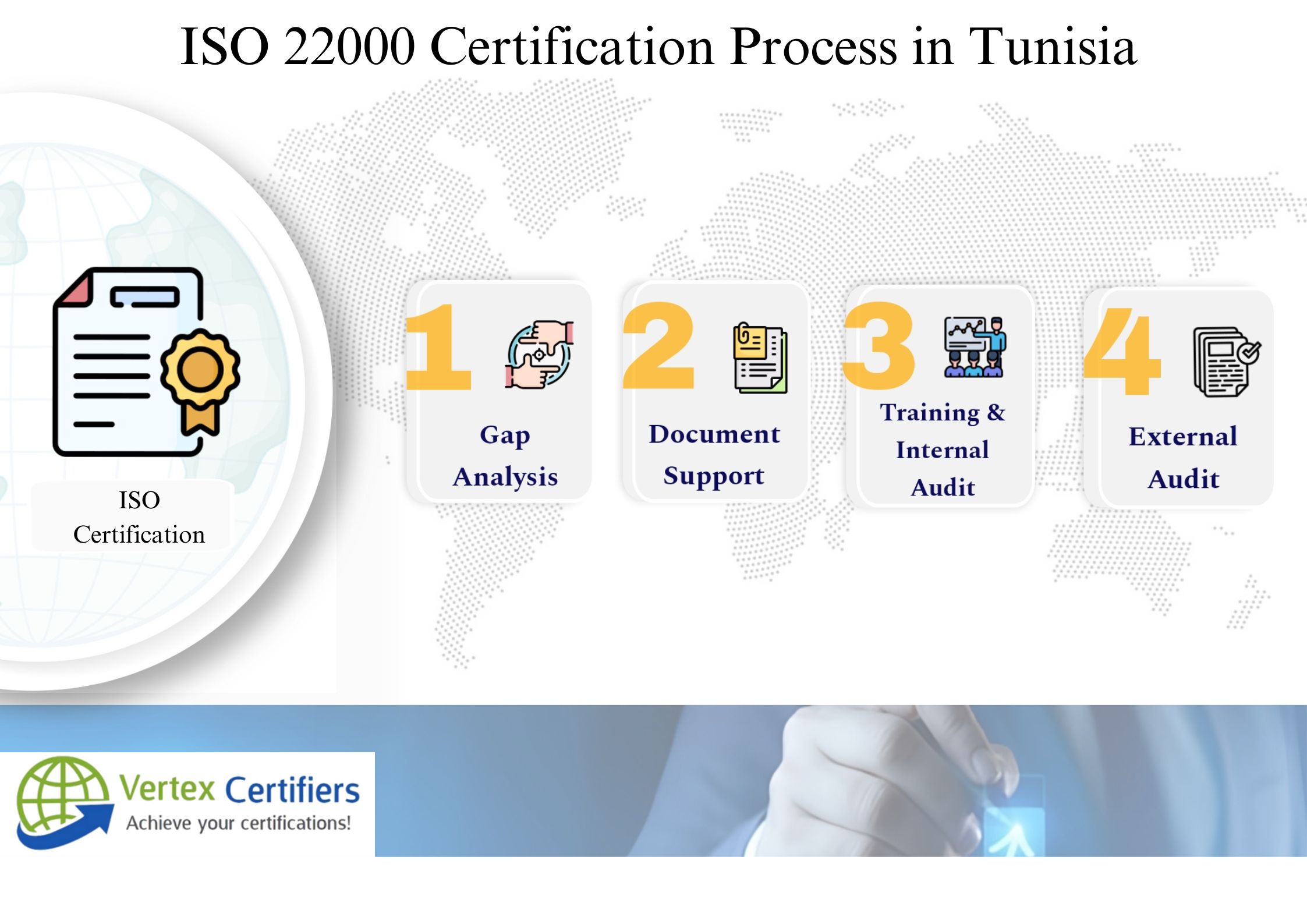
- Gap Analysis
An initial review to assess existing food safety practices and identify gaps against ISO 22000 standards. - FSMS Documentation and HACCP Plan
Developing policies, procedures, and HACCP plans to manage hazards and set preventive controls. - Implementation and Training
Deploying the food safety management system across operations and training employees at all levels for compliance. - Internal Audit
Evaluating system performance to identify nonconformities and areas requiring corrective actions. - Certification Audit
A final assessment conducted by an accredited certification body to confirm ISO 22000 compliance.
Following successful certification, organizations must maintain their FSMS through continual improvement, surveillance audits, and performance reviews.
Tunisia has a well-established food and agricultural sector that plays a significant role in the country’s economy. The nation is recognized for its production and export of olive oil, dates, seafood products, processed foods, fruits, vegetables, and agricultural commodities. As Tunisian food businesses increasingly participate in international trade and supply chains, maintaining effective food safety management systems has become essential for meeting customer, regulatory, and export market requirements.
ISO 22000 Certification provides a globally recognized framework that enables food organizations in Tunisia to identify, evaluate, and control food safety hazards throughout the food chain. The standard integrates Hazard Analysis and Critical Control Point (HACCP) principles with management system requirements, helping organizations establish a structured approach to food safety management.
Importance of ISO 22000 for Tunisian Food Businesses
Food safety is a critical concern for businesses involved in food production, processing, packaging, storage, transportation, and distribution. Customers, regulators, importers, and retailers increasingly require suppliers to demonstrate their commitment to food safety through internationally recognized certifications.
ISO 22000 helps Tunisian organizations:
- Improve food safety performance throughout the supply chain.
- Meet international customer and importer requirements.
- Strengthen compliance with food safety regulations.
- Enhance consumer confidence and brand reputation.
- Reduce food contamination risks and product recalls.
- Improve operational efficiency through standardized processes.
- Support entry into European, Middle Eastern, African, and global markets.
Organizations that implement ISO 22000 often experience improved process control, better risk management, and greater confidence among customers and stakeholders.
Key Industries Benefiting from ISO 22000 Certification in Tunisia
Several industries across Tunisia can benefit from ISO 22000 implementation, including:
Olive Oil Producers and Exporters
Tunisia is among the world’s leading olive oil-producing countries. Exporters supplying international markets must maintain strict food safety controls to satisfy customer expectations and import requirements. ISO 22000 helps establish effective controls from harvesting and processing through packaging and export.
Date Processing and Packaging Companies
Tunisian dates are exported to numerous countries worldwide. Certification helps organizations demonstrate their commitment to food safety while improving product consistency and traceability.
Seafood and Fisheries Sector
Tunisia’s coastal location supports a significant fishing and seafood processing industry. ISO 22000 enables seafood businesses to manage food safety hazards associated with handling, processing, storage, and transportation.
Food Manufacturing Companies
Manufacturers producing packaged foods, beverages, bakery products, dairy products, confectionery items, and processed foods can use ISO 22000 to improve food safety controls and strengthen customer confidence.
Agricultural Processing Facilities
Organizations involved in processing fruits, vegetables, grains, spices, and agricultural products can utilize ISO 22000 to manage food safety risks throughout their operations.
Food Logistics and Storage Providers
Warehouses, cold storage facilities, transportation companies, and food distribution organizations can implement ISO 22000 to ensure food safety is maintained throughout the supply chain.
How ISO 22000 Supports Export Growth in Tunisia
Many Tunisian food businesses rely on exports as a significant source of revenue. International buyers increasingly require suppliers to demonstrate compliance with recognized food safety standards before entering commercial agreements.
ISO 22000 certification can help organizations:
- Improve supplier qualification opportunities.
- Meet international food safety expectations.
- Strengthen relationships with importers and distributors.
- Demonstrate commitment to food safety and quality.
- Improve competitiveness in global markets.
- Facilitate participation in international supply chains.
Organizations seeking to expand into export markets often find that certification provides an additional level of confidence to customers and business partners.