ISO 9001 Certification in Iran:
ISO 9001 Certification in Iran, Vertex Certifiers is a trusted ISO consulting and certification partner in Iran, supporting organizations across Tehran, Karaj, Isfahan, Tabriz, Mashhad, and Shiraz with internationally recognized ISO 9001 Quality Management System certification. With deep expertise across ISO 9001, ISO 14001, ISO 45001, ISO 27001, ISO 22000, ISO 13485, ISO 21001, and GMP, Vertex helps Iranian manufacturers, service providers, exporters, healthcare units, and SMEs build compliant, efficient, and customer-focused systems. Our city-specific delivery model—remote for corporate hubs and onsite for industrial zones—ensures fast-track, cost-effective certification aligned with IAF-accredited standards, enabling Iranian businesses to strengthen credibility, win tenders, and expand confidently into regional and global markets.
ISO 9001:2015 sets the global benchmark for Quality Management Systems (QMS), helping organizations deliver consistent, customer-focused results. In Iran, amid export controls and regional trade growth, ISO 9001 certification builds international credibility for over 10,000 certified firms.
What is ISO 9001 Quality Management System (QMS)?
ISO 9001:2015 promotes seven principles: customer focus, leadership, engagement of people, process approach, improvement, evidence-based decisions, and relationship management. It’s process-oriented, not product-specific, applicable to any sector.
Core elements include risk-based thinking, PDCA cycles, and continual improvement. Globally accepted by 1+ million organizations, it aligns perfectly with Iran’s industrial push—oil services, manufacturing, IT—enhancing traceability and satisfaction. Unlike rigid specs, ISO 9001 flexes to organizational context, making certification accessible yet powerful.
Who Needs ISO 9001 Certification in Iran?
Universal appeal across:
- Manufacturing & Industrial: Auto parts, steel, chemicals.
- Oil & Gas Support: EPC, maintenance services.
- Construction & Infrastructure: Projects, contractors.
- IT/Software/Tech: Development, BPO firms.
- Healthcare/Diagnostics/Labs: Clinics, testing centers.
- Trading/Logistics/Distribution: Supply chain operators.
- Education/Services: Training institutes, consultancies.
Even startups benefit from structured QMS foundations.
ISO 9001 Certification Process in Iran
Proven 7-step roadmap by ISO 9001 Consultants in Iran:
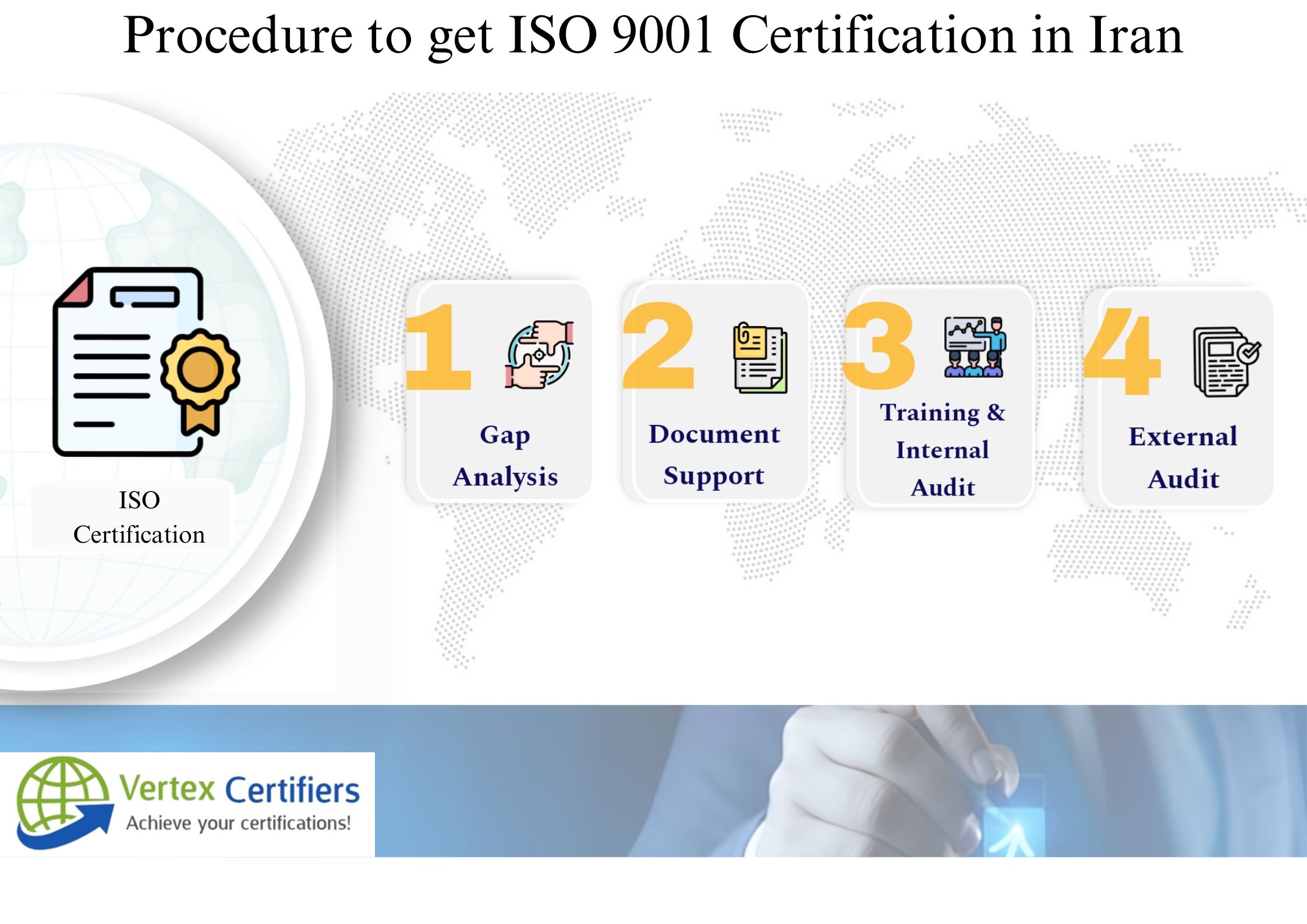
- Gap Analysis: Assess vs ISO 9001:2015.
- Scope Definition & Planning: Boundaries, objectives.
- QMS Documentation: Manual, SOPs, forms.
- Implementation & Training: Process rollout, awareness.
- Internal Audit & Management Review: Self-assess, correct.
- Certification Audit: Stage 1 (docs), Stage 2 (site).
- Certificate Issuance: 3-year validity, surveillance.
IAF-accredited bodies like TÜV, SGS, UAF operate in Iran.
Â
ISO 9001 Certification in Iran – City-Wise Demand
ISO 9001 certification demand in Iran is driven by strong industrial and service clusters across key cities.
- Tehran: Corporate headquarters, IT & services (around 60% of certifications), and diversified manufacturing units.
- Karaj: Auto parts manufacturers and large industrial zones supporting Tehran’s supply chain.
- Isfahan: Steel plants, chemical industries, and large food processors.
- Tabriz: Machinery, engineering companies, and export-focused free trade zones.
- Mashhad: Food processing, hospitality, logistics, and trade corridor businesses.
- Shiraz: Healthcare services, pharmaceutical support units, and engineering firms.
Many INISO-accredited certification bodies operate in these regions, while Special Economic Zones (SEZs) provide incentives that accelerate ISO adoption.
Key ISO 9001 Requirements
ISO 9001 follows the Annex SL high-level structure, ensuring consistency and audit readiness:
- Context of the Organization: Identification of internal/external issues and stakeholder expectations.
- Leadership & Quality Policy: Management commitment, defined roles, and communicated quality objectives.
- Risk & Opportunity Management: Proactive planning using tools like SWOT or FMEA.
- Operational Planning & Control: Process mapping, KPIs, and outsourced process control.
- Performance Evaluation: Internal audits, management reviews, and performance monitoring.
- Continual Improvement: Nonconformity handling, CAPA, and PDCA-driven improvement.
Robust documented information ensures long-term compliance and smooth certification audits.
Timeline for ISO 9001 Certification in Iran
- Small Organizations: 2–3 weeks (10–50 employees).
- Medium Enterprises: 3–5 weeks for process-intensive operations.
- Large / Multi-site Organizations: 4–8 weeks depending on scope and complexity.
Timelines depend on readiness, staff involvement, and existing documentation. With Vertex’s fast-track approach, prepared organizations can complete certification in as little as 10 days.
Cost of ISO 9001 Certification in Iran
The cost of ISO 9001 certification varies based on several factors:
- Company size and total manpower.
- Number of processes, sites, and locations.
- Industry complexity and regulatory exposure.
- Existing documentation maturity.
- Choice of certification body (local INISO vs international IAF).
Integrating ISO 9001 with other standards (such as ISO 14001 or ISO 45001) can reduce audit and implementation effort by up to 30%.
Benefits of ISO 9001 Certification for Iranian Businesses
- 20–30% improvement in operational efficiency through standardized processes.
- Higher customer satisfaction and retention (often exceeding 90%).
- 40% reduction in defects, rework, and complaints.
- Improved management visibility using KPIs and dashboards.
- Enhanced credibility for tenders, contracts, and partnerships.
- Stronger export acceptance and supplier approval.
Many ISO 9001–certified Iranian organizations report 15–25% annual order growth.
ISO 9001 vs Other ISO Standards
ISO 9001 serves as the foundation for an Integrated Management System (IMS):
- ISO 14001: Adds environmental management controls.
- ISO 45001: Focuses on occupational health & safety.
- ISO 27001: Strengthens information security on a QMS base.
Integrated audits reduce duplication and can cut certification costs by nearly 50%, especially popular in Iranian manufacturing and oil-related sectors.
How Vertex Certifiers Helps with ISO 9001 Certification in Iran
Vertex Certifiers delivers end-to-end ISO 9001 certification support across Iran:
- Free Gap Analysis with readiness scoring.
- Customized QMS Documentation aligned to your industry.
- Employee Training (online & onsite).
- Mock Audits & Final Audit Support with 95%+ success rates.
- IAF-recognized Certification Bodies for global acceptance.
We provide remote support for Tehran-based firms and onsite assistance in Tabriz, Isfahan, Mashhad, Shiraz, and Karaj, with over 500 successful projects delivered globally.
Frequently Asked Questions (FAQs)
- Is ISO 9001 mandatory in Iran? No, but often required for tenders and government contracts.
- Who issues ISO 9001 certificates? INISO-accredited and IAF-recognized certification bodies.
- How long is the certificate valid? 3 years with annual surveillance audits.
- Can it be combined with other ISO standards? Yes, IMS is highly recommended.
- Is ISO 9001 suitable for SMEs and startups? Absolutely—scalable and cost-effective.
Get ISO 9001 Certified in Iran
Elevate your business with a free ISO 9001 consultation from Vertex Certifiers. We serve organizations across Tehran, Karaj, Isfahan, Tabriz, Mashhad, and Shiraz.
📧 Email: info@vertexcertifiers.com
Fast-track your ISO 9001 certification in Iran — global quality with local expertise.
Our Services
- GMP Certification
- GLP Certification
- GDP Certification
- Halal Certificate
- Organic Certificate
- CE Marking Certification
- RoHS Certification
- FDA Certification
- CMMI Certification
- Cyber Security
- VAPT Testing
- Security Assessment
