ISO 50001 Certification in Vietnam:
ISO 50001 Certification in Vietnam, Vertex Certifiers is a globally recognized ISO consulting and certification support firm providing complete end-to-end ISO 50001 Certification services across Vietnam. Our experienced ISO consultants and lead auditors assist organizations through every stage of the certification journey, including gap analysis, energy review, documentation, implementation, employee training, internal audits, management review, certification audit coordination, and post-certification support. We serve organizations across major business and industrial cities including Hanoi, Ho Chi Minh City, Hai Phong, Da Nang, Can Tho, Nha Trang, Binh Duong, Dong Nai, Bac Ninh, and other regions of Vietnam. In addition to ISO 50001 Energy Management Systems (EnMS), Vertex Certifiers also provides implementation and certification support for ISO 9001, ISO 14001, ISO 45001, ISO 27001, ISO 22000, ISO 22301, ISO 13485, and other internationally recognized management system standards. Whether you operate in manufacturing, electronics, steel, cement, textile, chemical, automotive, food processing, logistics, or other energy-intensive industries, our practical and cost-effective consulting approach helps improve energy efficiency, reduce operational costs, achieve regulatory compliance, and strengthen your organization’s sustainability and global competitiveness.
What is ISO 50001 Certification ?
ISO 50001 is the internationally recognized standard for Energy Management Systems (EnMS), developed and published by the International Organization for Standardization (ISO). The current version, ISO 50001:2018, provides organizations with a systematic framework to establish, implement, maintain, and continually improve their energy management practices. Rather than focusing solely on reducing energy consumption, ISO 50001 enables organizations to improve overall energy performance by identifying opportunities for efficiency, establishing measurable energy objectives, monitoring energy usage, and implementing data-driven improvements across all operational processes.
The standard promotes a proactive approach toward managing energy resources by requiring organizations to develop an energy policy, conduct comprehensive energy reviews, establish Energy Performance Indicators (EnPIs), define energy baselines, and integrate risk-based thinking into day-to-day operations. Through continual monitoring, measurement, internal audits, and management reviews, organizations can reduce energy waste, lower operating costs, minimize greenhouse gas emissions, and improve environmental performance while maintaining productivity.
Although ISO 50001 and ISO 14001 both contribute to environmental sustainability, they serve different purposes. ISO 14001 focuses on managing an organization’s overall environmental impacts, including waste management, pollution prevention, legal compliance, and environmental protection. ISO 50001, on the other hand, specifically concentrates on improving energy performance, increasing energy efficiency, reducing energy consumption, and optimizing the use of energy resources. Many organizations implement both standards together as part of an Integrated Management System (IMS) to achieve greater operational efficiency, sustainability, and long-term business performance.
ISO 50001 Certification Process
The ISO 50001 certification process follows a structured methodology by expert ISO 50001 Consultants in Vietnam that enables organizations to establish an effective Energy Management System (EnMS) while continually improving their energy performance:
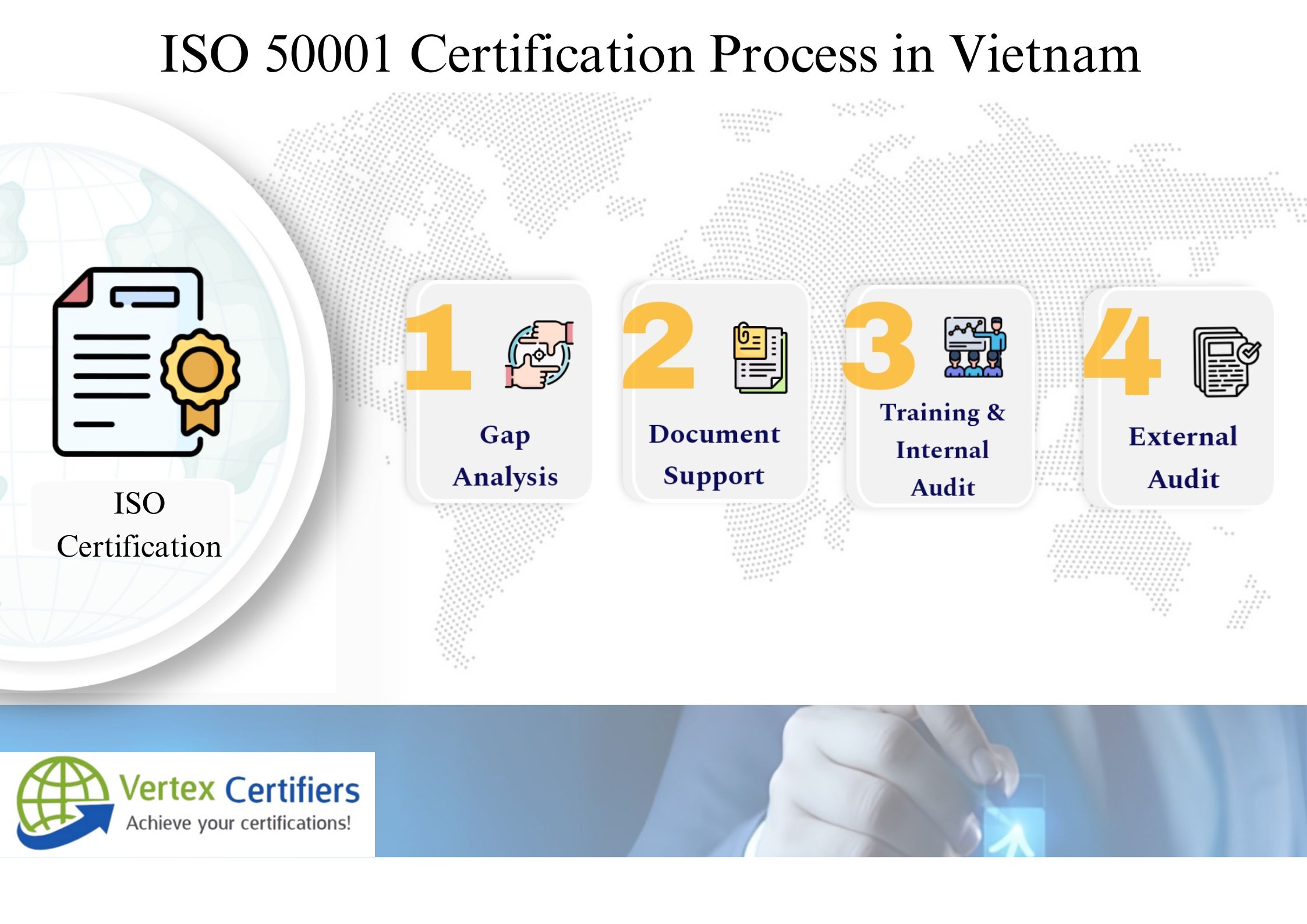
Gap Analysis: The implementation journey begins with a comprehensive assessment of the organization’s existing energy management practices to identify gaps between current operations and ISO 50001 requirements.
Energy Review: A detailed energy review is conducted to evaluate energy consumption patterns, identify significant energy uses, establish energy baselines, and determine opportunities for improving energy efficiency throughout the organization.
Documentation: Based on the findings, the necessary documentation is developed, including the Energy Management Manual, energy policy, operational procedures, work instructions, monitoring methods, and documented records required by the standard.
Energy Policy: Top management establishes an Energy Policy that demonstrates the organization’s commitment to improving energy performance, complying with applicable legal requirements, and continually enhancing the effectiveness of the Energy Management System.
Energy Objectives and Targets: Measurable energy objectives, targets, and Energy Performance Indicators (EnPIs) are established to monitor improvements, reduce energy consumption, and support long-term sustainability goals.
Implementation: The documented Energy Management System is implemented across relevant departments by integrating energy-efficient operational controls, maintenance practices, process improvements, and employee responsibilities into daily business operations.
Monitoring Energy Performance: Organizations continuously monitor, measure, analyze, and evaluate energy performance using established baselines and performance indicators to ensure objectives are being achieved and improvement opportunities are identified.
Employee Training and Awareness: Employees receive appropriate training to understand the Energy Management System, their responsibilities, energy-saving practices, and the organization’s overall commitment to continual improvement.
Internal Audit: Periodic internal audits are conducted to verify compliance with ISO 50001 requirements, evaluate system effectiveness, identify nonconformities, and recommend corrective actions.
Management Review: Top management reviews the performance of the Energy Management System, evaluates achievement of energy objectives, allocates necessary resources, and approves continual improvement initiatives.
Certification Audit: An accredited certification body conducts a two-stage certification audit to assess documentation and verify the effective implementation of the Energy Management System before issuing ISO 50001 certification.
Surveillance Audits: Following certification, annual surveillance audits are conducted to confirm continued compliance with ISO 50001 requirements, monitor continual improvement, and maintain the validity of the certification.
Why ISO 50001 Certification is Important in Vietnam
Vietnam has emerged as one of Asia’s fastest-growing manufacturing and export economies, attracting substantial foreign direct investment across sectors such as electronics, automotive, steel, cement, textiles, chemicals, food manufacturing, and packaging. As industrial production continues to expand, energy consumption has increased significantly, making efficient energy management a critical business priority. Rising electricity costs, growing competition in international markets, and increasing pressure to reduce operating expenses have encouraged organizations throughout Vietnam to adopt internationally recognized energy management practices.
The Vietnamese government is actively promoting sustainable industrial development, energy conservation, and carbon emission reduction through various national initiatives and regulatory frameworks. At the same time, international customers and multinational corporations increasingly expect suppliers to demonstrate responsible energy management and sustainability performance as part of their procurement requirements. ISO 50001 certification enables organizations to align with these expectations by establishing a structured Energy Management System that improves energy efficiency, reduces waste, lowers carbon emissions, and supports long-term environmental objectives.
The standard is particularly valuable for energy-intensive industries such as electronics manufacturing, steel production, cement manufacturing, textile and garment production, chemical processing, food manufacturing, automotive components, packaging, logistics, and large industrial facilities. By implementing ISO 50001, organizations can systematically monitor energy usage, identify improvement opportunities, optimize equipment performance, reduce utility costs, enhance operational efficiency, and strengthen their competitiveness in both domestic and international markets while supporting Vietnam’s transition toward a more sustainable and energy-efficient economy.
Our Services
Our Local Cities

ISO 50001 Certification in Vietnam | ISO 50001 Consultants in Vietnam
ISO 50001 Certification in Vietnam helps organizations build a structured Energy Management System (EnMS) to improve energy performance, reduce consumption, and control energy-related costs. It is especially valuable for energy-intensive industries, export-oriented businesses, industrial facilities, commercial buildings, and large institutions looking to improve sustainability and operational efficiency.
With rising energy costs, growing ESG expectations, and stronger environmental accountability, ISO 50001 gives businesses in Vietnam a practical framework to monitor, manage, and continually improve energy use. It also supports organizations working toward carbon reduction, sustainability targets, and long-term business resilience.
Benefits of ISO 50001 Certification
ISO 50001 helps organizations improve how energy is measured, controlled, and optimized across operations. It supports both financial and sustainability goals by making energy performance part of day-to-day business management.
- Reduced energy consumption: Helps identify waste and improve the use of electricity, fuel, steam, compressed air, and other energy sources.
- Lower operating costs: Better control of energy usage can reduce utility bills and unnecessary consumption.
- Better energy efficiency: Creates a structured approach to improve performance of processes, equipment, and facilities.
- Reduced carbon emissions: Lower energy use typically contributes to lower greenhouse gas emissions.
- Improved sustainability: Supports environmental responsibility and long-term resource conservation.
- Regulatory compliance: Helps organizations manage energy-related compliance obligations more systematically.
- Better ESG performance: Strengthens reporting, accountability, and sustainability positioning.
- Improved operational efficiency: Energy controls often improve broader process discipline and plant performance.
- Better resource utilization: Encourages more effective use of utilities, equipment, and infrastructure.
- Competitive advantage: Can strengthen positioning with customers, partners, and international buyers.
- Better reputation: Demonstrates commitment to responsible and efficient operations.
- Improved environmental performance: Supports reduced environmental impact through better energy management.
- Supports Net Zero initiatives: Helps organizations create measurable progress toward carbon and energy goals.
- Better investor confidence: Stronger governance and measurable efficiency improvements can improve stakeholder trust.
Industries That Need ISO 50001 in Vietnam
ISO 50001 is relevant across many sectors in Vietnam, especially where energy use is high, operational efficiency is important, or sustainability expectations are increasing.
Manufacturing
Manufacturing companies can use ISO 50001 to reduce energy waste, improve equipment efficiency, and control operating costs across production lines.
Electronics
Electronics manufacturers and suppliers often need tighter process control, reduced utility waste, and better ESG performance to support global customer expectations.
Steel Plants
Steel plants are energy-intensive operations where ISO 50001 can support better furnace efficiency, utility control, and cost reduction.
Cement Plants
Cement manufacturing involves significant energy consumption, making ISO 50001 useful for monitoring, baselining, and improving plant-wide energy performance.
Chemical Industry
Chemical businesses can benefit from better monitoring of process energy use, improved operational control, and more disciplined energy planning.
Food Processing
Food processors often consume substantial energy in refrigeration, heating, packaging, and utilities, making energy management commercially important.
Textiles
Textile manufacturers can use ISO 50001 to optimize steam, electricity, water-heating, and production-related energy use.
Garments
Garment exporters can strengthen energy efficiency and sustainability credentials while supporting buyer expectations and cost control.
Paper Mills
Paper and pulp facilities often have large thermal and electrical loads, making structured energy management especially valuable.
Plastic Manufacturing
Plastic manufacturers can improve equipment efficiency, reduce consumption, and strengthen productivity through better energy monitoring.
Warehouses
Warehouses with lighting, cooling, refrigeration, automation, or material handling systems can reduce utility costs through better control.
Logistics
Logistics businesses can use ISO 50001 to manage fuel, facility, and support-system energy use more efficiently.
Industrial Parks
Industrial parks and large industrial campuses can benefit from structured energy governance across common infrastructure and shared utilities.
Commercial Buildings
Office buildings, mixed-use developments, and business facilities can use ISO 50001 to reduce electricity consumption and improve building performance.
Hospitals
Hospitals have continuous energy demand from medical equipment, HVAC, lighting, and support systems, making energy management highly relevant.
Universities
Universities and educational campuses can improve energy control across buildings, labs, hostels, cooling systems, and common utilities.
Large Hotels
Hotels can reduce operating costs and strengthen sustainability positioning by improving HVAC, hot water, lighting, and facility-wide energy performance.
ISO 50001 Requirements
ISO 50001 includes a set of structured management system requirements that help organizations plan, operate, monitor, and improve energy performance.
- Context of Organization: Understanding internal and external issues, relevant stakeholders, and the scope of the Energy Management System.
- Leadership: Top management commitment, accountability, and support for the energy management framework.
- Energy Policy: A formal policy that sets the direction for energy performance and continual improvement.
- Energy Planning: Structured planning to identify significant energy uses, opportunities, and priorities.
- Energy Review: Analysis of energy use and consumption to determine where improvement efforts should focus.
- Energy Baseline: Establishing reference points against which energy performance improvement can be measured.
- Energy Performance Indicators (EnPIs): Defining measurable indicators used to track energy performance over time.
- Objectives: Setting energy-related goals and improvement targets aligned with the policy and review findings.
- Operational Control: Implementing controls for processes, equipment, and activities that influence energy performance.
- Monitoring: Ongoing observation of energy use, performance, deviations, and trends.
- Measurement: Collecting and evaluating relevant data to support evidence-based improvement.
- Competence: Ensuring personnel involved in the system are capable and appropriately trained.
- Awareness: Making employees aware of the policy, objectives, significant energy uses, and their responsibilities.
- Documentation: Maintaining required documented information, procedures, records, and evidence.
- Internal Audit: Auditing the system internally to verify implementation and conformity.
- Management Review: Top management review of system effectiveness, energy performance, and improvement needs.
- Continual Improvement: Ongoing enhancement of both the Energy Management System and energy performance results.
Cost of ISO 50001 Certification in Vietnam
The cost of ISO 50001 Certification in Vietnam depends on the size and complexity of the organization and there is no fixed cost for every company. Each project is different, so businesses usually receive a customized quotation based on scope, operational profile, and certification requirements.
The main cost factors typically include:
- Company size: Larger businesses usually require more implementation effort, wider training coverage, and longer audits.
- Energy consumption: Organizations with complex or high energy usage often need deeper energy review and performance analysis.
- Number of sites: Multi-site operations require broader scope management and more audit coordination.
- Manufacturing complexity: Energy-intensive and technically complex operations may need more extensive controls and documentation.
- Audit duration: Certification body fees often depend on audit man-days and operational scope.
- Documentation: The level of support needed for procedures, records, baselines, and EnPI tracking can affect implementation cost.
- Certification body: Fees vary depending on the selected certification body and audit scope.
Because there is no standard fixed price, the best approach is to request a customized quotation based on your organization’s actual energy profile and certification scope.
Timeline for ISO 50001 Certification in Vietnam
The implementation timeline depends on readiness, energy complexity, number of sites, documentation status, and internal resource availability. A practical timeline can be presented as follows:
| Organization Size | Estimated Timeline |
|---|---|
| Small Companies | 30–45 days |
| Medium Companies | 45–75 days |
| Large Companies | 60–120 days |
Why Choose Vertex Certifiers
Vertex Certifiers supports businesses across Vietnam with practical, implementation-focused ISO 50001 consulting designed to improve readiness, reduce delays, and simplify the path to certification.
- Experienced Lead Auditors: Guidance from professionals who understand energy management and certification requirements.
- Affordable Pricing: Flexible consulting support suitable for SMEs and large organizations.
- Fast Documentation: Support for energy manuals, procedures, records, and audit-ready documented information.
- Online & Onsite Consulting: Flexible implementation support based on business needs and locations.
- Energy Management Experts: Practical support for energy review, baselines, EnPIs, and operational improvement.
- Internal Audit: Pre-certification internal audit support to identify and close gaps early.
- Certification Coordination: Assistance with planning, audit readiness, and coordination with certification bodies.
- End-to-End Support: Complete support from gap analysis to certification and maintenance.
- Post Certification Support: Help with surveillance audit preparation, improvements, and ongoing compliance.
- Global Experience: Support shaped by international certification expectations and industry practices.
Cities We Serve in Vietnam
Vertex Certifiers provides ISO 50001 consulting and certification support across major cities and industrial regions in Vietnam, including:
- Hanoi
- Ho Chi Minh City
- Hai Phong
- Da Nang
- Can Tho
- Nha Trang
- Bac Ninh
- Dong Nai
- Binh Duong
- Hue
Integration with Other ISO Standards
ISO 50001 can be integrated with other management system standards as part of an Integrated Management System (IMS). This helps organizations manage multiple business priorities through one aligned framework instead of maintaining separate systems for each standard.
ISO 50001 is commonly integrated with:
- ISO 9001: For quality management and process consistency.
- ISO 14001: For environmental management and sustainability performance.
- ISO 45001: For occupational health and safety management.
- ISO 50001: For energy management and performance improvement.
Key benefits of integration include:
- Single documentation: Common procedures, records, and controls reduce duplication.
- Single audit: Coordinated audits can reduce disruption and streamline assessment activities.
- Lower cost: Integrated systems often reduce administrative and audit-related overhead.
- Improved efficiency: Shared management processes make implementation and maintenance easier.
- Better compliance: One aligned system can improve consistency across quality, energy, safety, and environmental obligations.
Frequently Asked Questions
What is ISO 50001 Certification?
ISO 50001 Certification is formal recognition that an organization has implemented an Energy Management System that meets the requirements of ISO 50001.
Who needs ISO 50001 in Vietnam?
It is especially useful for manufacturers, industrial facilities, exporters, commercial buildings, hospitals, campuses, logistics operations, and other organizations with significant energy use.
Is ISO 50001 mandatory?
ISO 50001 is generally not mandatory unless required by a customer, contract, tender, group policy, or specific business program.
How long does certification take?
The timeline depends on business size, energy complexity, site count, and implementation readiness. Small organizations may complete it faster than large multi-site operations.
What is the cost of ISO 50001 Certification?
There is no fixed cost. The total cost depends on your company size, energy usage, number of sites, documentation needs, audit duration, and certification body.
Can SMEs implement ISO 50001?
Yes. Small and medium-sized businesses can implement ISO 50001 when the system is designed to match their scale, energy profile, and operational needs.
What is an Energy Management System?
An Energy Management System is a structured framework used to monitor, control, and improve energy performance across an organization.
What is the validity of ISO 50001?
ISO certification is commonly issued within a three-year cycle, with surveillance audits typically conducted during that period to maintain validity. [web:40][web:90][web:103]
Can ISO 50001 be integrated with ISO 9001 and ISO 14001?
Yes. Many organizations integrate ISO 50001 with other ISO standards to create one coordinated management system.
Why choose Vertex Certifiers?
Vertex Certifiers offers practical consulting, fast documentation support, experienced auditors, certification coordination, and end-to-end implementation support across Vietnam.
Get ISO 50001 Certification in Vietnam
Strengthen your energy performance with expert ISO 50001 consulting and certification support from Vertex Certifiers.
- Free consultation
- Gap assessment
- Affordable implementation
- Fast certification support
- Email: info@vertexcertifiers.com
- Contact form support
- Request a customized quotation
Get ISO Certification Support in Vietnam
Looking to improve compliance, strengthen operations, and build business credibility in Vietnam? Vertex Certifiers provides end-to-end ISO certification consulting, documentation, implementation, training, internal audits, and certification support tailored to your organization.
We support businesses across Vietnam for major international standards including ISO 9001 Certification in Vietnam, ISO 14001 Certification in Vietnam, ISO 22000 Certification in Vietnam, ISO 27001 Certification in Vietnam, and ISO 22301 Certification in Vietnam.
Our consultants support organizations across major cities in Vietnam, including Ho Chi Minh City, Hanoi, Da Nang, Hai Phong, Can Tho, Bien Hoa, Bac Ninh, Hai Duong, Vung Tau, and other key industrial and commercial locations.
Email: info@vertexcertifiers.com
Contact Vertex Certifiers today for a free consultation and a customized quotation for ISO certification in Vietnam.
