
ISO Certification for IT Companies in Philippines:
ISO Certification for IT Companies in Philippines, Vertex Certifiers is an international ISO consulting company providing end-to-end ISO certification consulting services for IT companies throughout the Philippines. We assist organizations in implementing internationally recognized ISO standards, including ISO 27001 (Information Security Management System), ISO 9001 (Quality Management System), ISO 20000-1 (IT Service Management System), ISO 22301 (Business Continuity Management System), ISO 27701 (Privacy Information Management System), ISO 42001 (Artificial Intelligence Management System), ISO 31000 (Risk Management), ISO 29110 (Software Engineering for Very Small Entities), ISO 27017 (Cloud Security), ISO 27018 (Protection of Personally Identifiable Information in Public Clouds), ISO 27032 (Cybersecurity Guidelines), and ISO 38500 (IT Governance). Our comprehensive consulting services include gap analysis, management system design, documentation development, risk assessments, employee training, implementation support, internal audits, management review assistance, and certification audit coordination. Our experienced consultants work with software companies, BPOs, KPOs, cloud service providers, SaaS companies, FinTech organizations, AI companies, cybersecurity firms, managed service providers, data centers, and technology startups across Manila, Quezon City, Makati, Taguig, Pasig, Cebu City, Davao City, Iloilo City, Clark, Bacolod, and other locations throughout the Philippines, offering both remote and on-site consulting tailored to each organization’s business objectives.
The Philippines has emerged as one of Asia’s leading technology and digital service hubs, driven by rapid growth in its Information Technology (IT) and Information and Communications Technology (ICT) sectors. The country is home to a thriving ecosystem of software development companies, IT service providers, Business Process Outsourcing (BPO) and Knowledge Process Outsourcing (KPO) organizations, cloud computing providers, Software-as-a-Service (SaaS) companies, artificial intelligence (AI) startups, FinTech firms, cybersecurity companies, data centers, and managed service providers. As digital transformation accelerates across industries, technology businesses are increasingly expected to demonstrate robust management systems, information security, service quality, and operational excellence.
With the Philippines serving clients across North America, Europe, Australia, the Middle East, and the Asia-Pacific region, international certifications have become an important factor in building trust and winning new business opportunities. Government projects, multinational partnerships, and global outsourcing contracts often require organizations to demonstrate compliance with internationally recognized ISO standards. Customers also expect technology providers to maintain strong information security controls, protect sensitive business and customer data, ensure service continuity, and deliver consistent quality across all operations.
Why ISO Certification is Important for IT Companies
Technology companies operate in a highly competitive environment where clients expect secure, reliable, and high-quality services. Implementing internationally recognized ISO standards helps organizations establish structured business processes, strengthen governance, and demonstrate their commitment to quality, information security, privacy, and continual improvement.
Builds Customer Confidence
ISO certification demonstrates that an organization follows internationally accepted management practices and maintains consistent service quality. This increases customer confidence and strengthens long-term business relationships.
Supports International Contracts
Many multinational corporations, government agencies, and enterprise customers prefer or require ISO-certified vendors when selecting technology partners. Certification can improve eligibility for international tenders, outsourcing contracts, and strategic partnerships.
Expands Outsourcing Opportunities
The Philippines is a global leader in IT outsourcing and BPO services. ISO certification helps organizations meet the expectations of overseas clients by demonstrating effective management systems, reliable service delivery, and strong information security practices.
Improves Risk Management
ISO standards encourage organizations to identify, assess, and mitigate operational, technical, and business risks before they impact service delivery. Effective risk management improves organizational resilience and decision-making.
Strengthens Data Protection
Technology companies frequently manage confidential customer information, intellectual property, financial data, and personally identifiable information (PII). Relevant ISO standards help organizations establish robust security controls and protect sensitive information against cyber threats and unauthorized access.
Supports Regulatory Compliance
ISO management systems assist organizations in aligning with applicable legal, contractual, industry, and regulatory requirements. A structured compliance approach reduces the likelihood of nonconformities and enhances governance.
Drives Process Improvement
Documented procedures, defined responsibilities, performance monitoring, and continual improvement initiatives help organizations standardize operations, reduce inefficiencies, and improve productivity across departments.
Enhances Service Quality
Consistent service delivery is essential for software development companies, cloud providers, managed service providers, and IT support organizations. ISO certification promotes better service management, quality assurance, customer satisfaction, and continual performance improvement.
Improves Business Continuity
Technology businesses must maintain service availability even during cyber incidents, infrastructure failures, or unexpected disruptions. ISO standards encourage organizations to develop business continuity and disaster recovery capabilities that minimize downtime and protect critical operations.
Creates Competitive Advantage
ISO certification differentiates organizations from competitors by demonstrating professionalism, operational maturity, and adherence to internationally recognized best practices. Certified organizations often enjoy greater credibility when pursuing new business opportunities.
Process to get ISO Certification for IT Companies in Philippines
Regardless of the ISO standard being implemented, the certification journey follows a structured process that ensures the management system is effectively designed, implemented, and continually improved by expert ISO Consultants for IT Companies in Philippines
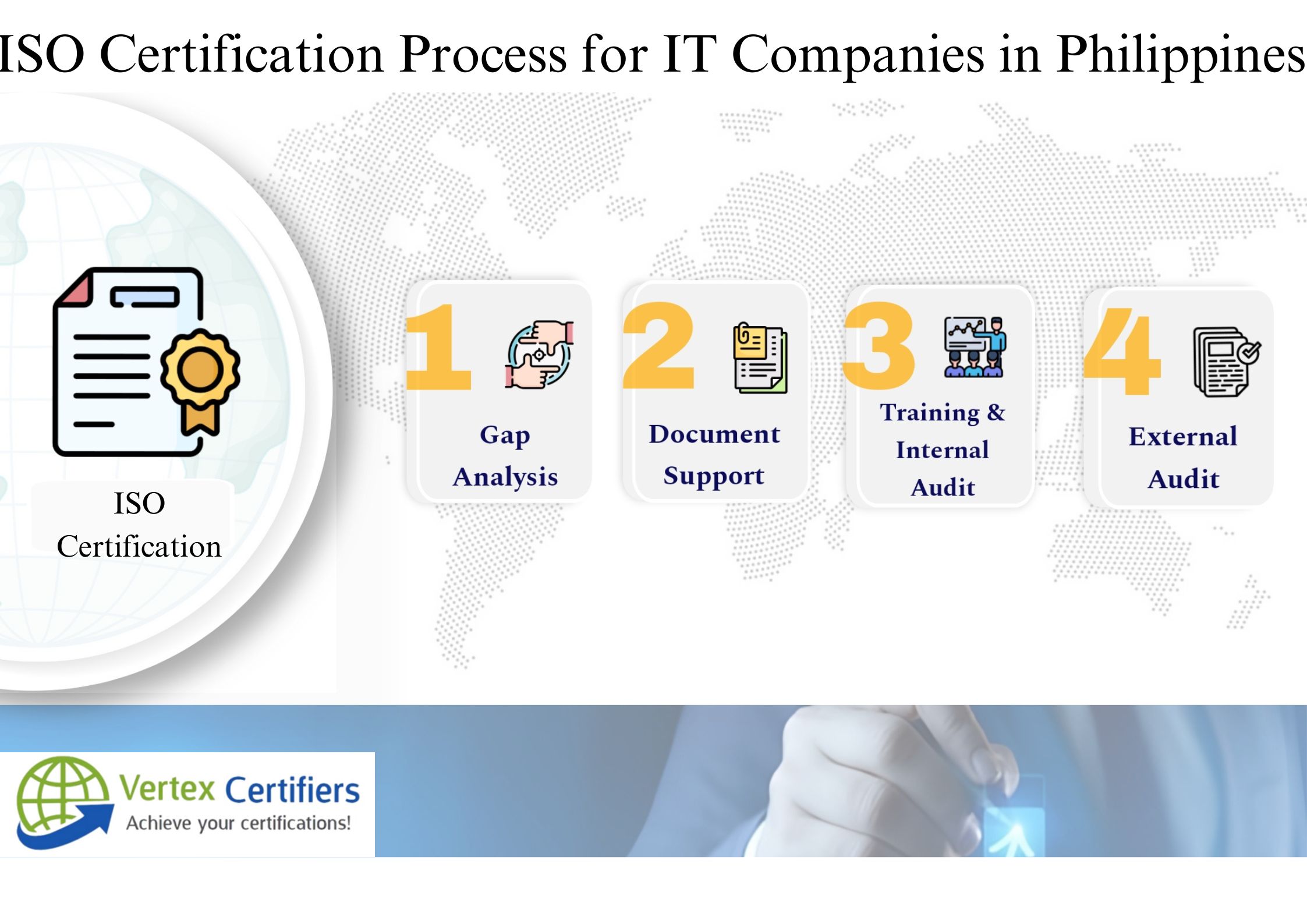
Step 1 – Gap Analysis
The implementation process begins with a detailed assessment of the organization’s existing processes, policies, and controls against the requirements of the selected ISO standard. This gap analysis identifies areas requiring improvement and establishes a roadmap for successful implementation.
Step 2 – Planning
Based on the findings of the gap analysis, an implementation plan is developed. The project scope, objectives, responsibilities, timelines, resources, and milestones are clearly defined to ensure systematic execution of the certification project.
Step 3 – Documentation
Required policies, procedures, manuals, process documents, work instructions, risk assessments, and operational records are developed or updated to comply with the requirements of the applicable ISO standard while reflecting the organization’s business processes.
Step 4 – Implementation
The documented management system is implemented throughout the organization. Employees begin following the established procedures, controls, and operational practices to ensure consistent compliance with ISO requirements.
Step 5 – Training
Employees receive awareness and competency-based training on the implemented management system, their individual responsibilities, organizational policies, and relevant ISO requirements. Effective training promotes employee engagement and successful implementation.
Step 6 – Internal Audit
An internal audit is conducted to evaluate whether the management system has been effectively implemented and complies with the selected ISO standard. Any identified nonconformities or opportunities for improvement are addressed before the certification audit.
Step 7 – Management Review
Top management reviews the overall performance of the management system, including audit findings, objectives, risks, customer feedback, resource requirements, and continual improvement initiatives. This ensures leadership commitment and the ongoing effectiveness of the system.
Step 8 – Certification Audit
An accredited certification body performs the certification audit to verify compliance with the selected ISO standard. Upon successful completion of the audit and closure of any identified nonconformities, the organization is awarded the ISO certification, demonstrating its commitment to internationally recognized best practices and continual improvement.